
Quick Answer: Why Are Vespa-Style Scooters So Popular?
Vespa-style scooters remain popular because they combine timeless design, practical urban mobility, fuel efficiency, and a unique lifestyle appeal. Their blend of classic aesthetics and modern technology continues to attract riders of all ages around the world.
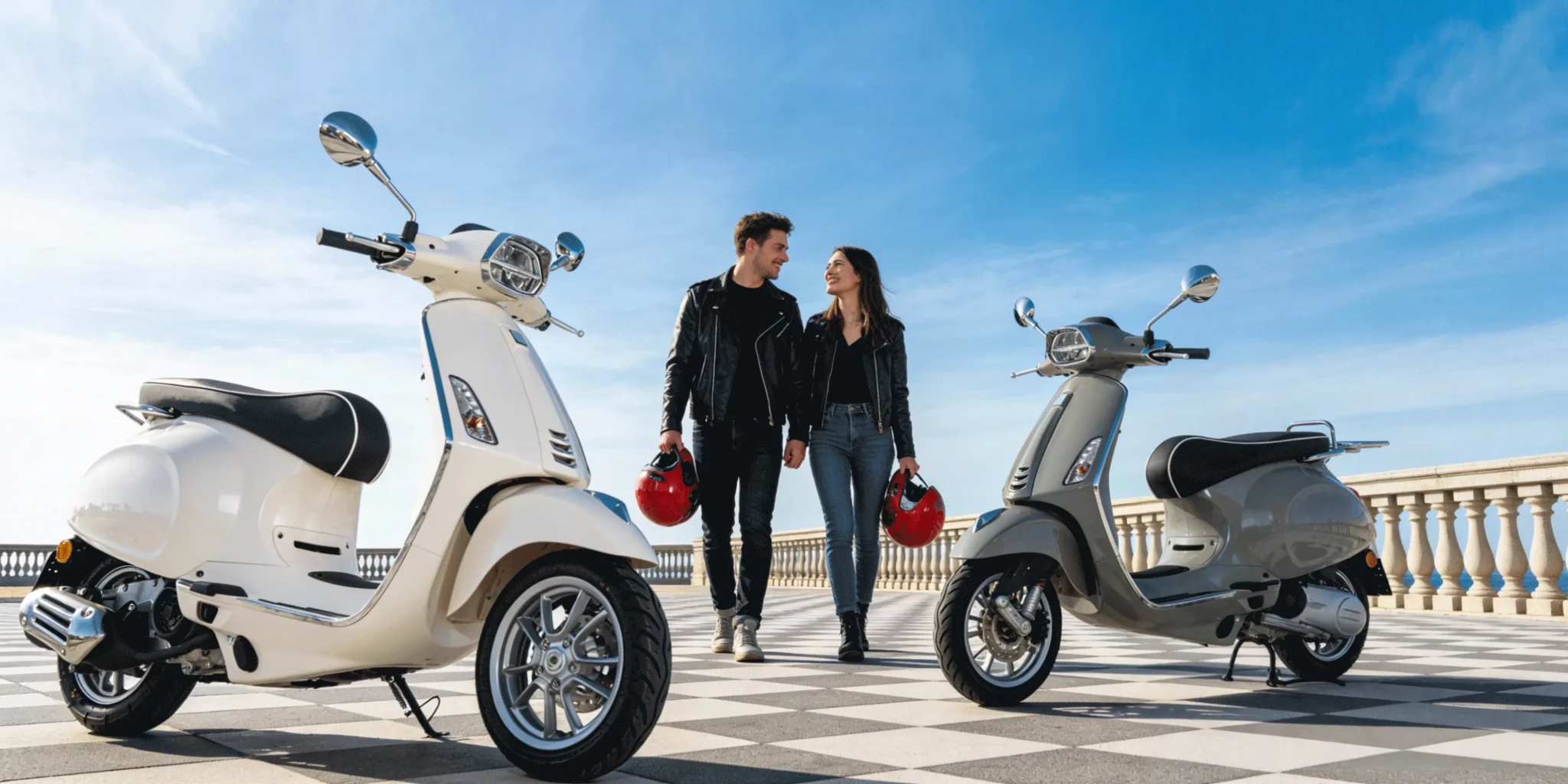
Walk through the streets of Rome, Barcelona, Bangkok, Taipei, or Paris, and you are likely to spot a familiar silhouette weaving effortlessly through city traffic. Rounded bodywork, elegant curves, a relaxed riding position, and an unmistakable sense of style—few vehicles have influenced urban mobility and lifestyle culture quite like the Vespa-style scooter.
Yet the appeal of these scooters extends far beyond transportation. For many riders, a retro scooter represents freedom, individuality, and a connection to a design philosophy that has remained relevant for generations. While technology continues to evolve, the attraction of classic scooter styling remains remarkably strong.
So why do Vespa-inspired scooters continue to attract riders decades after their original introduction? The answer lies in a unique combination of history, design, practicality, and culture.
Related 🔗: What is a Scooter, Moped, Underbone, or Motorcycle?
From Practical Transportation to Cultural Icon
The story of the classic scooter begins in post-war Europe, when affordable and efficient transportation became a necessity for millions of people. Scooters offered a simple solution: they were economical, easy to ride, and accessible to riders of all experience levels.
What started as practical transportation quickly became something much larger.
Unlike motorcycles that often emphasized performance and speed, scooters appealed to a broader audience. Students, office workers, artists, travelers, and families all embraced the concept. The scooter became a symbol of mobility, independence, and modern urban life.
As cities expanded and traffic became increasingly congested, scooters proved perfectly suited to navigating narrow streets and crowded neighborhoods. Their practicality earned respect, while their distinctive styling captured people’s imagination.
Over time, the scooter evolved from a vehicle into a cultural statement.
The Design That Refuses to Go Out of Style
One of the biggest reasons retro scooters remain popular today is their timeless design.
In an era when many vehicles are designed around aggressive lines and futuristic aesthetics, classic scooters offer something different. Their smooth curves, balanced proportions, and minimalist elegance create a visual identity that feels both nostalgic and contemporary.
Good design does not age.
A well-designed retro scooter can look just as appealing today as it did decades ago. This is a rare achievement in the automotive world, where trends often change every few years.
For many riders, choosing a retro scooter is not simply about transportation. It is a conscious choice to embrace a style that values simplicity, craftsmanship, and character.
This explains why vintage-inspired scooters continue to attract riders from different generations. Older enthusiasts appreciate the heritage, while younger riders are drawn to the authenticity and uniqueness that retro styling offers.
More Than a Vehicle: A Lifestyle Choice
Ask scooter owners why they ride, and the answer is rarely limited to convenience.
Many riders describe a feeling of freedom that comes from traveling through a city at a more relaxed pace. Unlike driving a car, riding a scooter encourages interaction with the surrounding environment. Riders notice local cafés, hidden streets, architecture, and neighborhoods that might otherwise go unnoticed.
The journey becomes part of the experience.
This lifestyle aspect has helped fuel the growth of scooter communities around the world. Weekend rides, local gatherings, charity events, and scooter clubs bring together people who share a passion for classic design and urban exploration.
In many cities, scooter culture has developed its own identity. Riders personalize their scooters with custom seats, luggage racks, windshields, mirrors, and paint schemes. Every scooter tells a story about its owner.
That personal connection is one of the reasons scooter culture continues to thrive in the digital age.
The Influence of Film, Fashion, and Popular Culture
Few vehicles have enjoyed such a close relationship with popular culture.
Classic scooters have appeared in films, advertisements, travel photography, and fashion campaigns for decades. Their image is often associated with romance, adventure, creativity, and European city life.
For many people, their first exposure to scooter culture comes through travel experiences. Visiting historic cities and seeing locals navigate urban streets on stylish scooters creates a lasting impression.
Social media has amplified this phenomenon even further.
Platforms such as Instagram, YouTube, and TikTok have introduced a new generation of riders to retro scooter culture. Travel influencers, motorcycle enthusiasts, and lifestyle creators regularly feature classic scooters as part of their content.
As a result, retro scooters have become symbols of both nostalgia and modern urban living.
Why Retro Scooters Make Sense for Modern Cities
While style plays a major role in their popularity, practical benefits should not be overlooked.
Modern cities face increasing challenges related to traffic congestion, parking shortages, and transportation costs. Scooters offer a highly effective solution to many of these problems.
Compared with larger motorcycles or cars, retro scooters provide:
- Easy maneuverability in urban traffic
- Convenient parking options
- Excellent fuel efficiency
- Lower operating costs
- User-friendly riding characteristics
- Comfortable everyday commuting
For many city residents, these advantages make scooters one of the most practical forms of transportation available.
The combination of functionality and style is difficult to match.
Rather than choosing between appearance and practicality, riders can enjoy both.
Related 🔗: CUB vs Scooter vs Street Bike – Which Is Better for Daily Commuters?
The Evolution of the Modern Retro Scooter
Although the visual design of classic scooters has remained remarkably consistent, the technology underneath has evolved significantly.
Today’s riders expect more than nostalgic styling. Modern consumers also demand reliability, safety, comfort, and efficiency.
As a result, contemporary retro scooters now incorporate features such as:
- Electronic fuel injection
- LED lighting systems
- ABS braking technology
- Digital instrument displays
- Improved suspension systems
- Enhanced fuel economy
- Reduced emissions
This blend of heritage-inspired design and modern engineering has helped create an entirely new category within the global two-wheel market: the modern retro scooter.
These machines preserve the emotional appeal of classic scooters while meeting the expectations of today’s riders.
The Global Rise of Vespa-Inspired Scooters
One of the most interesting developments in recent years has been the growth of Vespa-inspired scooter manufacturing outside Europe.
As demand for retro scooters has increased worldwide, manufacturers across Asia and other regions have developed their own interpretations of the classic scooter formula.
Consumers today have more choices than ever before.
Rather than focusing solely on heritage, modern manufacturers are introducing innovative features, improved reliability, competitive pricing, and advanced production standards.
This has made retro scooter ownership accessible to a broader audience while helping preserve the spirit of classic scooter culture.
The result is a vibrant global market where timeless design continues to evolve through modern manufacturing and engineering.
What Riders Look for in a Retro Scooter Today
Modern buyers typically evaluate several key factors when choosing a retro scooter.
Design Authenticity
The visual appeal remains essential. Riders often seek scooters that capture the elegance and proportions associated with classic European scooter design.
Reliability
Dependability is critical for daily commuting. Consumers expect modern engineering standards and consistent performance.
Comfort
Ergonomic seating, smooth suspension, and rider-friendly controls contribute significantly to overall satisfaction.
Safety
Features such as ABS braking systems and improved lighting technology have become increasingly important.
Value
Today’s buyers want a balance between style, performance, quality, and affordability.
Manufacturers that successfully combine these elements are well-positioned to meet the growing demand for modern retro scooters.
A Manufacturer’s Perspective on Modern Retro Scooters
As a scooter manufacturer, we have witnessed a growing demand for retro-inspired models across global markets.
Riders today are looking for more than transportation. They want products that combine heritage-inspired styling with modern reliability.
In conversations with distributors, dealers, and customers, several priorities consistently emerge:
Timeless design
Reliable performance
Affordable ownership
Practical urban mobility
This reflects a broader shift in consumer preferences, where emotional value has become just as important as technical specifications.
The Future of Scooter Culture
The future of retro scooter culture looks promising.
Urbanization continues to increase worldwide, creating greater demand for efficient personal transportation. At the same time, consumers are showing renewed interest in products with authentic stories, timeless design, and emotional appeal.
Electric scooters are also entering the market, introducing new possibilities while maintaining familiar styling cues.
Technology will undoubtedly continue to change.
Design trends will evolve.
Consumer expectations will shift.
Yet the fundamental attraction of the retro scooter remains remarkably consistent.
People are not simply buying transportation.
They are buying an experience.
They are buying freedom, individuality, and a connection to a cultural tradition that has endured for generations.
Frequently Asked Questions About Vespa-Style Scooters
What is a Vespa-style scooter?
A Vespa-style scooter refers to a scooter that adopts the classic design language associated with traditional Italian scooters, including rounded bodywork, a step-through frame, and retro-inspired styling.
Why are retro scooters so popular?
Retro scooters combine timeless aesthetics with practical urban transportation. Many riders appreciate their unique character, fuel efficiency, and ease of use.
Are Vespa-style scooters good for beginners?
Yes. Most retro scooters are easy to ride, lightweight, and well-suited for new riders who want a comfortable and approachable riding experience.
Are modern retro scooters reliable?
Modern retro scooters often feature advanced engineering, fuel injection systems, improved braking technology, and enhanced manufacturing standards, making them highly reliable for daily use.
What’s the difference between a scooter and a motorcycle?
Scooters typically feature a step-through chassis, automatic transmission, and a more relaxed riding position, while motorcycles generally require manual shifting and have a different frame design.
Are retro scooters suitable for daily commuting?
Absolutely. Their maneuverability, fuel efficiency, and convenient parking capabilities make them ideal for urban transportation.
What engine size is best for city riding?
For most urban riders, 125cc to 200cc scooters provide an excellent balance between efficiency, performance, and practicality.
Why do people customize retro scooters?
Customization allows owners to express their personality through accessories, colors, luggage solutions, seating options, and aesthetic upgrades.
Are electric retro scooters becoming popular?
Yes. Electric retro scooters are gaining popularity as cities seek cleaner transportation solutions while preserving classic scooter aesthetics.
What should I look for when buying a retro scooter?
Key considerations include build quality, reliability, safety features, comfort, fuel efficiency, after-sales support, and overall value.
Conclusion
Few vehicles have achieved what the classic Vespa-style scooter has accomplished.
It began as a practical transportation solution and evolved into a global cultural icon. Its influence can be seen in urban mobility, design, fashion, travel, and lifestyle communities around the world.
Today, retro scooters continue to attract riders because they offer something increasingly rare: a combination of functionality, personality, and timeless style.
As technology advances and cities continue to change, the appeal of classic scooter culture shows no sign of fading.
For riders seeking a more enjoyable, stylish, and meaningful way to navigate everyday life, the retro scooter remains one of the most compelling choices on two wheels.