
Short Answer
Motorcycle distributors should plan spare parts before the first shipment, not after sales begin. In 2026, the best spare parts strategy is to start with fast-moving wear parts, warranty-critical components, model-specific service items, and a clear reorder plan based on sales volume, road conditions, dealer capability, and supplier lead time.
For importers, dealers, CKD/SKD assemblers, and fleet suppliers, spare parts planning directly affects customer satisfaction, dealer confidence, warranty cost, repeat orders, and long-term brand reputation.
KAMAX supports qualified B2B buyers with complete motorcycles, OEM/ODM cooperation, CKD/SKD discussions, export coordination, and model-based spare parts planning for distributor markets.
About the Article
Why Spare Parts Planning Matters More in 2026
The motorcycle market in 2026 is more practical and more cost-sensitive. Many riders still need daily transportation, delivery work, agriculture support, or commercial mobility, but buyers are paying closer attention to maintenance cost, service speed, parts availability, and total cost of ownership.
For a motorcycle distributor, the first order may be won by model design, price, and delivery time. But repeat orders are usually won by after-sales support.
If spare parts are not ready, the distributor may face:
- Slow dealer repairs
- Unhappy end users
- Higher warranty pressure
- Lower confidence in new models
- Weak repeat sales
- Damage to brand reputation
If spare parts are planned well, the distributor can build:
- Faster service response
- Stronger dealer loyalty
- Recurring parts revenue
- Better warranty control
- Higher trust in the brand
- More stable long-term cooperation with the factory
A distributor who imports motorcycles only sells units. A distributor who controls spare parts builds a market.
Related 🔗:
How to Import Motorcycles from China?
How Importers and Distributors Can Choose a Reliable Motorcycle Manufacturer in China
How to Audit Motorcycle OEM Factory Before Your First Order
The 2026 Spare Parts Planning Framework for Motorcycle Distributors
A practical spare parts strategy should cover four layers.
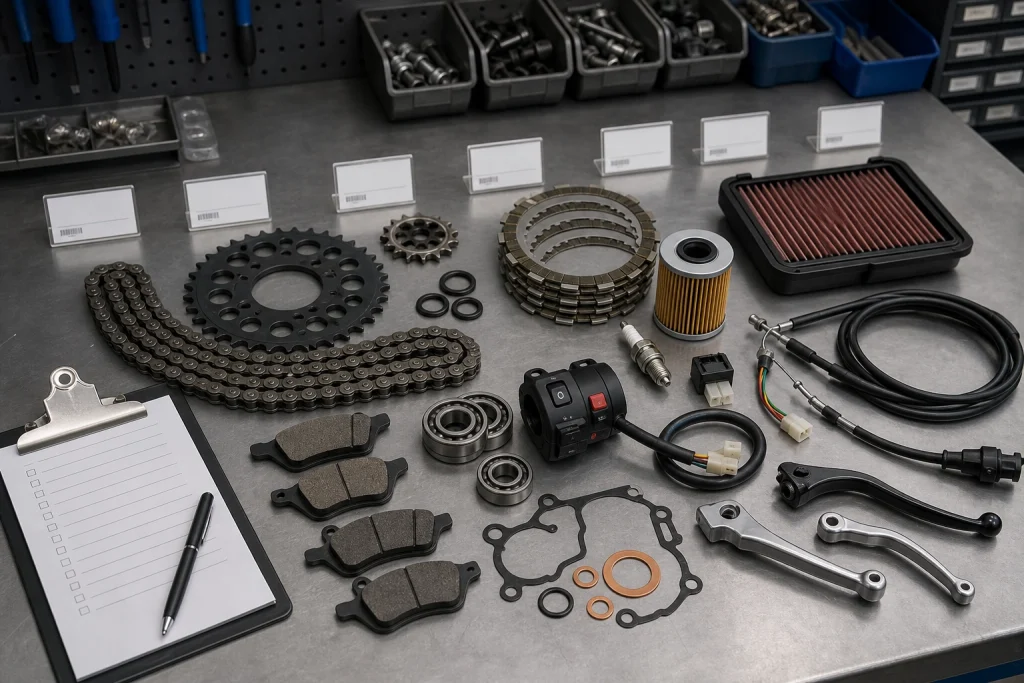
1. Fast-Moving Wear Parts
These are parts that dealers replace regularly because of normal use.
Typical examples include:
- Brake pads
- Brake shoes
- Chains
- Sprockets
- Clutch plates
- Spark plugs
- Air filters
- Oil filters where applicable
- Cables
- Tires and tubes where applicable
- Bulbs or lighting components
- Bearings
- Seals
- Gaskets
These parts should be the foundation of the first spare parts package.
2. Warranty-Critical Parts
These parts may not move every day, but they are important when a warranty case appears.
Examples may include:
- Electrical switches
- Relays
- Regulators
- Starter-related parts
- Carburetor or EFI-related components depending on model
- Brake system components
- Selected engine service parts
- Suspension components
- Battery-related items
Warranty-critical parts help dealers solve problems quickly and protect brand trust.
3. Model-Specific Parts
Each motorcycle model needs its own spare parts list. Even similar-looking motorcycles may use different cables, body covers, lighting, wheels, brake systems, or electrical components.
For every model, distributors should prepare:
- Model name
- Engine or power system specification
- Part name
- Part number
- Recommended initial quantity
- Reorder point
- Compatible models
- Supplier lead time
- Dealer service notes
This is especially important when a distributor sells several models in the same market.
4. Long-Tail and Special-Order Parts
Not every component needs deep local inventory from day one. Large, expensive, or low-frequency parts can often be managed by special order, depending on market distance and factory lead time.
The goal is not to stock everything. The goal is to stock the right parts first.
How Much Spare Parts Inventory Should Distributors Prepare?
There is no universal spare parts percentage that fits every motorcycle business. The correct ratio depends on market, model, sales volume, use intensity, road conditions, dealer network, and shipping lead time.
As a practical starting point, many B2B motorcycle distributors begin with a focused fast-moving spare parts package rather than a full parts warehouse. In some programs, an initial fast-moving spare parts reference may be around a small percentage of the motorcycle order value, but the final plan should be confirmed according to the actual model and market.
A distributor should prepare more spare parts when:
- The motorcycles are used for delivery or commercial work
- Road conditions are rough
- The dealer network is expanding quickly
- Shipping lead time from the factory is long
- The model is new to the market
- The distributor promises strong warranty service
- The business involves fleet customers
- The market has limited local substitute parts
A small pilot order may need a lean spare parts package. A serious distributor launch needs a structured parts plan.
Spare Parts Planning by Motorcycle Segment
Different motorcycle categories need different parts strategies.
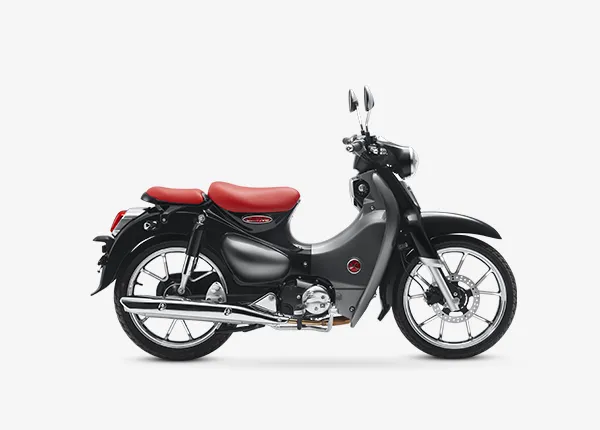
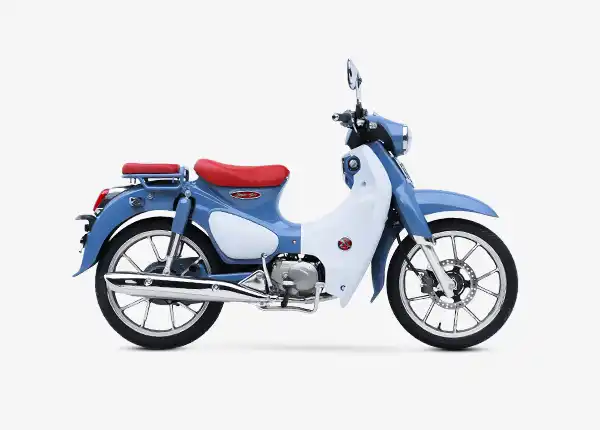
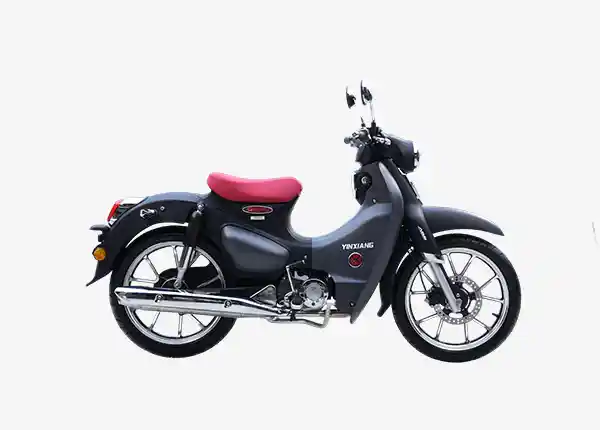
Cub, Underbone, and Commuter Motorcycles
Cub and commuter motorcycles are usually used every day. Riders care about low running cost, easy maintenance, fuel economy, and fast repair.
Distributors should prioritize:
- Brake parts
- Chains and sprockets
- Filters
- Clutch parts
- Cables
- Tires and tubes
- Lighting
- Mirrors
- Small electrical parts
- Common body covers
For 110cc, 125cc, and 150cc commuter models, spare parts availability can become a major selling point for dealers.
Utility Motorcycles for Africa and Emerging Markets
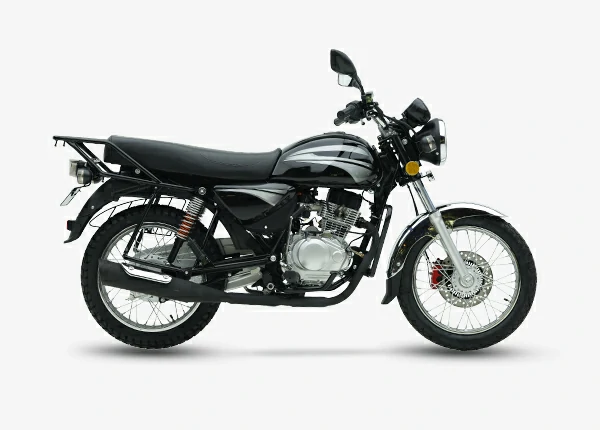
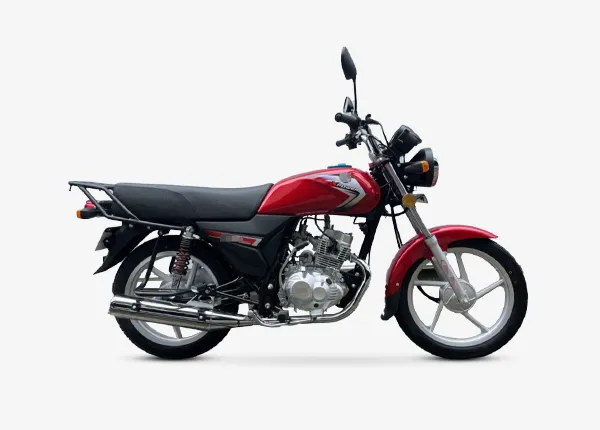
In many African and emerging markets, motorcycles are used for commuting, passenger transport, delivery, agriculture, and cargo work. High daily mileage and rough roads increase the importance of durable service parts.
Distributors should prepare:
- Heavy-duty brake parts
- Chains and sprockets
- Tires and tubes
- Suspension-related parts
- Cables
- Engine service parts
- Carrier or rack-related parts where applicable
- Lighting and electrical components
- Fasteners and small repair items
For utility motorcycles, uptime matters. If a rider depends on the motorcycle for income, slow repair means lost earnings.
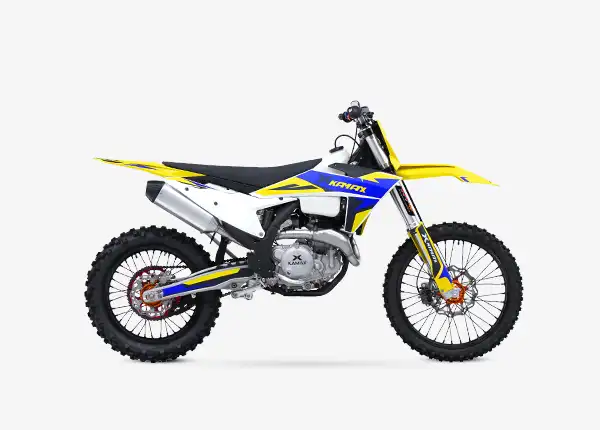
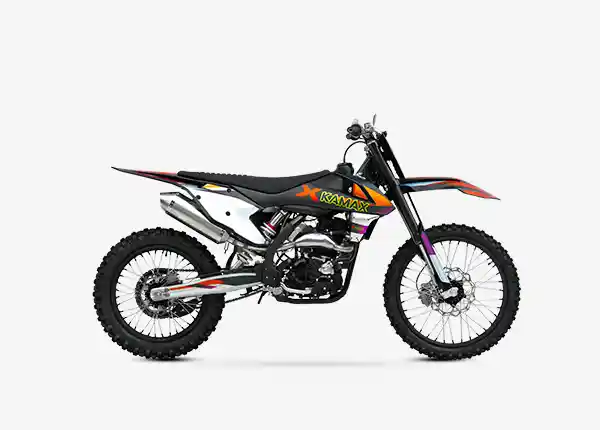
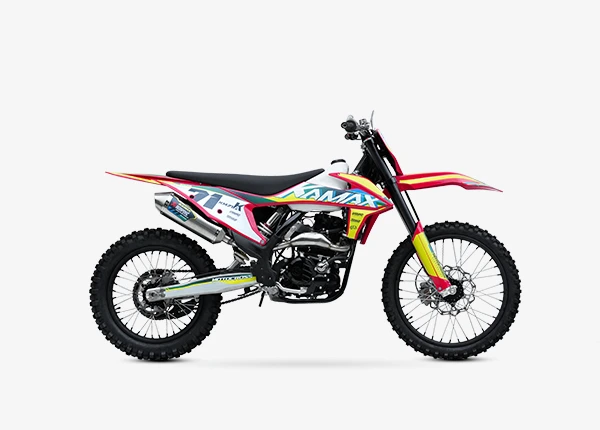
Dirt Bikes and Off-Road Motorcycles
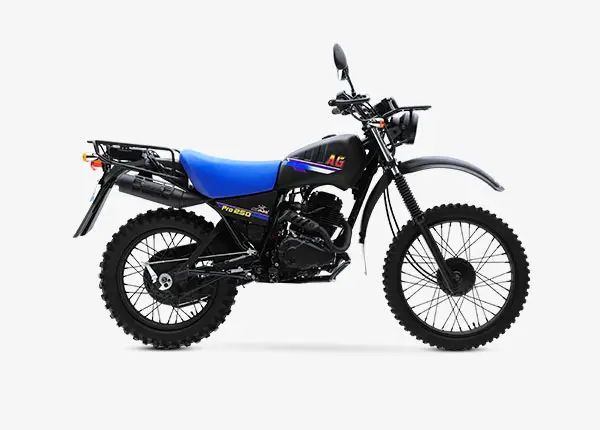
Dirt bikes and off-road motorcycles usually have higher impact-related parts demand. Riders may use them for trail riding, racing, training, or rough terrain.
Distributors should focus on:
- Brake levers
- Clutch levers
- Plastics
- Foot pegs
- Chains
- Sprockets
- Brake pads
- Suspension service parts
- Filters
- Tires
- Grips
- Protection-related parts
For off-road dealers, parts speed can strongly influence customer loyalty.
Electric Motorcycles
Electric motorcycles need a different spare parts mindset. Distributors must plan not only mechanical parts, but also electrical and diagnostic support.
Important areas may include:
- Chargers
- Controllers
- Displays
- Wiring harnesses
- Brake parts
- Lighting components
- Battery-related service items
- Diagnostic guidance
- Software or configuration support where applicable
Electric motorcycles can be attractive for urban and delivery markets, but dealer training and after-sales process are especially important.
CKD and SKD Motorcycle Programs
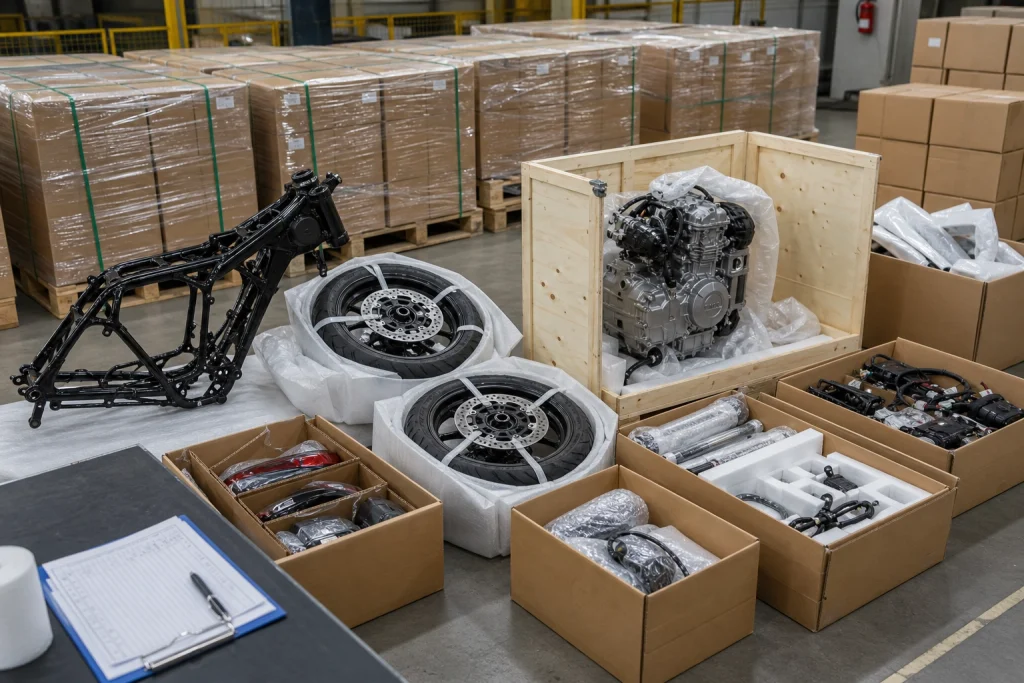
For CKD and SKD buyers, spare parts planning must be more disciplined because the buyer is also managing assembly, labeling, packing, and component flow.
CKD/SKD buyers should confirm:
- Bill of materials accuracy
- Parts labeling
- Packing method
- Assembly sequence
- Replacement parts list
- Damage control during shipping
- Dealer service parts
- Reorder process
- Technical documentation
For local assembly projects, spare parts are not only after-sales items. They are part of production stability.
Related 🔗:
OEM vs ODM Motorcycles: Which Model Fits Your Market?
Motorcycle CKD vs SKD vs CBU Explained | China Motorcycle Factory Guide
Build a Fast-Moving Parts List Before Launch
Before importing motorcycles, each distributor should create a fast-moving parts list for every model.
A useful list should include:
- Model name
- Part category
- Part number
- Part description
- Recommended initial stock
- Minimum reorder quantity
- Reorder point
- Factory lead time
- Compatible models
- Dealer service priority
This list helps the distributor avoid confusion when multiple motorcycles share similar components.
It also helps the export team recommend a more accurate spare parts package.
Link Spare Parts Planning With Model Selection
Spare parts planning should influence which motorcycles a distributor chooses.
Before selecting a model, ask:
- Is this model easy for local dealers to service?
- Are the main wear parts easy to stock?
- Does the model share parts with other models?
- Are the components suitable for local road conditions?
- Is the engine or power system familiar to technicians?
- Can the supplier support parts continuity?
- Is the model suitable for long-term repeat orders?
A motorcycle with a low purchase price is not always the best business choice if parts are difficult to manage later.
How Spare Parts Improve Dealer Confidence
Dealers do not only ask whether a motorcycle looks good or has a competitive price. They also ask whether they can repair it, explain it, and support customers after the sale.
A strong spare parts system helps dealers:
- Sell with more confidence
- Handle repairs faster
- Reduce customer complaints
- Manage warranty cases professionally
- Recommend the brand again
- Accept larger future orders
For new motorcycle brands entering a market, spare parts support can be one of the strongest ways to compete against established brands.
Common Spare Parts Mistakes to Avoid
Motorcycle distributors should avoid these mistakes:
- Importing motorcycles without an initial spare parts package
- Stocking too many cosmetic parts but not enough wear parts
- Not using clear part numbers
- Not separating parts by model
- Ignoring dealer training
- Waiting until warranty issues appear before ordering parts
- Choosing a supplier only by motorcycle price
- Not checking parts continuity before confirming a model
- Not planning EV electrical parts separately
- Not linking CKD/SKD parts with assembly documentation
A low FOB price can become expensive if spare parts are unavailable when dealers need them.
What to Prepare Before Asking a Factory for Spare Parts Support
To receive a useful spare parts recommendation, a distributor should provide clear market information.
Before contacting the factory, prepare:
- Target country
- Buyer type
- Planned models
- Estimated first order quantity
- Expected annual volume
- Road and usage conditions
- Dealer network size
- Warranty expectation
- CBU, SKD, or CKD preference
- Fleet or retail sales focus
- Required documentation
- Preferred reorder cycle
The more specific the buyer is, the more practical the spare parts plan can be.
How KAMAX Supports Motorcycle Spare Parts Planning
KAMAX is a China-based motorcycle manufacturer and wholesale supplier founded in 2001, serving global distributors, importers, dealers, CKD/SKD assemblers, and OEM/ODM partners with Cub, dirt, commuter, street, ATV, and electric motorcycles.
For qualified B2B buyers, KAMAX can support spare parts planning as part of the cooperation discussion. Depending on the model, market, and order plan, this may include:
- Model-based spare parts recommendations
- Fast-moving parts planning
- OEM/ODM configuration discussions
- CKD/SKD packing and parts coordination
- Export documentation support
- After-sales communication support
- Long-term distributor cooperation planning
Spare parts should be discussed before the first order, especially for buyers planning exclusive distribution, private-label motorcycles, fleet supply, or local assembly.
Final Recommendation
In 2026, motorcycle distributors should treat spare parts as part of the business model, not as an accessory to the first order.
Before launching a motorcycle line, every distributor should answer five questions:
- Which fast-moving parts will dealers need first?
- Which warranty-critical parts should be locally available?
- How quickly can we reorder from the factory?
- Which models share parts?
- Does the supplier support long-term parts continuity?
If these questions are answered before shipment, the distributor can reduce risk, support dealers faster, and build a stronger motorcycle brand in the local market.
FAQ
What spare parts should motorcycle distributors order first?
Motorcycle distributors should first order fast-moving and service-critical parts such as brake pads, brake shoes, chains, sprockets, clutch parts, filters, spark plugs, cables, lighting components, tires, tubes, seals, gaskets, bearings, and common electrical parts.
Should spare parts be ordered with the first motorcycle shipment?
Yes. Spare parts should be planned before the first shipment so dealers can support customers, handle warranty issues, and maintain confidence in the new motorcycle line from the beginning.
How much spare parts inventory should a distributor prepare?
The correct amount depends on model type, order quantity, road conditions, dealer network, warranty policy, and factory lead time. Most distributors should begin with a focused fast-moving parts package and adjust based on real sales and service data.
Are spare parts different for gasoline and electric motorcycles?
Yes. Gasoline motorcycles usually require engine, fuel, transmission, brake, and wear parts planning. Electric motorcycles also require chargers, controllers, wiring, displays, battery-related service items, and diagnostic support.
Why is spare parts planning important for CKD and SKD motorcycle buyers?
CKD and SKD buyers need spare parts planning because they manage both assembly and after-sales support. Clear parts labeling, BOM accuracy, packing, assembly documentation, and replacement parts availability are critical for stable operations.
Can KAMAX help distributors plan spare parts?
Yes. KAMAX can support qualified B2B buyers with model-based spare parts planning, OEM/ODM discussions, CKD/SKD coordination, export support, and long-term distributor cooperation
CTA
Planning to import motorcycles, build a dealer network, or launch a private-label motorcycle brand in your market?
Contact the KAMAX export team to discuss suitable models, spare parts planning, OEM/ODM cooperation, CKD/SKD options, and long-term wholesale supply.