Quick Answer
The most important motorcycle supplier red flags before paying a deposit are unclear factory role, vague component specifications, refusal of live video verification, no VIN or label confirmation, weak CBU/SKD/CKD packing explanation, no first-shipment spare parts plan, unclear warranty responsibility and pressure to buy too many models in the first order.
For motorcycle importers, the deposit is not only a payment step. It is the point where unresolved model, document, packing and after-sales risks start becoming expensive. A serious motorcycle supplier should be able to explain what it controls, what it outsources, which components are included, how motorcycles are tested, how they are packed and how dealers will be supported after arrival.
Before paying a deposit, importers should turn every vague promise into written confirmation: a configuration sheet, sample photos, live video verification, packing reference, spare parts list, document checklist and warranty process.
Table of Contents
Who Should Read This Guide
This guide is for importers, distributors, dealer groups, OEM buyers and CKD/SKD assemblers who are already talking with a motorcycle supplier and are close to paying a deposit.
At this stage, a buyer may already have a quotation, catalog, sample photos and payment terms, but still may not know enough about the supplier’s production scope, component choices, export documents, packing method or after-sales support.
The advice below is not about distrusting every supplier. Many problems happen because both sides confirm price too early and leave important motorcycle details unresolved.
Before paying, the buyer should turn every unclear point into written confirmation, photo, video, specification sheet or checklist.
This is especially important for first-time motorcycle importers, OEM/private label buyers and distributors planning their first shipment from China. The first order does not only test the product price. It tests the supplier’s real control over production, packing, documentation and dealer support.
Why the Deposit Stage Matters
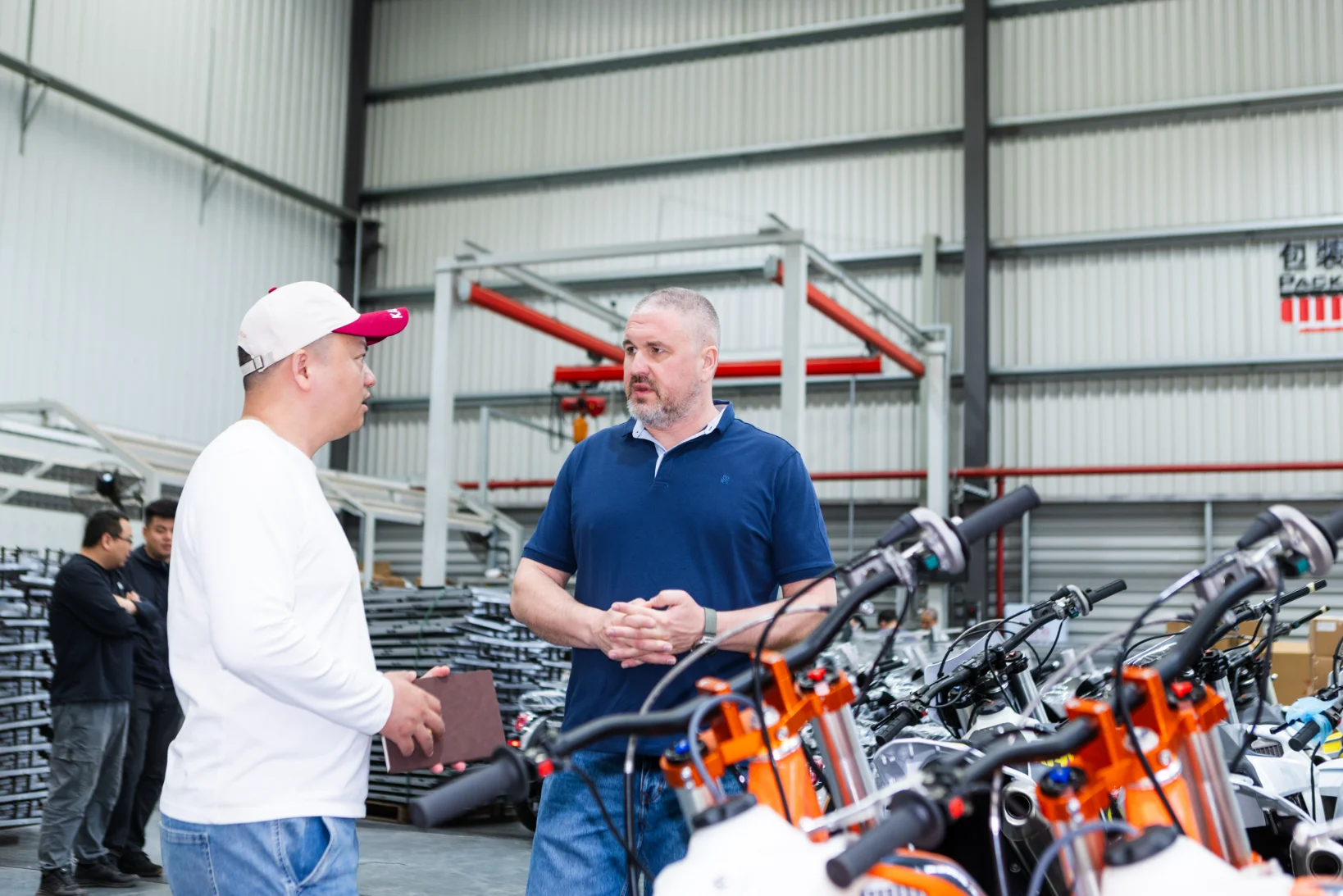
Before deposit, the importer can still slow down, ask for evidence and compare options. After deposit, unclear details become production arguments.
In motorcycle sourcing, those details are not small. Engine configuration, tire specification, brake setup, VIN format, manual language, carton marks, packing method and spare parts all affect the buyer’s ability to clear customs, register vehicles, sell locally and support dealers after delivery.
For general international trade due diligence, buyers should also check company identity, payment risk, contract terms and trade responsibilities. Official export support organizations such as the International Trade Administration are useful starting points for general trade due diligence. Incoterms are also important because they define the responsibilities, costs and risks between buyer and seller in an international transaction.
However, a motorcycle order needs more than a general supplier checklist. Importers must also check model configuration, production control, VIN/nameplate workflow, CBU/SKD/CKD packing, spare parts support and warranty responsibility before paying the deposit.
From KAMAX export experience, first-order problems usually do not come from one single mistake. They usually come from several small unclear points that were never confirmed before production: a tire specification, a battery capacity, a carton mark, a missing spare part list or an unclear warranty process.
Motorcycle Supplier Pre-Deposit Checklist
Use this checklist before paying a deposit to any motorcycle supplier. A reliable supplier should be able to answer these points clearly.
| Check Area | What to Confirm | Evidence Needed Before Deposit |
|---|---|---|
| Supplier Role | Factory, assembler, exporter, trading company or sourcing agent | Business information, production scope, live video, sample documents |
| Production Control | Assembly, QC, packing, documents and spare parts responsibility | Workshop video, QC checklist, packing photos, team explanation |
| Model Configuration | Engine, EFI/carburetor, cooling, brakes, tires, battery, lights, meter | Written configuration sheet |
| OEM / Branding | Logo, decals, nameplate, manual, labels and carton marks | Sample artwork, approval file, mock-up photos |
| VIN & Documents | VIN format, nameplate, engine number, certificate and export documents | Sample VIN/nameplate format, document checklist |
| Packing Method | CBU, SKD or CKD packing method | Packing photos, crate details, parts labeling examples |
| Loading Control | Container loading plan and damage prevention | Loading photos, packing list, protection method |
| Spare Parts | Fast-moving parts for first shipment | Spare parts recommendation by model category |
| Warranty | Warranty period, claim process and evidence required | Written warranty terms and claim workflow |
| After-Sales Support | Dealer support, parts supply and technical response | Contact window, parts lead time, support process |
If the supplier cannot provide basic evidence for several items above, the buyer should slow down before paying the deposit.
Motorcycle Supplier Red Flags Table
| Red Flag | What It May Mean | Motorcycle-Specific Risk | What to Ask Before Deposit | Risk Level |
|---|---|---|---|---|
| Supplier role is unclear | The company may be a factory, assembler, trading company or sourcing agent | Quality control, documents and warranty responsibility may be unclear | What do you control directly: assembly, QC, packing, documents and parts? | High |
| Quotation lacks component details | The supplier is quoting a price but not a controlled configuration | Engine, tires, brakes, battery, chain and lights may change after deposit | Can you provide a written configuration sheet? | High |
| No live video verification | The supplier may not want to show workshop, warehouse or packing area | Buyer cannot confirm real capability before payment | Can we have a live video call through showroom, warehouse and packing area? | High |
| VIN, labels and manuals are not discussed | The supplier treats documents as a final-week task | Customs, registration or dealer handover may be delayed | Can you confirm VIN, nameplate, manual language and carton marks before production? | High |
| Packing method is vague | The supplier has not matched packing to CBU, SKD or CKD order type | Damage, missing parts or assembly delays may happen after arrival | Can you show packing photos, labeling method and loading examples? | High |
| No spare parts list | The supplier is focused only on selling complete units | Dealers may face downtime and warranty pressure after first sales | Which fast-moving parts should be included in the first shipment? | High |
| Warranty responsibility is vague | Factory, importer and dealer responsibilities are not defined | Claims may become disputes after motorcycles are sold | What evidence is needed for warranty claims? | High |
| Too many models pushed for first order | The supplier is chasing order value rather than launch stability | Inventory, parts and dealer training become too complex | Which models are safest for my first shipment and market? | Medium |
Red Flag 1: The Supplier Role Is Not Clear
A trading company is not automatically a problem, and a factory is not automatically the best choice. The red flag is when the supplier cannot clearly explain its role.
Motorcycle importers need to know who controls model selection, component confirmation, assembly, inspection, packing, export documents, spare parts and warranty response.
Before deposit, ask the supplier to explain which parts of the order are handled in-house and which parts are coordinated with partners. If the supplier says “we can do everything” but cannot show the assembly area, warehouse, packing photos, sample documents or spare parts list, the buyer should slow down.
The issue is not the company type. The issue is control and accountability.
For example, a sourcing agent may still be useful if it has strong factory control, clear QC responsibility and good export experience. But if the supplier cannot explain who is responsible for production quality, document correction, missing parts or warranty claims, the importer may face problems after the deposit is paid.
A professional motorcycle supplier should be able to say clearly: “This is what we produce, this is what we assemble, this is what we outsource, and this is how we control quality before shipment.”
Red Flag 2: The Quotation Hides Component Differences
Two motorcycle quotations can look similar on model name and displacement but differ in the details that matter to dealers.
Important differences may include:
- EFI or carburetor
- Air-cooled or liquid-cooled engine
- Tire brand and tire size
- Front and rear brake type
- Battery capacity and battery type
- Chain and sprocket specification
- Lights, meter and switches
- Mirrors, wiring harness and fasteners
- Packing method
- Spare parts package
- Warranty support
A low price without a configuration sheet is not a complete quotation.
This is where importers should be careful with “same model, better price” claims. If one supplier is much cheaper, ask what changed. Did the tire spec change? Is the battery smaller? Are brake parts different? Is the packing weaker? Are spare parts excluded?
A professional supplier should be able to explain cost differences without hiding component changes.
Example: A 150cc underbone motorcycle may look almost the same in catalog photos, but the cheaper quotation may use a different tire, smaller battery, lower-cost brake parts or weaker packing. The unit price may look attractive before deposit, but the real cost appears later through dealer complaints, damaged units or higher after-sales pressure.
For B2B motorcycle buyers, the quotation should not only answer “how much is the unit price?” It should answer “what exactly am I buying?”
Red Flag 3: The Supplier Avoids Live Verification
Photos and catalogs are useful, but they are not enough before deposit.
A practical live video call can show the showroom, current stock, assembly or preparation area, packing area, warehouse, sample labels and documents. The buyer does not need a cinematic factory tour. They need a clear view of whether the supplier can support the actual order.
For a motorcycle importer, the video agenda should include model categories such as cub, underbone, scooter, commuter, dirt bike or electric motorcycle, depending on the order.
During the video call, the buyer should ask to see one or two models close up, including:
- Tire specification
- Brake setup
- Engine area
- VIN or nameplate position
- Dashboard and lights
- Battery position
- Packing examples
- Spare parts area
- Sample carton marks
- Sample documents
If the supplier refuses any live verification and only sends old videos, that is a warning sign.
A serious supplier does not need to show confidential production information. But it should be willing to show enough real-time evidence to prove that the company, products, warehouse and packing process actually exist.
For first cooperation, KAMAX usually recommends that importers use live video verification together with written configuration confirmation. Video shows capability; written documents control the final order standard.
Red Flag 4: VIN, Labels, Manuals and Carton Marks Are Left for Later
VIN, nameplate, engine number, warning labels, manual language and carton marks should not be left until shipment week.
These details affect customs clearance, registration, dealer delivery and brand presentation. For OEM or private label buyers, the risk is even higher because logos, decals, model names and manuals must match local market expectations.
Before deposit, ask for:
- VIN or nameplate format
- Engine number confirmation process
- Warning label language
- Manual language options
- Carton mark format
- Logo and decal artwork approval
- Model name confirmation
- Export document checklist
If the supplier says these details can be “handled later” but cannot explain the workflow, the buyer may face corrections after production has already started. That can delay shipment or create additional cost.
For regulated markets, VIN and import documents are not decoration. They may affect customs declaration, registration and compliance review. Buyers should always check local import rules before confirming the order.
For OEM/private label buyers, the supplier should confirm branding files before mass production, not after production. A small mistake in logo placement, manual language or carton marks can create a big problem when the motorcycles arrive at the distributor’s warehouse.
Red Flag 5: Packing Is Not Matched to CBU, SKD or CKD Shipment
Motorcycle packing is not one-size-fits-all.
A supplier that cannot explain the difference between CBU, SKD and CKD packing may not be ready for serious export cooperation.
CBU orders need crate protection, handlebar and mirror protection, battery handling and container loading control.
SKD orders need clear parts placement, assembly notes, parts matching and missing-parts prevention.
CKD orders need parts coding, packing sequence, container planning and local assembly support.
If the supplier cannot explain packing by order type, damage and local assembly problems become more likely.
Example: In SKD shipment, the container may leave China smoothly, but if parts are not labeled clearly, the importer’s local assembly team may lose time matching parts after arrival. This does not always appear as a “quality problem,” but it still increases labor cost, delays delivery and creates pressure on the distributor.
Before deposit, ask for:
- Packing photos by shipment type
- Crate or carton details
- Parts labeling examples
- Loading photos from previous shipments
- Battery handling method
- Protection for mirrors, plastics and painted parts
- Missing-parts claim process
For CKD and SKD buyers, packing is part of the product. Poor packing can damage the distributor’s local assembly efficiency, even if the motorcycle itself is acceptable.
Red Flag 6: Spare Parts and Warranty Are Treated as Afterthoughts
Spare parts should be discussed before deposit, not after the container is shipped.
Common first-shipment parts may include:
- Brake pads
- Chains
- Sprockets
- Filters
- Cables
- Tires
- Batteries
- Bulbs
- Mirrors
- Body panels
- Levers
- Plastics
- Belts and CVT-related parts for scooters
The exact parts package depends on model category and local service capacity. Scooter distributors may need belt and CVT-related parts. Dirt bike dealers may need more control levers, tires, suspension-related parts and plastics. Cub and underbone distributors may focus more on fast-moving service parts and body components.
A supplier that cannot discuss parts support before payment may not be ready for long-term distributor cooperation.
Warranty responsibility should also be confirmed before deposit. The importer needs to know:
- What is covered?
- What is not covered?
- How long is the warranty period?
- What evidence is needed for claims?
- Who checks photos or videos?
- How are replacement parts provided?
- How are repeated issues handled?
A motorcycle is not a one-time product sale. For distributors and dealers, the real business begins after the first batch is sold. If spare parts and warranty are unclear, the importer may win the price negotiation but lose dealer confidence later.
From KAMAX export experience, a controlled first-shipment spare parts plan is often more valuable than adding too many extra models to the first order. Parts support helps dealers sell with confidence and reduces after-sales pressure in the launch period.
Red Flag 7: Too Many Models Are Pushed for the First Order
A supplier may try to push many models into the first order: cub, scooter, dirt bike, electric motorcycle, underbone and commuter models all at once.
This is not always wrong, but it can become risky.
Too many models in the first order can create problems in:
- Inventory management
- Spare parts planning
- Dealer training
- Local marketing
- Warranty support
- Technical service
- Model positioning
- Cash flow control
For a new market or new distributor, the safer approach is usually a controlled model mix.
A first shipment should help the importer test market response, dealer feedback, spare parts demand and after-sales capability. It should not create an inventory burden before the distributor understands which models can move fastest.
Before deposit, ask the supplier:
- Which models are safest for my market?
- Which models share more spare parts?
- Which models are easier for dealers to maintain?
- Which models have stronger local demand?
- Which models should be tested first instead of ordered in large quantity?
A professional supplier should not only ask “how many units do you want?” It should help the buyer think about launch stability, model mix, parts support and dealer readiness.
What a Professional Motorcycle Supplier Should Provide Before Deposit
Before paying a deposit, a serious motorcycle supplier should be able to provide most of the following items:
| Item | Why It Matters |
|---|---|
| Company and role explanation | Helps buyer understand whether the supplier is a factory, assembler, exporter or sourcing company |
| Product configuration sheet | Prevents hidden changes in engine, brakes, tires, battery and key parts |
| Live video verification | Shows real products, warehouse, packing area and basic operation capability |
| Sample documents | Helps buyer understand export document workflow |
| VIN/nameplate confirmation | Reduces customs, registration and dealer handover problems |
| OEM branding confirmation | Prevents mistakes in logo, decals, manuals and carton marks |
| CBU/SKD/CKD packing plan | Reduces damage, missing parts and assembly delays |
| Spare parts recommendation | Helps dealers support the first batch after sales begin |
| Warranty process | Clarifies responsibility between supplier, importer and dealer |
| Production and inspection timeline | Helps buyer plan payment, shipment and market launch |
If the supplier only provides catalog photos and a low price, the buyer does not yet have enough information to make a safe deposit decision.
Deposit Decision Table
| Buyer Situation | Safer Next Step | What Not to Do | KAMAX Export Team Suggestion |
|---|---|---|---|
| First order with a new supplier | Confirm role, models, components, documents and packing before deposit | Do not pay based only on catalog and unit price | Start with a controlled product mix and clear spare parts plan |
| Supplier offers the lowest price | Ask for component comparison and packing details | Do not assume all quotations include the same specification | Compare engine, tires, brakes, battery, chain and parts support |
| OEM/private label order | Confirm logo, decals, manual, labels, sample and carton marks | Do not leave branding details until mass production | Use a written sample approval checklist |
| SKD or CKD shipment | Ask for packing sequence, parts labeling and assembly support | Do not treat CKD as simple loose parts packing | Confirm parts coding and missing-parts claim process |
| Buyer wants many models in first order | Check market fit, parts sharing and dealer capacity | Do not overload the first shipment with too many categories | Use a focused launch mix first |
| Buyer has strict local compliance needs | Check local import, emissions, VIN and registration rules | Do not assume one document package works for all countries | Confirm document needs before quotation is finalized |
What to Ask Before Paying a Motorcycle Supplier
Before paying a deposit, importers should ask these questions:
- What part of the order do you control directly: model selection, assembly, QC, packing, documents or after-sales?
- Are you the factory, assembler, exporter, trading company or sourcing agent for this order?
- Can you provide a configuration sheet with engine, brake, tire, battery, lights, meter and key components?
- Can we schedule a live video call through showroom, warehouse, packing area and sample document review?
- Can you confirm VIN, nameplate, manual language, warning labels and carton marks before production?
- What packing method is planned: CBU, SKD or CKD?
- Can you show packing photos or loading photos from previous similar shipments?
- Which fast-moving spare parts should be included in the first shipment?
- What is the warranty claim process, and what evidence is needed?
- Which models are safest for the first shipment based on my country, road conditions and dealer capacity?
- What local documents or compliance requirements should I confirm before finalizing the order?
- What will happen if there are missing parts, wrong labels or warranty claims after arrival?
The supplier’s answers do not need to be perfect, but they should be specific. Vague answers before deposit often become expensive problems after production starts.
KAMAX importers can also review the KAMAX motorcycle range, the guide on choosing a reliable motorcycle manufacturer in China, the article on auditing a motorcycle OEM factory before a first order, and the guide on motorcycle spare parts planning for distributors.
From a factory and export team viewpoint, clear confirmation before deposit protects both sides. It reduces changes during production, avoids packing disputes and makes the first shipment easier for local dealers to support. When buyers contact KAMAX, the export team usually needs the target country, model category, estimated quantity, document requirements, preferred packing method and spare parts expectations before giving practical recommendations.
FAQ
What are the biggest motorcycle supplier red flags before paying a deposit?
The biggest motorcycle supplier red flags are unclear production role, vague component specifications, refusal of live video verification, no VIN or label process, weak packing explanation, no spare parts list and unclear warranty responsibility. These issues can become expensive after the deposit is paid.
How can I verify if a China motorcycle supplier is a real factory?
Ask for a live video call that shows showroom, assembly or preparation area, warehouse, packing area and sample documents. Also ask what the supplier controls directly and what is outsourced. A real manufacturer or capable exporter should explain production scope, QC, packing and after-sales support clearly.
What should a motorcycle quotation include before deposit?
A motorcycle quotation should include model, displacement, EFI or carburetor, cooling method, tire, brake, battery, lights, meter, packing method, spare parts scope, MOQ, lead time, payment terms and document responsibilities. A price without component details is not enough for a safe deposit decision.
Should VIN, labels and manuals be confirmed before paying?
Yes. VIN, nameplate, engine number, warning labels, manual language and carton marks should be confirmed before production, especially for OEM or private label orders. These details affect customs clearance, registration, dealer handover and brand presentation in the local market.
Why should spare parts be discussed before the first shipment?
Spare parts decide whether local dealers can support customers after sales begin. Importers should discuss fast-moving parts such as brake pads, chains, sprockets, filters, cables, tires, batteries and bulbs before deposit. The exact package depends on model category and local service capacity.
Is buying from a trading company always a red flag?
No. A trading company is not automatically a red flag if its role, supplier network, QC responsibility, document support and after-sales process are clear. The risk is when the company cannot explain who controls production, components, packing, documents and warranty claims.
What should I do if one motorcycle supplier offers a much lower price?
Ask what changed in the configuration. Compare engine option, tire, brake, battery, chain, lights, packing, spare parts and warranty support. A lower price may be reasonable, but it should be explained with component and service differences before the buyer pays a deposit.
Final Thoughts
Paying a deposit is not just a financial step. It is the moment when the motorcycle importer accepts the supplier’s quotation, configuration, communication quality and risk control process.
A reliable motorcycle supplier should not only offer a competitive price. It should help the buyer confirm the model, components, documents, packing, spare parts and warranty process before production starts.
For first-time importers and new distributors, the safest approach is to control the first order carefully: fewer unclear models, clearer configuration, confirmed packing, prepared spare parts and written responsibility for after-sales issues.
Before paying a deposit, send KAMAX your target country, model category, estimated quantity, required documents, packing preference and spare parts expectations. The KAMAX Export Team can help review whether the model mix and supplier confirmation process are practical for your first shipment.