
If you are searching for the best dirt bike, the first question is not “Which model is fastest?” It is “Which type of dirt bike matches the way I ride?”
The main types of dirt bikes are motocross, enduro, trail, dual-sport, adventure, supermoto, trials, hill-climb, flat-track, pit bikes, kids’ dirt bikes, and electric dirt bikes. Each type is designed for a different riding style, terrain, skill level, and purpose.
A motocross bike is built for closed-track speed, jumps, and racing. A trail bike is easier to ride on forest paths, open fields, and recreational dirt routes. An enduro bike is made for long, technical off-road riding. A dual-sport bike adds street-legal equipment so you can ride on both pavement and dirt.
Choosing the wrong type of dirt bike can make riding harder, more expensive, and less enjoyable. This guide explains the different types of dirt bikes, compares their features, and helps you choose the right one for your riding goals.
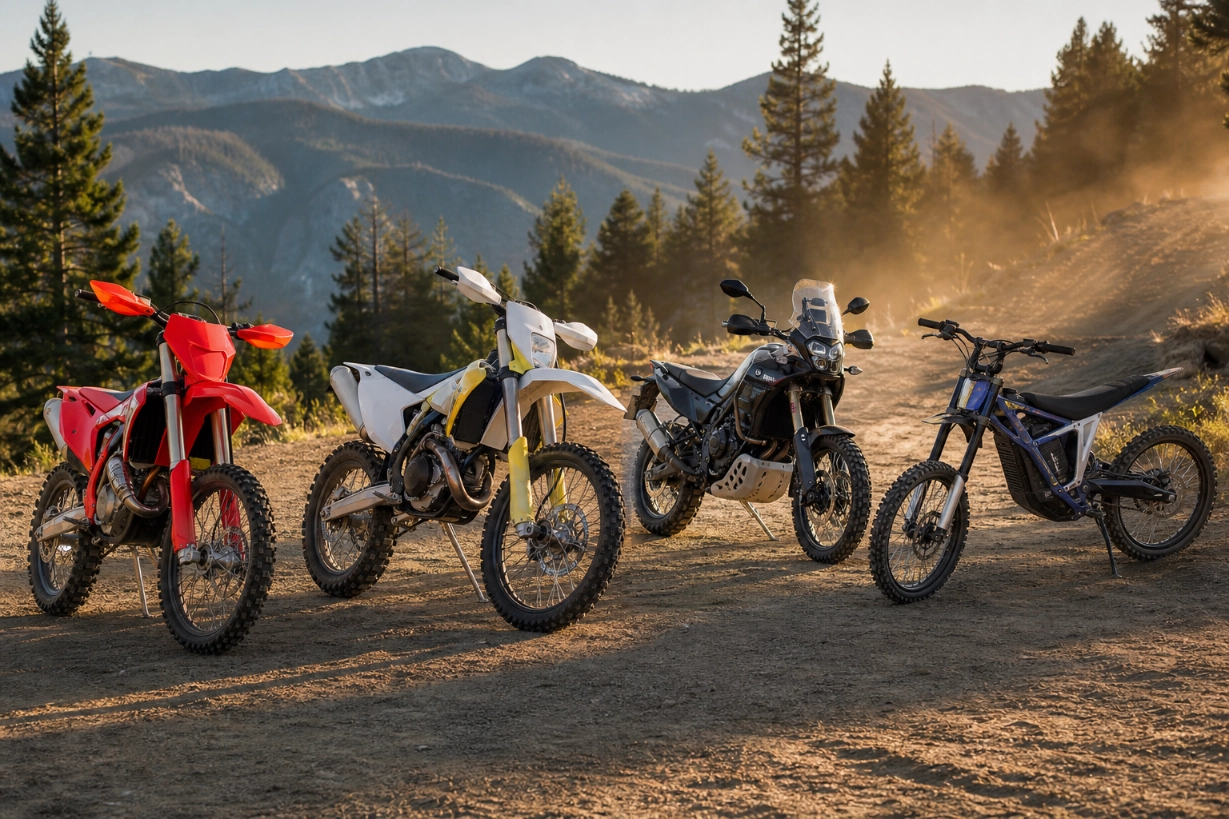
Quick Answer: What Are the Different Types of Dirt Bikes?
The 12 most common types of dirt bikes are:
- Motocross bikes — built for closed-track racing, jumps, and high-speed riding.
- Enduro bikes — designed for long-distance technical off-road riding.
- Trail bikes — beginner-friendly bikes for recreational off-road riding.
- Dual-sport bikes — street-legal dirt bikes for both pavement and trails.
- Adventure bikes — larger bikes for long-distance travel on roads, gravel, and light trails.
- Supermoto bikes — dirt-bike-style motorcycles set up mainly for pavement.
- Trials bikes — lightweight bikes for balance, control, and obstacle riding.
- Hill-climb bikes — specialized bikes for steep incline competitions.
- Flat-track bikes — bikes built for oval dirt-track racing.
- Pit bikes — small dirt bikes for casual riding, practice, and mini racing.
- Kids’ dirt bikes — smaller bikes designed for young riders.
- Electric dirt bikes — quiet, battery-powered dirt bikes with low maintenance.
For most beginners, the best choices are trail bikes, small dual-sport bikes, pit bikes, kids’ dirt bikes, or lower-powered electric dirt bikes. Motocross and high-performance enduro bikes are usually better for experienced riders.
Dirt Bike Types Compared at a Glance
| Dirt Bike Type | Best For | Typical Terrain | Beginner Friendly? | Street Legal? | Key Advantage | Main Trade-Off |
|---|---|---|---|---|---|---|
| Motocross Bike | Track racing, jumps, berms | Closed motocross tracks | No | Usually no | Lightweight, fast, aggressive | Harsh on trails and requires more maintenance |
| Enduro Bike | Technical off-road riding | Woods, rocks, mud, hills | Sometimes | Sometimes | Strong off-road capability | Taller, more powerful, and more expensive |
| Trail Bike | Recreational riding | Forest trails, fields, easy hills | Yes | Usually no | Smooth power and comfort | Not built for serious racing |
| Dual-Sport Bike | Road and trail use | Pavement, gravel, light trails | Yes, especially smaller models | Yes | One bike for commuting and dirt riding | Heavier than pure dirt bikes |
| Adventure Bike | Long-distance mixed-surface travel | Roads, gravel, mild off-road | Usually no | Yes | Comfort, fuel range, luggage capacity | Heavy in technical terrain |
| Supermoto Bike | Urban riding, kart tracks, pavement fun | Pavement and light dirt | Sometimes | Often | Sharp handling on roads | Limited off-road traction |
| Trials Bike | Balance and obstacle riding | Rocks, logs, trials courses | For patient learners | No | Extreme control at low speed | Not practical for normal trail riding |
| Hill-Climb Bike | Steep competition climbs | Sand, dirt, steep slopes | No | No | Maximum climbing traction | Very specialized |
| Flat-Track Bike | Oval dirt racing | Groomed oval tracks | No | No | High-speed sliding control | Not suitable for trails |
| Pit Bike | Practice, fun, mini racing | Backyards, pits, small tracks | Yes | Usually no | Affordable and easy to transport | Too small for full-size trail riding |
| Kids’ Dirt Bike | Youth learning | Easy dirt, private land | Yes | No | Sized for children | Must be matched carefully to age and height |
| Electric Dirt Bike | Quiet riding, low maintenance | Trails, practice areas, urban-edge riding | Often | Sometimes | Instant torque and low noise | Range and charging time limits |
Related 🔗:
Enduro vs. Motocross vs. Dirt Bike vs. Off-Road vs. Trial
Dirt Bike Riding: Master These 10 Expert Tips for Speed, Safety & Adventure
Motocross vs Supercross: What’s the Difference? (From an Amateur Rider’s Real Experience)
Dual Sport vs Adventure Motorcycles: Beginner’s Guide to Off-Road & Long-Distance Riding
What Makes a Dirt Bike Different From a Regular Motorcycle?
A dirt bike is a motorcycle designed mainly for off-road riding. Compared with a street motorcycle, a dirt bike usually has:
- Long-travel suspension for bumps, jumps, rocks, roots, and ruts
- Knobby tires for grip on dirt, mud, gravel, and sand
- High ground clearance for riding over obstacles
- A lightweight and narrow body for better control
- Lower gearing for off-road acceleration
- Minimal bodywork on race-focused models
- A riding position that allows the rider to stand easily
Not every dirt bike is street legal. In many places, a bike needs approved lights, mirrors, indicators, horn, emissions equipment, a license plate mount, and registration to be used on public roads. Always check your local laws before riding a dirt bike on pavement.
1. Motocross Bikes
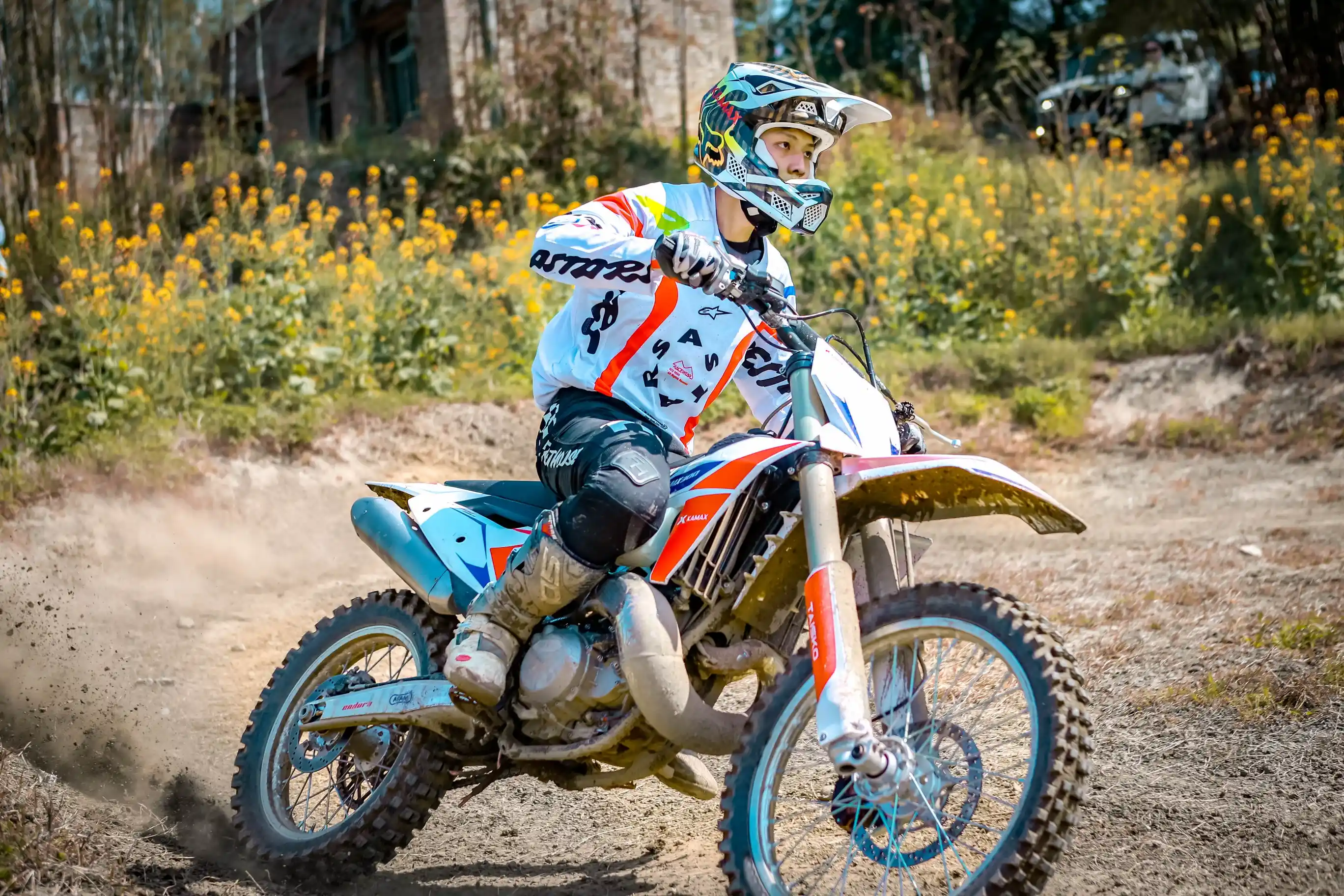
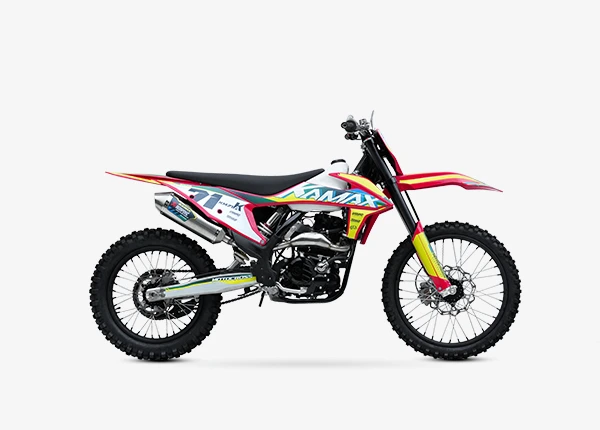
Motocross bikes, also called MX bikes, are built for closed-course racing. Their natural home is a motocross track with jumps, berms, whoops, sharp corners, and short high-intensity races.
Motocross bikes are designed for speed, acceleration, and aggressive riding. They are usually lightweight and powerful, with stiff suspension that can handle hard landings from jumps.
Best For
- Motocross racing
- Track practice
- Jumping
- Competitive riding
- Experienced riders who want maximum performance
Key Features
- Lightweight frame
- Long-travel suspension
- Aggressive engine tuning
- Close-ratio transmission
- Knobby tires for prepared dirt tracks
- No unnecessary street equipment
- Usually no headlight, mirrors, kickstand, or turn signals
Who Should Choose a Motocross Bike?
Choose a motocross bike if your main goal is riding or racing on motocross tracks. These bikes reward aggressive riding and precise technique.
However, motocross bikes are not usually the best choice for casual trail riders. Their suspension can feel harsh at low speed, their power can be abrupt, and their maintenance intervals can be shorter than trail bikes.
If you are a beginner, avoid buying a 450cc motocross bike just because it looks exciting. A smaller four-stroke trail bike or lower-displacement dirt bike is usually easier to learn on.
2. Enduro Bikes
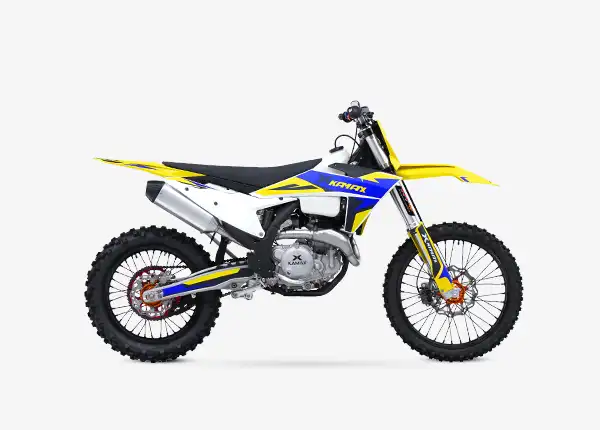
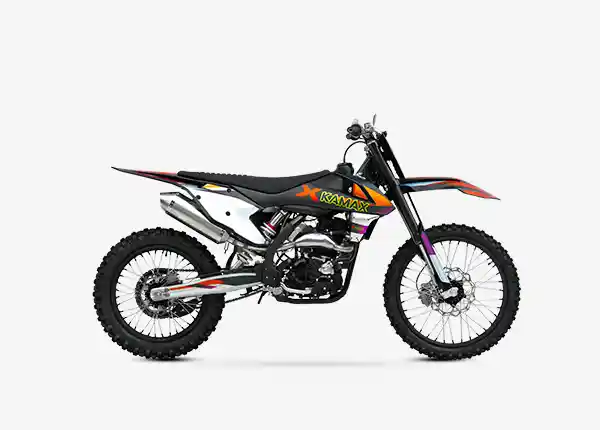
Enduro bikes are designed for long off-road rides, technical terrain, and endurance racing. They sit between motocross bikes and trail bikes. They are more capable and performance-focused than casual trail bikes, but usually more practical for natural terrain than pure motocross bikes.
Enduro bikes are built to handle rocks, roots, mud, hills, forests, and long-distance off-road routes. Some enduro bikes are also street legal, depending on the model and local laws.
Best For
- Technical trails
- Woods riding
- Rocks, roots, mud, and hills
- Long-distance off-road events
- Intermediate and advanced riders
- Riders who want serious off-road capability
Key Features
- Strong low-end and midrange power
- Suspension tuned for rough natural terrain
- Larger fuel tank than most motocross bikes
- Wider gear ratios
- Skid plate or hand guards on many models
- Lighting or kickstand on some models
- Street-legal equipment on certain versions
Who Should Choose an Enduro Bike?
Choose an enduro bike if you ride challenging terrain and need a bike that can handle slow technical sections as well as faster open trails.
Enduro bikes are excellent for intermediate and advanced riders. Some mild enduro models can work for confident beginners, but high-performance enduro bikes may be too tall, powerful, or expensive for a first dirt bike.
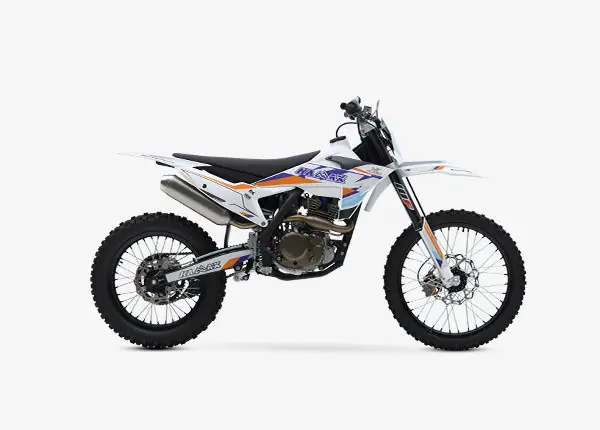
3. Trail Bikes
Trail bikes are one of the best choices for beginners and recreational riders. They are made for off-road fun, not professional racing.
A good trail bike is stable, predictable, comfortable, and easier to maintain. Trail bikes usually have smoother power delivery and softer suspension than motocross bikes, making them easier to control on natural terrain.
Best For
- Beginners
- Weekend trail riding
- Farm or private-land riding
- Forest paths
- Open fields
- Moderate dirt routes
- Riders who value comfort and reliability
Key Features
- Smooth, manageable power
- Softer suspension
- Lower seat height on many models
- Electric start on many modern bikes
- Durable engine design
- Longer maintenance intervals
- Comfortable riding position
Who Should Choose a Trail Bike?
Choose a trail bike if you are learning off-road riding or want a low-stress bike for casual adventures.
For many adults, a 125cc to 250cc four-stroke trail bike is easier to control than a race-tuned motocross bike. For smaller riders, seat height and weight matter as much as engine size.
If your goal is to explore trails, build confidence, and enjoy riding without racing pressure, a trail bike is usually the smartest starting point.
4. Dual-Sport Bikes
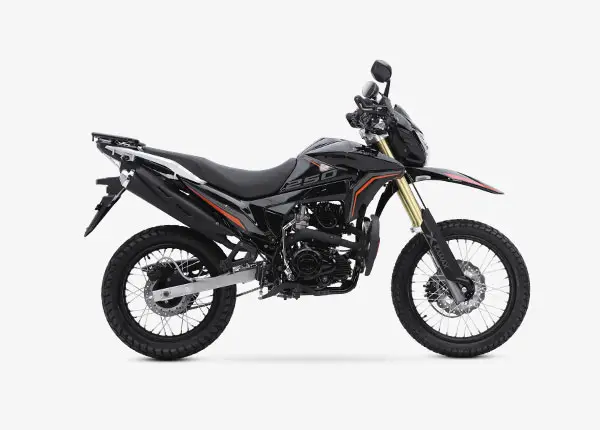
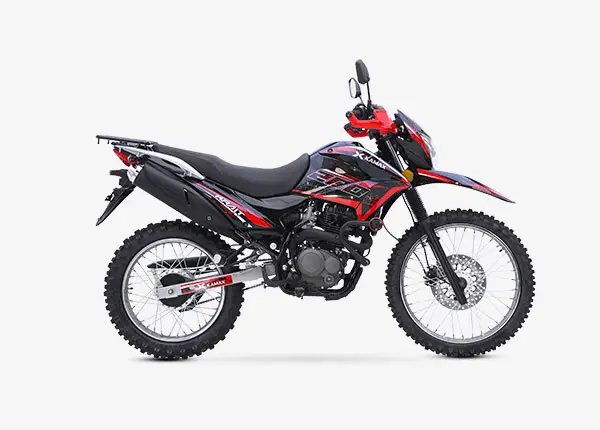
Dual-sport bikes are street-legal motorcycles that can also ride off-road. They are ideal for riders who want one bike for pavement and dirt.
A dual-sport bike can be used for commuting, gravel roads, light trails, and weekend exploring. Unlike pure dirt bikes, dual-sport bikes usually include lights, mirrors, turn signals, a horn, and a license plate mount.
Best For
- Riders who need legal road use
- Commuting
- Gravel roads
- Light to moderate trails
- Exploring without a truck or trailer
- Riders who want one bike for road and dirt
Key Features
- Headlight and taillight
- Turn signals
- Mirrors
- Horn
- License plate mount
- Road-friendly gearing
- Mixed-use tires
- Balanced suspension for road and trail riding
Who Should Choose a Dual-Sport Bike?
Choose a dual-sport bike if you want one motorcycle for both pavement and dirt.
Smaller dual-sport bikes are often beginner friendly. Larger dual-sport bikes can travel faster on roads but become heavier and harder to manage on technical trails.
If you need a street-legal dirt bike, dual-sport is usually the first category to consider.
5. Adventure Bikes
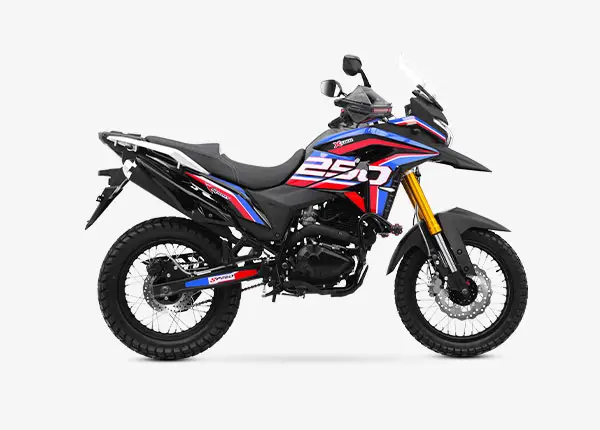
Adventure bikes are built for long-distance travel across mixed surfaces. They are not the same as lightweight dirt bikes, but they belong in the wider off-road motorcycle family because they can handle pavement, gravel, dirt roads, and mild trails.
Adventure bikes are larger, heavier, and more comfortable than most dirt bikes. They often include large fuel tanks, wind protection, luggage options, and advanced electronics.
Best For
- Long-distance touring
- Gravel travel
- Multi-day trips
- Carrying luggage
- Road and light off-road use
- Riders who want comfort and range
Key Features
- Larger fuel tank
- Wind protection
- Comfortable seat
- Upright riding position
- Luggage racks or panniers
- ABS and traction control on many models
- Larger engine
- Heavier chassis
Who Should Choose an Adventure Bike?
Choose an adventure bike if you want to ride far, carry gear, and mix pavement with unpaved roads.
Do not choose a heavy adventure bike as a substitute for a lightweight trail bike if your main goal is tight woods, deep mud, or steep technical climbs. Adventure bikes are great for distance, but they can be difficult to handle in technical off-road conditions.
6. Supermoto Bikes
Supermoto bikes combine dirt bike geometry with street tires and pavement-focused suspension. Many supermoto bikes are based on motocross or enduro platforms but use smaller road wheels, sticky tires, and stronger front brakes.
Supermoto bikes are quick, agile, and fun on pavement. They are popular for urban riding, tight roads, kart tracks, and stunt-style riding.
Best For
- Urban riding
- Tight paved roads
- Kart tracks
- Supermoto racing
- Riders who like dirt bike handling on pavement
Key Features
- 17-inch road wheels on many models
- Street tires
- Strong front brake
- Firmer suspension
- Upright dirt-bike riding position
- Lightweight handling
Who Should Choose a Supermoto Bike?
Choose a supermoto if you like the light feel of a dirt bike but ride mostly on pavement.
Supermoto bikes are fun and responsive, but they are not ideal for serious off-road riding because street tires have limited grip in dirt, mud, and sand.
7. Trials Bikes
Trials bikes are made for precision, balance, and control rather than speed. Riders use them to climb rocks, cross logs, hop over obstacles, and complete technical sections without putting a foot down.
Trials bikes are extremely lightweight and often have little or no seat. They are built for low-speed skill riding, not long-distance trail riding.
Best For
- Trials competition
- Balance training
- Low-speed technical control
- Obstacle riding
- Riders who enjoy skill-based challenges
Key Features
- Very light frame
- Minimal or no seat
- Small fuel tank
- Smooth throttle response
- Low gearing
- Suspension designed for obstacle impacts
- Excellent clutch control
Who Should Choose a Trials Bike?
Choose a trials bike if you want to develop exceptional balance, clutch control, and precision.
Trials bikes are not practical for normal trail riding because they are designed for short technical sections rather than long-distance comfort.
8. Hill-Climb Bikes
Hill-climb bikes are specialized machines designed to climb steep slopes as quickly as possible. Many are custom-built for competition.
These bikes often have powerful engines, extended swingarms, aggressive rear tires, and gearing designed for steep climbs.
Best For
- Hill-climb racing
- Sand hills
- Steep dirt inclines
- Specialized competition riders
Key Features
- High torque
- Extended swingarm
- Paddle or aggressive rear tire
- Modified gearing
- Strong engine tuning
- Competition-focused setup
Who Should Choose a Hill-Climb Bike?
Choose a hill-climb bike only if you participate in hill-climb events or need a custom machine for steep competition terrain.
These bikes are too specialized for normal trail riding, beginner riding, or general off-road use.
9. Flat-Track Bikes
Flat-track bikes are designed for oval dirt-track racing. Riders slide through corners at high speed on groomed dirt tracks.
Flat-track bikes look simple, but they require a very specific setup and riding style. They are built for speed, cornering, and controlled slides.
Best For
- Flat-track racing
- Oval dirt tracks
- Riders focused on sliding technique
- High-speed cornering
Key Features
- Low stance
- Track-specific tires
- Racing geometry
- Minimal bodywork
- Setup optimized for oval racing
- Powerful engine response
Who Should Choose a Flat-Track Bike?
Choose a flat-track bike if you plan to race on dirt ovals.
It is not the right choice for trail riding, jumping, motocross, or technical off-road routes.
10. Pit Bikes
Pit bikes are small dirt bikes originally used for moving around race pits. Today, they are popular for fun riding, backyard practice, mini racing, and learning basic control.
Pit bikes are smaller, lighter, and usually less powerful than full-size dirt bikes. They are easy to transport and often more affordable.
Best For
- Casual riding
- Young or smaller riders
- Practice areas
- Mini racing
- Backyard riding
- Affordable entry-level fun
Key Features
- Small frame
- Engine sizes often around 50cc to 150cc
- Low seat height
- Easy transport
- Lower purchase price
- Simple handling
Pit Bike vs Dirt Bike: What Is the Difference?
A pit bike is a smaller type of dirt bike. The main differences are size, power, suspension, and intended use.
A full-size dirt bike is better for trails, racing, and rough terrain. A pit bike is easier to store, easier to transport, and more approachable for casual riding or practice.
If you want serious trail performance, choose a full-size dirt bike. If you want affordable fun in a small area, a pit bike can be a great choice.
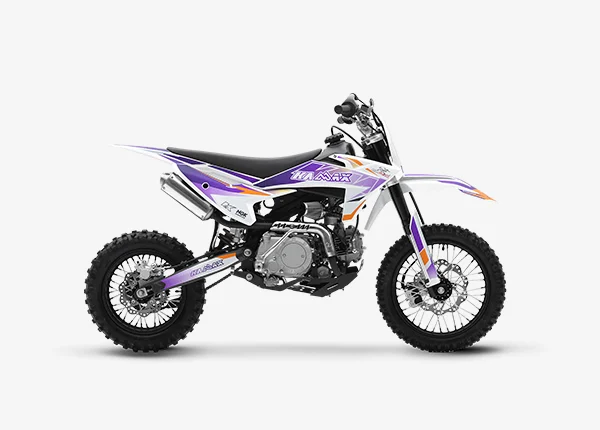
11. Kids’ Dirt Bikes
Kids’ dirt bikes are designed for young riders. They have smaller frames, lower power, lighter weight, and safety-focused features.
The goal of a kids’ dirt bike is to help children learn control without being overwhelmed by size, speed, or weight.
Best For
- Children learning to ride
- Family off-road riding
- Youth practice areas
- Entry-level motocross progression
- Young beginners
Key Features
- Smaller engine sizes
- Low seat height
- Lightweight frame
- Automatic or semi-automatic transmission on many models
- Throttle limiters on some models
- Electric start on many beginner bikes
- Electric options for quiet practice
How to Choose a Kids’ Dirt Bike
Match the bike to the child’s height, weight, maturity, and experience.
A child should be able to control the bike, reach the controls, stop safely, and understand basic safety instructions. Bigger is not better if the rider cannot turn, stop, balance, or pick up the bike.
For young riders, confidence and control are more important than speed.
12. Electric Dirt Bikes
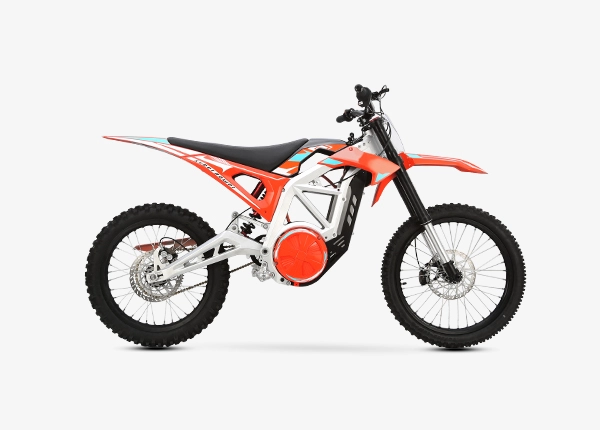
Electric dirt bikes are one of the fastest-growing categories in off-road riding. They use battery-powered motors instead of gasoline engines.
Electric dirt bikes offer instant torque, quiet operation, and less routine maintenance. Many models also include adjustable power modes, which can make them easier for beginners.
Best For
- Quiet practice areas
- Riders who want low maintenance
- Urban-edge off-road riding
- Beginners who want simple operation
- Riders who like instant torque
- Eco-conscious riders
Key Features
- Electric motor
- Battery pack
- Charger
- Instant power delivery
- No engine oil changes
- Fewer moving parts
- Low noise
- Adjustable power modes on many models
Who Should Choose an Electric Dirt Bike?
Choose an electric dirt bike if you want quiet riding, simple maintenance, and smooth power delivery.
Before buying, check real-world range, charging time, battery replacement cost, water resistance, parts support, and whether the bike is legal in your intended riding area.
Two-Stroke vs Four-Stroke vs Electric Dirt Bikes
Dirt bike type describes the bike’s purpose. Engine type describes how the bike makes power. Both matter when choosing the right bike.
| Power Type | Best For | Strengths | Trade-Offs |
|---|---|---|---|
| Two-Stroke Gas | Racing, lightweight performance, experienced riders | Light, powerful for its size, simple engine design | Snappier power, more noise, fuel/oil mix on many models |
| Four-Stroke Gas | Trail riding, motocross, enduro, beginners | Smooth power, broad torque, familiar fueling | Heavier and more complex engine maintenance |
| Electric | Quiet riding, low maintenance, instant torque | Simple operation, low noise, fewer routine service items | Range, charging time, and battery cost |
For beginners, a mild four-stroke trail bike or adjustable-power electric dirt bike is often easier to learn on than a high-performance two-stroke race bike.
How to Choose the Right Dirt Bike Type
Before comparing brands, prices, or engine sizes, ask these questions.
1. Where Will You Ride Most Often?
| Riding Location | Best Dirt Bike Type |
|---|---|
| Motocross track | Motocross bike |
| Woods, rocks, mud, and hills | Enduro bike |
| Easy to moderate trails | Trail bike |
| Pavement plus dirt | Dual-sport bike |
| Gravel roads and long trips | Adventure bike |
| Small practice area | Pit bike or electric dirt bike |
| Obstacle courses | Trials bike |
| Oval dirt tracks | Flat-track bike |
| Steep competition climbs | Hill-climb bike |
2. What Is Your Skill Level?
| Skill Level | Recommended Dirt Bike Type |
|---|---|
| Complete beginner | Trail bike, small dual-sport, pit bike, kids’ bike, or mild electric dirt bike |
| Intermediate rider | Trail bike, enduro bike, dual-sport, or smaller motocross bike |
| Advanced rider | Motocross, high-performance enduro, trials, flat-track, hill-climb, or competition electric bike |
3. Do You Need Street Legality?
If you need to ride on public roads, start with dual-sport bikes or street-legal enduro models.
Do not assume a headlight makes a dirt bike road legal. Laws vary by country, state, and region. A street-legal dirt bike may need lights, mirrors, turn signals, horn, emissions equipment, registration, and a license plate.
4. How Important Is Seat Height?
Seat height can determine whether a bike feels safe or intimidating.
A rider does not always need both feet flat on the ground, but beginners usually benefit from a bike they can balance and stop confidently. If a bike is too tall or too heavy, it can slow learning and reduce confidence.
5. How Much Maintenance Are You Ready For?
Race bikes usually require more frequent maintenance than casual trail bikes.
If you want more riding and less garage work, choose a simple trail bike, small dual-sport, or electric dirt bike with strong parts support.
6. What Is Your Real Budget?
Your real budget should include more than the bike itself.
You may also need:
- Helmet
- Goggles
- Gloves
- Boots
- Knee and elbow protection
- Chest or body protection
- Riding pants and jersey
- Maintenance tools
- Spare tubes or tire repair supplies
- Transport, registration, or riding-area fees
Safety gear is not optional. A cheaper bike with proper gear is a better decision than an expensive bike with poor protection.
Best Dirt Bike Type by Rider Goal
| Rider Goal | Best Dirt Bike Type |
|---|---|
| I am a complete beginner. | Trail bike, small dual-sport, pit bike, or beginner electric dirt bike |
| I want to race motocross. | Motocross bike |
| I want to ride woods and technical trails. | Enduro bike |
| I want one bike for commuting and dirt roads. | Dual-sport bike |
| I want to travel long distances with luggage. | Adventure bike |
| I want a small bike for fun and practice. | Pit bike |
| I am buying for a child. | Kids’ dirt bike matched to height and experience |
| I need quiet riding and low maintenance. | Electric dirt bike |
| I want to improve balance and control. | Trials bike |
| I want pavement performance with dirt bike feel. | Supermoto bike |
Common Mistakes When Choosing a Dirt Bike
Buying Too Much Engine
Many riders progress faster on a manageable bike. A powerful bike can build bad habits if the rider is tense, afraid of the throttle, or unable to control the weight.
For beginners, bigger is not always better. Smooth power and easy control are more important than maximum speed.
Choosing by Looks Instead of Terrain
A motocross bike looks exciting, but it may be the wrong tool for slow rocky trails. A heavy adventure bike looks capable, but it can be exhausting in tight woods.
Choose the bike for where you actually ride, not only for how it looks.
Ignoring Seat Height and Weight
Engine size gets attention, but seat height and weight affect confidence every time you stop, turn around, or pick up the bike.
A bike that fits your body will help you learn faster and ride more safely.
Forgetting Parts and Service Support
A low purchase price does not help if replacement parts, tires, plastics, batteries, or service knowledge are hard to find.
Before buying, check parts availability, dealer support, and common maintenance needs.
Assuming Every Dirt Bike Can Ride Anywhere
Public roads, national forests, private tracks, dunes, and local trails may all have different rules.
Check access, noise limits, spark arrestor requirements, registration rules, and local riding regulations before buying.
Final Recommendation
The best dirt bike type depends on your terrain, experience, and riding goal.
Choose a trail bike if you want the easiest all-around starting point.
Choose a motocross bike if you ride or race on closed MX tracks.
Choose an enduro bike if you want serious capability on technical natural terrain.
Choose a dual-sport bike if you need street legality.
Choose an adventure bike if long-distance travel matters more than lightweight trail handling.
Choose a pit bike or kids’ dirt bike for smaller riders and practice.
Choose an electric dirt bike if quiet operation and low maintenance are priorities.
If you are still unsure, start with the most forgiving bike that fits your body and your terrain. The right first dirt bike is the one that helps you ride more often, learn faster, and stay in control.
FAQ: Types of Dirt Bikes
What Is the Best Type of Dirt Bike for Beginners?
The best type of dirt bike for most beginners is a trail bike because it has smooth power, comfortable suspension, and predictable handling. Small dual-sport bikes, pit bikes, kids’ bikes, and lower-powered electric dirt bikes can also be good beginner choices depending on the rider’s age, height, and terrain.
What Is the Difference Between a Trail Bike and a Motocross Bike?
A trail bike is designed for comfort, control, and recreational riding on natural terrain. A motocross bike is designed for racing on closed tracks with jumps and sharp turns. Motocross bikes are usually lighter, faster, taller, and stiffer, while trail bikes are usually smoother and easier to ride at low speeds.
Is an Enduro Bike Street Legal?
Some enduro bikes are street legal, but many are not. Street legality depends on the model and local law. A street-legal bike typically needs approved lights, mirrors, turn signals, horn, emissions equipment, registration, and a license plate.
What Type of Dirt Bike Is Best for Trail Riding?
For casual trail riding, a trail bike is usually best. For more technical trails with rocks, roots, mud, and steep climbs, an enduro bike may be better. Beginners should usually choose a smoother, lower-powered trail bike before moving to a high-performance enduro bike.
Are Pit Bikes the Same as Dirt Bikes?
A pit bike is a smaller type of dirt bike. Pit bikes are usually less powerful, easier to transport, and better for casual riding or mini racing. Full-size dirt bikes are better for rough trails, motocross tracks, and longer rides.
Are Electric Dirt Bikes Good?
Electric dirt bikes can be excellent for riders who want quiet operation, instant torque, and low routine maintenance. The main things to check are battery range, charging time, replacement battery cost, parts availability, and local riding rules.
What Dirt Bikes Are Street Legal?
Dual-sport bikes are the most common street-legal dirt bike category. Some enduro and adventure bikes are also street legal. Pure motocross bikes, pit bikes, trials bikes, and most kids’ dirt bikes are usually not street legal from the factory.
What Size Dirt Bike Should I Get?
Choose size based on height, weight, experience, and terrain, not just engine displacement. Beginners usually do better with manageable power, reasonable seat height, and a bike they can control confidently.