About this Article
Why I’m Writing This (And Why My Perspective Is Different)
I’m not a pro racer. I don’t ride for a factory team, and I don’t pretend to be something I’m not.
I’m an amateur motocross rider who has spent years riding outdoor motocross tracks across the China, Russia,U.S., while also working professionally in the motorcycle industry.
That combination matters.
I’ve ridden tracks, adjusted suspension the wrong way, picked the wrong tires, gotten arm pump halfway through motos, and gone home sore enough to question my life choices. At the same time, my work in motorcycle manufacturing has forced me to understand why a bike behaves the way it does—not just how it feels.
When people search “what’s the difference between motocross and supercross”, most articles give textbook answers.
This one doesn’t.
This is based on what I’ve actually felt on a bike.
Quick Answer: What’s the Main Difference Between Motocross and Supercross?
According to the American Motorcyclist Association (AMA), motocross tracks are outdoor and vary widely in terrain, while supercross tracks are usually man-made stadium courses designed for technical precision.
Motocross is outdoor, natural-terrain racing that rewards endurance, adaptability, and smooth riding over long distances.
Supercross is indoor, stadium-based racing that demands precision, explosive power, and perfect timing on tightly packed, technical obstacles.
That’s the short version.The real difference only becomes clear once you ride them.
Before I even started riding motocross seriously, I spent time understanding how dirt bikes differ from true motocross machines. I broke that down in detail here → Enduro vs. Motocross vs. Dirt Bike vs. Off-Road vs. Trial
What Motocross Really Feels Like (From My Own Riding)
Motocross is unpredictable in the best—and worst—way.
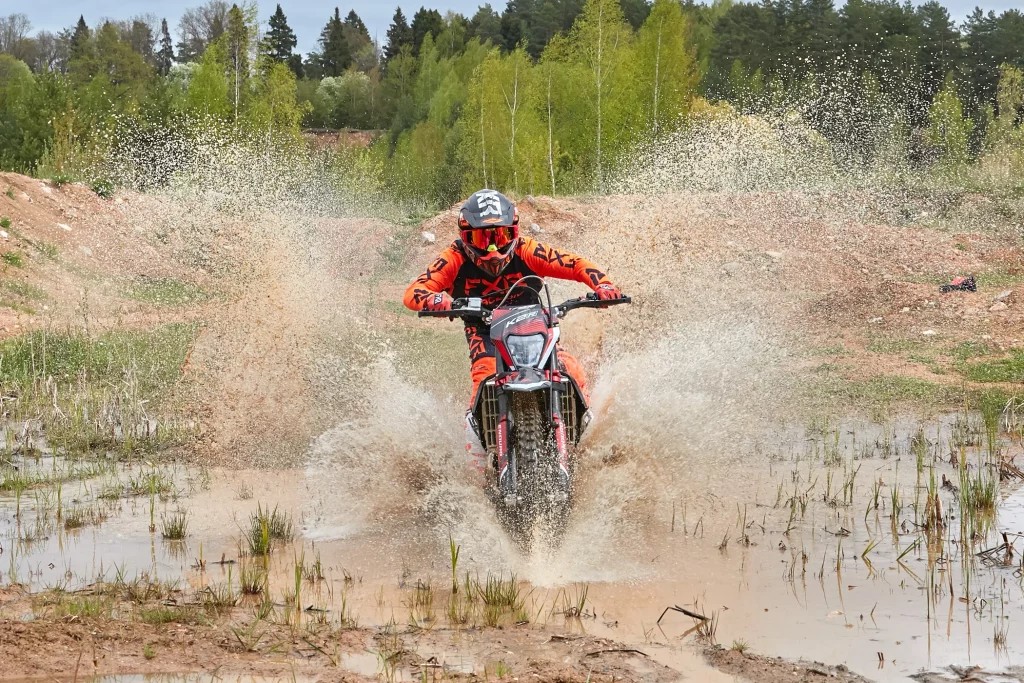
Every outdoor track I’ve ridden feels different. Soil changes, weather changes, ruts form where you didn’t expect them, and what worked last lap suddenly doesn’t work at all.
I still remember early on thinking, “I’ve got this line figured out.”
Two laps later, the same line was blown out, slick, and actively trying to throw me off the bike.
This footage represents my firsthand experience competing in a live motocross race under real track conditions. It comes from an outdoor motocross race on a partially man‑made course. While there are intentional jumps and technical sections, the competition is run in a natural outdoor setting with multiple laps around a motocross loop — typical of Motocross racing rather than stadium Supercross.
This video was recorded during an actual motocross race, capturing the real environment and atmosphere at the track. There were no controlled conditions—just a live race with changing soil, deepening ruts, and the pressure that comes with lining up on the gate.
You can see how the track deteriorates as the race goes on and how riders are forced to adapt lap by lap. This is what motocross really feels like outside of edited highlight clips.
What Caught Me Off Guard as an Amateur Rider
- Physical endurance: Long motos exposed my lack of conditioning fast
- Track evolution: Lines change constantly; you can’t ride on autopilot
- Suspension mistakes: Too stiff early on = fatigue and loss of traction
From experience, I learned that motocross rewards riders who stay smooth and patient. Over-riding the bike usually backfires. When I softened my suspension slightly and focused on momentum instead of aggression, my lap times actually improved.
That was a hard lesson—but a valuable one.
Supercross: Why It’s a Completely Different Skill Set
Even though I personally focus on motocross, I’ve spent time riding supercross-style tracks and studying them closely through my industry work.
Supercross is controlled chaos.
Everything is man-made. Every jump, rhythm lane, and whoop section is intentional. There’s very little forgiveness, especially for amateur riders.
What surprised me the most wasn’t the jumps—it was how mentally demanding it is.
What Makes Supercross So Difficult
- Tight spacing leaves no room for hesitation
- Rhythm sections punish poor timing instantly
- Mistakes compound over an entire lap
In motocross, you can sometimes recover from a bad corner. In supercross, one mistake often ruins the next three obstacles. That’s brutal.
From a setup perspective, bikes feel sharper, stiffer, and more nervous—but that’s necessary for fast transitions and short landings.
Motocross vs Supercross: Side-by-Side Comparison
| Feature | Motocross | Supercross |
|---|---|---|
| Track Location | Outdoor, natural terrain | Indoor stadium |
| Track Length | Longer | Shorter |
| Terrain | Dirt, sand, mud, ruts | Man-made dirt |
| Jumps | Big, flowing | Short, technical |
| Physical Demand | Endurance-focused | Explosive power |
| Riding Style | Smooth, adaptive | Precise, aggressive |
| Bike Setup | Softer suspension | Stiffer suspension |
This table explains the what.
Riding explains the why.
Are Motocross and Supercross Bikes Actually Different?
This is one of the most common questions I hear, and based on both my riding experience and my work in the motorcycle industry, the honest answer might surprise some people.
From a structural standpoint, motocross and supercross bikes are essentially the same machines. The frame, engine platform, and core components don’t magically change just because the race moves from an outdoor track to a stadium.
What does change—dramatically—is the setup.
When I ride outdoor motocross tracks, I prefer a slightly softer suspension setup that allows the bike to track through ruts and absorb long braking bumps without beating me up over a full moto. On supercross-style tracks, that same setup would feel vague and unpredictable. The suspension needs to be stiffer, rebound control tighter, and throttle response sharper.
In other words, it’s not a different bike—it’s the same bike tuned for a completely different environment.
If you want a concise overview from an industry team perspective, Kawasaki’s “Motocross vs. Supercross” video offers a practical summary of the disciplines and why setups and tactics typically diverge.
Bike Setup Differences I Learned Through Trial and Error
Because of my work in motorcycle manufacturing, I pay close attention to setup—but theory only gets you so far.
Motocross Setup (What Works for Me)
- Slightly softer suspension for traction and comfort
- Focus on stability over sharpness
- Tires with aggressive knobs for changing conditions
Early on, I ran my suspension too stiff because I thought it would make me faster. It didn’t. It just made me tired.
Supercross-Oriented Setup
- Stiffer suspension to handle quick landings
- Faster rebound control
- Emphasis on instant throttle response
Even small setup changes in supercross-style riding feel amplified. There’s no hiding mistakes.
Mistakes I Made (And Still See Other Riders Make)
I’ve made most of these myself.
- Overriding the bike early in a moto
- Ignoring track walk or inspection
- Chasing speed instead of consistency
One mistake I clearly remember: hitting jumps too aggressively when tired. That led to bad landings, arm pump, and mistakes that could’ve been avoided by backing off just a little.
Motocross taught me that consistency beats ego every time.



Which One Should You Start With? My Honest Opinion
If you’re an amateur rider like me, I honestly believe motocross is the better place to start.
Here’s why:
- It builds endurance
- It teaches terrain reading
- It’s more forgiving when you make mistakes
Supercross is incredible to watch and ride—but it demands a refined skill set that’s easier to develop after motocross fundamentals are solid.
That’s not theory. That’s experience.
Final Thoughts: Why Motocross vs Supercross Isn’t About “Better”
Motocross and supercross aren’t rivals. They’re different disciplines that reward different skills.
Motocross made me tougher, more patient, and more adaptable.
Supercross showed me how precise riding really needs to be.
As an amateur rider with industry experience, I’ve learned that improvement doesn’t come from copying pros—it comes from understanding your environment, your bike, and your limits.
Ride often. Make mistakes. Adjust. Repeat.
That’s how you actually get better.
Author
Experienced Off-Road Rider & Motorcycle Industry Professional
Amateur motocross rider with years of hands-on riding experience and professional involvement in motorcycle manufacturing, bike setup, and product development. Focused on real-world riding insights, not theory.