
Two-Stroke vs Four-Stroke Motorcycle Engines: The fundamental difference between two-stroke and four-stroke motorcycle engines lies in their combustion cycle design. A two-stroke engine completes a power cycle with every crankshaft revolution, typically delivering higher power density and more aggressive acceleration. In contrast, a four-stroke engine requires two crankshaft revolutions to complete a full combustion cycle, resulting in smoother power delivery, better fuel efficiency, and longer engine lifespan. This mechanical distinction ultimately shapes the unique riding characteristics and practical applications of each engine type.
Hello riders, Logan here. After years of riding everything from daily commuters to large adventure motorcycles, one of the most fascinating mechanical debates I constantly encounter is the comparison between two-stroke and four-stroke engines. This difference goes far beyond engineering design — it directly affects throttle response, maintenance costs, riding comfort, and emotional riding experience.
This guide combines real riding experience with mechanical engineering fundamentals to help riders understand which engine truly suits their needs.

Your Will Learn
Related Source:
Two-Valve vs Four-Valve Motorcycle Engines
Do Large-Displacement Motorcycles Really Use More Fuel?
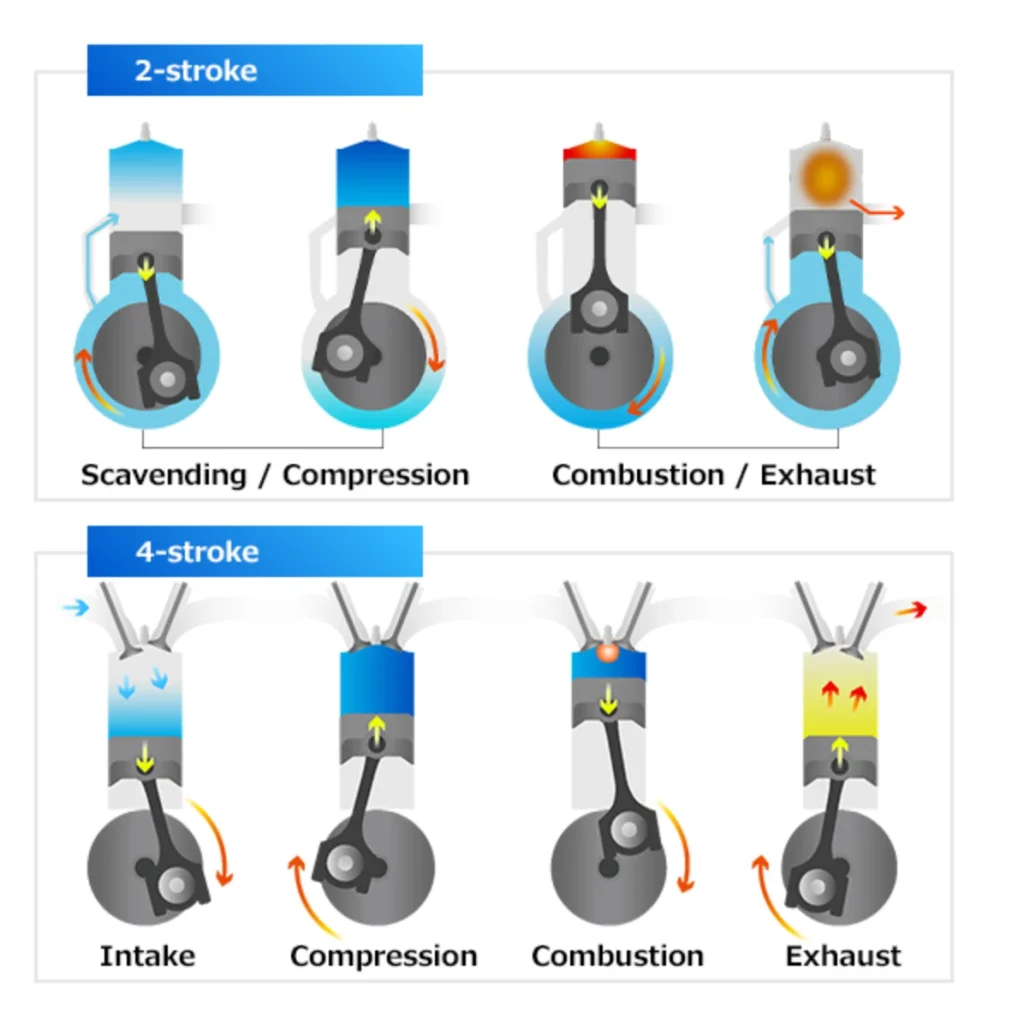
How Two-Stroke and Four-Stroke Engines Work
Four-Stroke Engine Operation
Four-stroke engines complete combustion through four piston movements:
- Intake
- Compression
- Power
- Exhaust
The crankshaft rotates twice per combustion cycle. This separation allows precise fuel management, improved thermal efficiency, and smoother engine operation. Riders typically experience refined throttle control and predictable torque delivery.
Two-Stroke Engine Operation
Two-stroke engines combine all combustion processes into two piston movements using intake, exhaust, and transfer ports built into the cylinder wall.
Because a power stroke occurs every crankshaft revolution, two-stroke engines produce significantly higher power relative to displacement. This engineering characteristic creates their famously aggressive performance behavior.
Performance Comparison: Explosive vs Linear Power Delivery
Two-Stroke Engine Performance
Two-stroke motorcycles deliver extremely rapid throttle response. When entering the powerband, acceleration can feel immediate and intense, especially in mid-to-high RPM ranges.
Advantages include:
- Exceptional power-to-weight ratio
- Lightweight engine construction
- Superior responsiveness in racing and off-road conditions
However, traditional carbureted two-stroke engines often produce limited torque at low RPM. Modern technologies such as electronically controlled exhaust valves and direct fuel injection have improved low-speed performance but have not completely eliminated the high-rev-focused power characteristic.
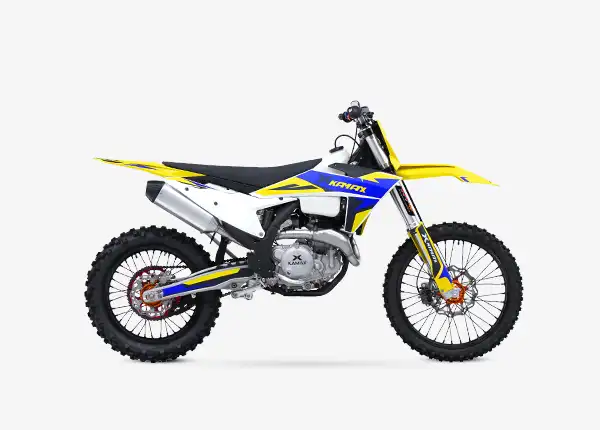
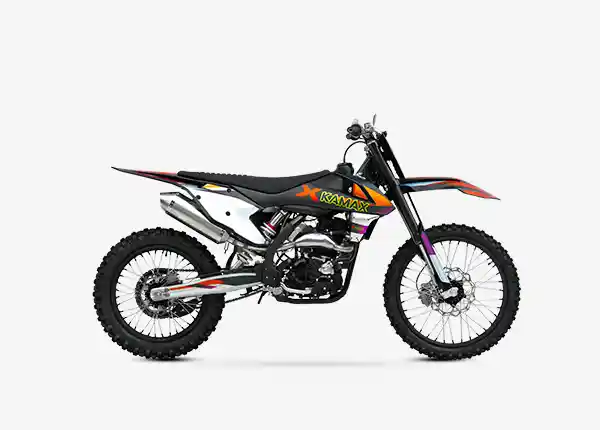
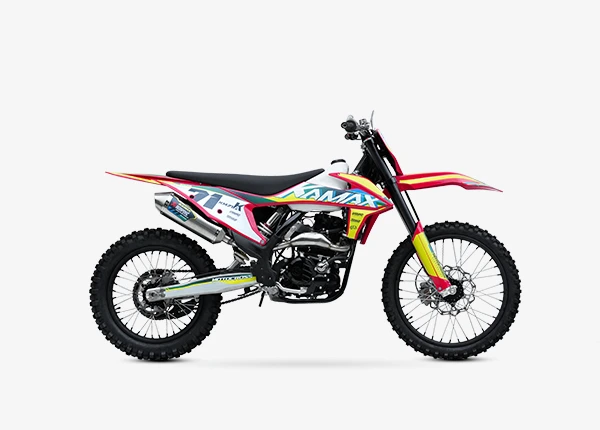
Four-Stroke Engine Performance
Four-stroke engines offer progressive and predictable torque distribution across the RPM range. Power builds smoothly, making them easier to control in urban traffic, highway cruising, and long-distance touring.
During one of my rides exceeding ten hours across multiple provinces in China, my four-stroke adventure motorcycle maintained consistent power output and thermal stability throughout the journey — a key advantage of four-stroke durability.
Fuel Efficiency Comparison
Two-stroke engines typically consume more fuel due to their scavenging process. During cylinder clearing, some unburned air-fuel mixture escapes through the exhaust port, reducing combustion efficiency.
Most two-stroke engines also rely on premixed lubrication, which increases operational costs and emissions output.
From personal experience:
- Large displacement two-stroke off-road motorcycle: 80–100 km per tank under aggressive riding
- KTM 1290 Super Adventure: Over 300 km per tank
- BMW R1250GS Adventure: Up to 500 km during highway touring
Increasing global emission regulations have also significantly reduced street-legal two-stroke availability in many countries.
Maintenance and Durability Comparison
Two-Stroke Engine Maintenance
Two-stroke engines are mechanically simpler and easier to service. Routine maintenance typically involves:
- Spark plug replacement
- Fuel system inspection
- Piston and ring monitoring
However, fuel-based lubrication leads to higher piston and cylinder wear rates, requiring more frequent internal component replacement.
Four-Stroke Engine Maintenance
Four-stroke engines include complex valve systems and timing mechanisms requiring:
- Scheduled oil changes
- Valve clearance adjustments
- Timing chain inspection
Although maintenance procedures are more complex, four-stroke engines generally offer significantly longer service life and improved long-term ownership value.
Engine Sound and Riding Emotion
Two-stroke motorcycles produce sharp, high-frequency exhaust tones widely appreciated by off-road riders and vintage motorcycle enthusiasts.
Four-stroke engines generate deeper, lower-frequency exhaust notes, offering a more refined acoustic experience better suited for urban environments and touring comfort.
Which Engine Type Should You Choose?
Two-Stroke Motorcycles Are Best For
- Motocross and off-road competition
- Riders seeking aggressive performance
- Lightweight performance enthusiasts
Four-Stroke Motorcycles Are Best For
- Daily commuting
- Long-distance touring
- Adventure riding
- Riders prioritizing durability and efficiency
For me personally, two-stroke motorcycles represent raw excitement and mechanical purity. Four-stroke engines represent reliability and versatility — qualities essential for real-world riding demands.
Motorcycling is deeply personal, and the best engine choice depends entirely on your riding philosophy.
Two-Stroke vs Four-Stroke Motorcycle Engines FAQ
Are two-stroke engines faster than four-stroke engines?
Two-stroke engines usually produce higher power relative to engine size, allowing faster acceleration. However, four-stroke engines often achieve higher top speeds due to better torque distribution and efficiency.
Why are two-stroke engines less fuel efficient?
Two-stroke engines lose some unburned fuel during the scavenging process, which reduces combustion efficiency and increases fuel consumption.
Do two-stroke engines require more maintenance?
Yes. Although mechanically simpler, two-stroke engines experience faster internal wear and typically require more frequent piston and ring replacements.
Why are most modern motorcycles four-stroke?
Four-stroke engines meet stricter emission regulations, offer better fuel efficiency, and provide longer engine lifespan, making them more practical for everyday use.