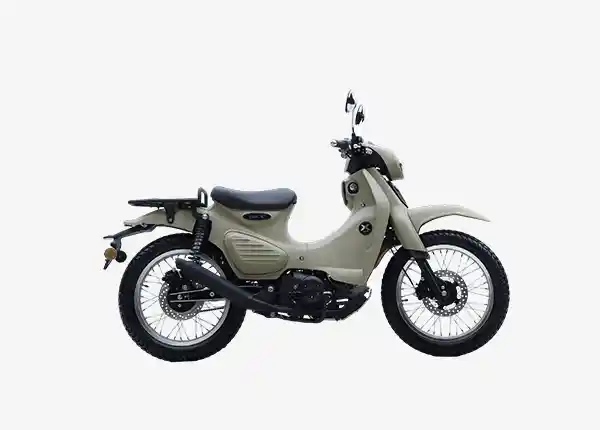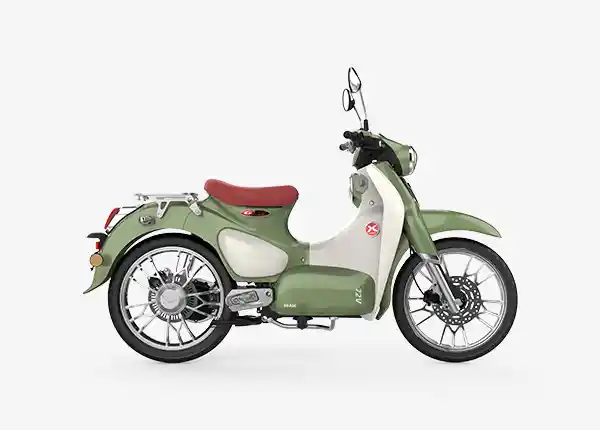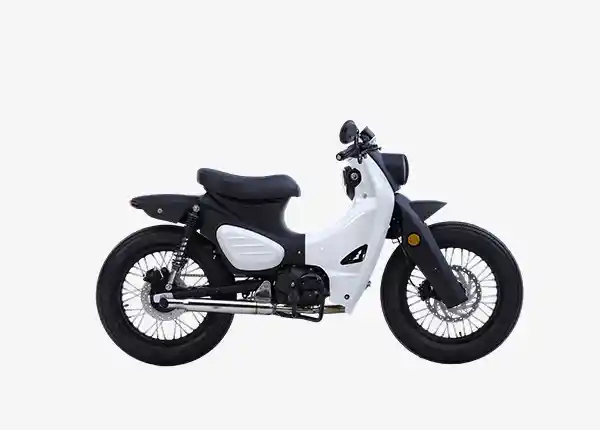
Southeast Asia is one of the world’s strongest motorcycle markets, boasting household ownership rates of over 80% in regions like Vietnam and Thailand. If you are an importer, distributor, or mobility company, OEM manufacturing can help you launch quickly—provided your product, compliance, and after-sales system are designed for local realities.
As a premium China motorcycle manufacturer in global motorcycle export, KAMAX has streamlined this process, providing the infrastructure needed to dominate the ASEAN market.
This guide explains how to build a profitable private-label brand using motorcycle OEM Southeast Asia networks to dominate the ASEAN market.
Why Southeast Asia Is Attractive for Private-Label Motorcycle Brands
Motorcycles are daily transportation, not occasional lifestyle purchases. That creates steady volume opportunities in:
- Urban commuting (110cc–150cc scooter and underbone segments)
- Last-mile delivery and e-commerce fleets (Grab/Gojek-ready specs)
- Rural mobility and utility use (High ground clearance models)
- The emerging Electric Vehicle (EV) transition for green logistics
Buyers in this region are very practical: fuel economy, high resale value, durability, and ease of repair at local workshops matter more than marketing slogans.
Segment by Country: The “Big Three” Dynamics
A common mistake is treating Southeast Asia as one uniform market. In reality, regulatory environments and consumer preferences vary significantly:
- Vietnam: Dominated by underbones; high demand for fuel efficiency.
- Indonesia: Massive market for automatic scooters; complex local content requirements (TKDN).
- Thailand: High standards for finish quality and strict TISI certification.
Before selecting an OEM platform, map your strategy based on local tax/tariff structures (Form D/E) and registration requirements. Your first win should come from one focused market cluster.
Choose Models Built for Tropical Operating Conditions
Your OEM product must survive monsoon flooding, 40°C+ heat, and mixed road quality. Prioritize:
- Optimized Cooling Systems: Essential for engine longevity in heavy stop-start traffic.
- Anti-Corrosion Coating: Critical for coastal markets (Philippines/Indonesia) to prevent frame rust.
- Waterproof Electricals: High-grade wiring harnesses to prevent failure during heavy tropical downpours.
- Suspension Tuning: Stiffened for “Pillion + Cargo” heavy-load scenarios common in the region.
Use the Right OEM Cooperation Model
- White Label: Fast launch, low cost; best for initial market pilot testing.
- Semi-Custom (Recommended): Existing platform with custom ECU tuning, local tire brands, and branded aesthetics. This balances cost with market differentiation.
- Full Custom: Strong brand uniqueness; highest investment and Minimum Order Quantity (MOQ).
For most ASEAN distributors, semi-custom OEM is the most practical model to ensure local market-fit.
Build Landed Cost Around ASEAN Reality
FOB price is only the beginning. Your margin depends on the full operating cost from your motorcycle OEM Southeast Asia supplier.That’s the full landed and operating cost:
- Ex-factory/FOB unit cost
- Compliance and Testing fees (Euro 4/5 or local standards)
- Freight, insurance, and port handling charges
- Dealer incentives and channel margins
- Warranty reserve (budgeting 2-3% for initial quality buffers)
Lock Homologation and Documentation Early
In Southeast Asia, bureaucracy is often a bigger bottleneck than production. Ensure your OEM partner provides:
- ISO 9001 and WMI (World Manufacturer Identifier) certificates.
- Certificate of Origin (CO) for ATIGA tax exemptions.
- Technical Construction Files (TCF) for safety and emissions registration.
- VIN/engine traceability data.
Contract for Quality and Service, Not Only Price
Your OEM agreement must be enforceable. Key terms to include:
- Detailed technical specification annex (BOM control)
- Approved component list (preventing unauthorized sub-supplier swaps)
- Inspection standards before shipment
- Spare parts support commitment (10-15% initial stock recommended)
Decide CBU vs. SKD/CKD by Country Economics
- CBU (Completely Built Up): Fastest launch; simpler operations but higher import duties.
- SKD/CKD (Knocked Down): Potential for significant tax optimization in markets like Indonesia and Vietnam. This should be run as a financial model, not just a procurement preference.
KAMAX provides flexible supply chain solutions. Whether you need CBU for a fast launch or CKD kits to set up a local assembly plant in Indonesia or Vietnam, our logistics team handles the complexity of “Knocked Down” packaging to ensure zero damage during transit.
Related Source: Motorcycle CKD vs SKD vs CBU Explained | China Motorcycle Factory Guide
Win Dealer Confidence with After-Sales Discipline
In Southeast Asia, a bike sells once on price, but it only sells repeatedly if the service works. Before your first bulk shipment:
- Establish a fast-moving spare parts catalog.
- Provide localized service manuals and technician training.
- Create a structured warranty claim workflow to support local dealers.
Launch with Pilot Markets, Then Scale
Recommended expansion path:
- Pilot with selected high-quality dealers in one core country.
- Track real-world failure modes and refine the BOM/specs.
- Validate consistency across multiple shipments.
- Expand regionally once the operational system is proven.
Conclusion: Execution Over Ideation
Building a motorcycle brand in Southeast Asia is highly achievable for B2B companies—but success depends on localized execution. The winners are not those with the lowest purchase price, but those with the best supply chain reliability, compliance readiness, and dealer support discipline.
Are you planning your entry into the ASEAN market? [Contact Us] for a professional OEM feasibility study and compliance audit.
FAQ (Southeast Asia Focus)
What engine size is most scalable?
125cc-150cc is the “sweet spot” for balancing power and tax brackets across most ASEAN markets.
Is white-label enough?
It works for testing, but long-term competitiveness requires semi-custom localization and strong after-sales support.
What about Electric Motorcycles?
The EV shift is accelerating due to government subsidies in Thailand and Indonesia; now is the time to explore EV OEM platforms.