When people talk about electric motorcycles, they often start with battery capacity or top speed. In real-world manufacturing and daily use, however, the motor is what riders feel first.
From the moment a rider twists the throttle, torque defines how confident the motorcycle feels, how smoothly it moves through traffic, and how reliable it remains after thousands of kilometers. For OEM buyers, the motor also defines something less visible but equally important: warranty risk, customer satisfaction, and long-term brand reputation.
Over the years, we have seen many electric motorcycle projects struggle—not because the concept was wrong, but because the motor was selected based on peak numbers rather than real operating conditions.
This article explains how to choose a high-torque BLDC motor from a practical, manufacturer-level perspective. It is written for OEM buyers, commercial clients, and serious motorcycle enthusiasts who want to understand how torque, system design, and real-world usage come together in a successful electric motorcycle.
About this Article
What a BLDC Motor Really Means in Motorcycle Applications
BLDC (Brushless Direct Current) motors have become the industry standard for electric motorcycles, and for good reason. Compared with brushed motors, they eliminate mechanical wear points, improve efficiency, and allow much finer torque control through modern motor controllers.

But in motorcycle applications, the advantage of a BLDC motor is not theoretical efficiency. It is control.
A well-matched BLDC motor allows engineers to shape torque delivery—soft at low throttle, strong under load, and predictable across the entire speed range. This is what separates a motorcycle that feels “electric but natural” from one that feels abrupt or underpowered.
Why High Torque Matters More Than Peak Power
Torque in Daily Riding
In city traffic, electric motorcycles rarely operate near their maximum speed. Instead, they repeatedly accelerate from low speed, carry varying loads, and deal with uneven road conditions.
In these situations, torque determines:
- How easily the motorcycle moves off the line
- How stable it feels with a passenger
- How confidently it climbs ramps and hills
- How much throttle modulation the rider needs
This is why two motorcycles with similar rated power can feel completely different on the road.
The Problem with Peak Power Marketing
Peak power figures look attractive in brochures, but they often represent conditions that occur only briefly. From an OEM standpoint, designing around peak power alone can lead to:
- Thermal overload during continuous use
- Reduced efficiency in normal riding
- Inconsistent performance across production units
A high-torque BLDC motor with strong continuous torque almost always delivers better real-world performance than a motor optimized purely for peak output.
Key Motor Parameters OEM Buyers Should Focus On
Continuous Torque vs Peak Torque
Peak torque is easy to advertise. Continuous torque is harder to engineer—and far more important.
For commercial electric motorcycles, especially commuter and utility models, continuous torque defines:
- Long-term reliability
- Thermal stability
- Consistent customer experience
OEM buyers should always request continuous torque data and understand under what conditions it is measured.
Motor Speed, KV Value, and Reduction Strategy
Lower KV motors generally favor torque and control, while higher KV motors favor speed. In practice, this means choosing between:
- Direct-drive hub motors for simplicity
- Hub motors with internal reduction for higher torque density
- Mid-drive systems where torque is multiplied through gearing
Each approach involves trade-offs in efficiency, noise, maintenance, and packaging. There is no universal “best” solution—only the right solution for a specific motorcycle.
System Matching: Motor, Controller, and Battery
One of the most common mistakes in electric motorcycle projects is treating the motor as a standalone component.
In reality:
- Controller current limits define usable torque
- Battery voltage defines operating speed range
- Thermal strategies must consider the entire drivetrain
A well-integrated system always outperforms a collection of high-spec components that are not designed to work together.
Thermal Management: The Silent Performance Limiter
Heat is the natural enemy of electric motors. Inadequate thermal design leads to automatic derating, reduced torque, and eventually premature failure.
From a manufacturing perspective, good thermal design includes:
- Efficient heat transfer paths
- Conservative continuous ratings
- Real-world testing under load
Motors that perform well on test benches do not always perform well in dense urban traffic or hot climates.
Choosing the Right Motor Size: A Practical Approach
Instead of starting with power figures, experienced OEM teams start with use cases:
- Typical payload
- Riding environment
- Desired acceleration feel
- Duty cycle
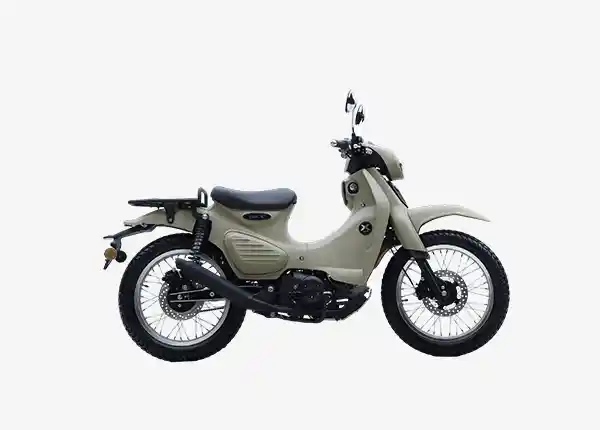
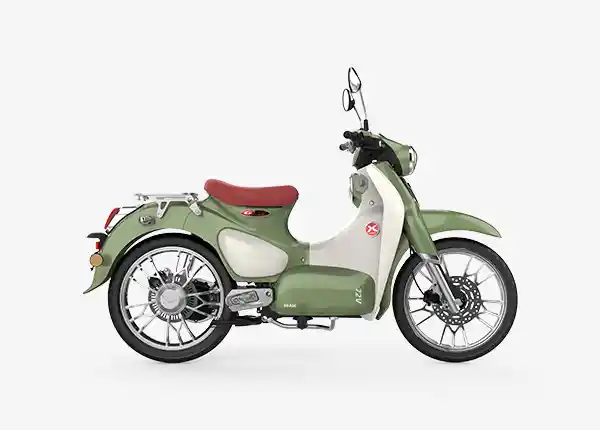
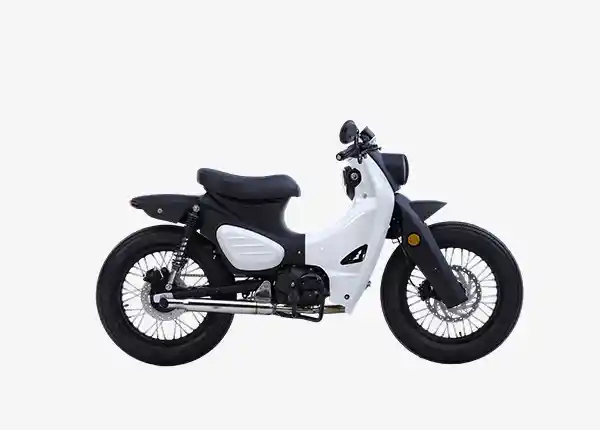
For urban commuter motorcycles, especially Cub-style platforms, torque at low to medium speed is almost always the primary requirement. Oversizing the motor for top speed rarely improves customer satisfaction.
OEM Considerations Beyond Specifications
Production Consistency
For OEM buyers, consistency between production batches matters as much as raw performance. Small variations in motor characteristics can affect throttle tuning and ride feel.
Customization and Integration
Most OEM projects require some level of customization:
- Mounting geometry
- Wiring layout
- Waterproofing
- Noise control
A supplier’s engineering support capability often determines how smoothly a project moves from prototype to mass production.
Real-World Example: Torque-Oriented Design in Electric Cub Motorcycles
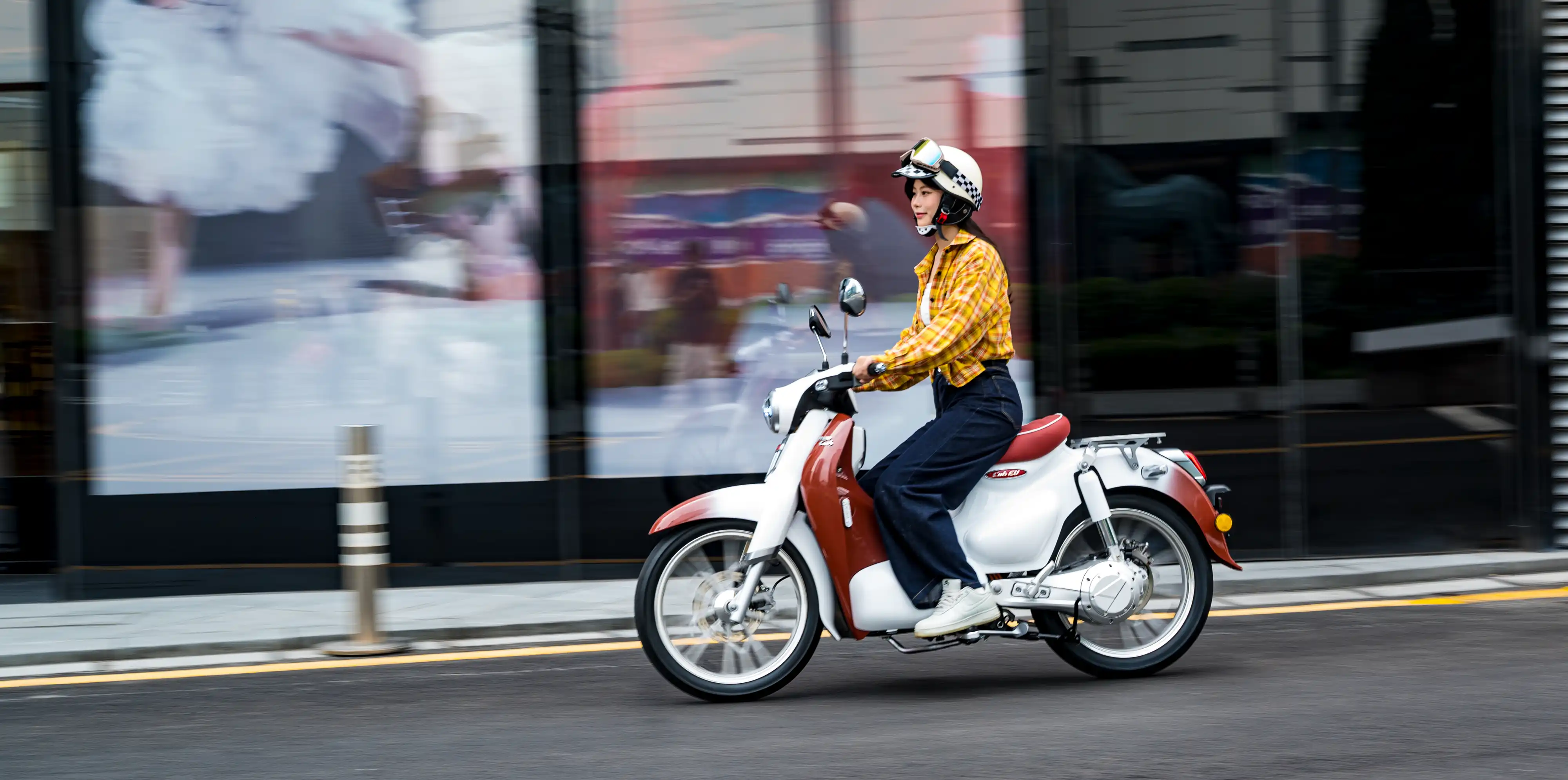
Cub-style motorcycles are designed for practicality. They are used daily, often by riders who value comfort, reliability, and ease of use more than aggressive performance.
Electric Cub motorcycles, such as the KAMAX Cub EV, are engineered with this reality in mind. Rather than chasing extreme specifications, the drivetrain focuses on:
- Strong, predictable torque delivery
- Smooth throttle response
- Efficient operation in urban conditions
This approach reflects a broader lesson in electric motorcycle design: success comes from matching motor characteristics to real riding behavior, not marketing numbers.
Common Mistakes OEM Buyers Should Avoid
- Selecting motors based on peak power alone
- Ignoring continuous thermal limits
- Underestimating system integration challenges
- Choosing suppliers without long-term support capability
These mistakes often appear only after a product reaches the market—when they are most expensive to fix.
Final Checklist Before Selecting a High-Torque BLDC Motor
Before committing to a motor choice, OEM buyers should confirm:
- Continuous torque under real conditions
- Thermal stability at target duty cycles
- Compatibility with controller and battery
- Supplier engineering and production capability
Conclusion: Torque Is a Long-Term Decision
In electric motorcycles, torque defines everyday usability. A carefully selected high-torque BLDC motor improves ride quality, reliability, and customer satisfaction—especially in commuter and commercial applications.
For OEM projects, the best motor is not the one with the highest number on paper, but the one that performs consistently, integrates smoothly, and supports the intended use case over years of operation.
FAQ
Why is torque more important than power in electric motorcycles?
Torque determines acceleration, load handling, and real-world usability, especially in urban riding where motorcycles rarely operate at maximum speed.
What is continuous torque in a BLDC motor?
Continuous torque is the amount of torque a motor can deliver over long periods without overheating or performance degradation.
Are hub motors suitable for electric motorcycles?
Yes. Hub motors are widely used in commuter and Cub-style electric motorcycles due to their simplicity, reliability, and good low-speed torque characteristics.
How do OEM buyers evaluate BLDC motor reliability?
OEM buyers focus on thermal performance, production consistency, real-world testing data, and the supplier’s engineering support capability.