
A motorcycle sample order, trial order and bulk order are not simply three different purchase quantities.
Each stage should answer a different business question:
- A sample order confirms whether the motorcycle is suitable for the target market.
- A trial order tests whether the buyer and factory can complete a real commercial shipment with the agreed specifications, packing and documents.
- A bulk order begins when the product and order process are stable enough to be managed repeatedly.
Many first-order problems begin because order volume increases before the previous stage has been completed properly.
The cause is not always fraud or poor manufacturing. More often, the order becomes too complicated too early: too many models, unclear options, inconsistent product names, incomplete spare-parts planning or packing decisions made just before loading.
Scale order volume only as fast as product approval, document control and after-sales readiness can keep up.
A safer purchasing path gives every order a clear purpose. The buyer moves forward only after the current stage has answered the questions it was designed to test.
Quick Answer
A motorcycle sample order should confirm product and market fit. A trial order should confirm whether the factory can produce, pack, document and ship a controlled commercial order. A bulk order should begin only after the specification, model mix, commercial terms, spare-parts plan and shipment-release process have become stable.
About the Article
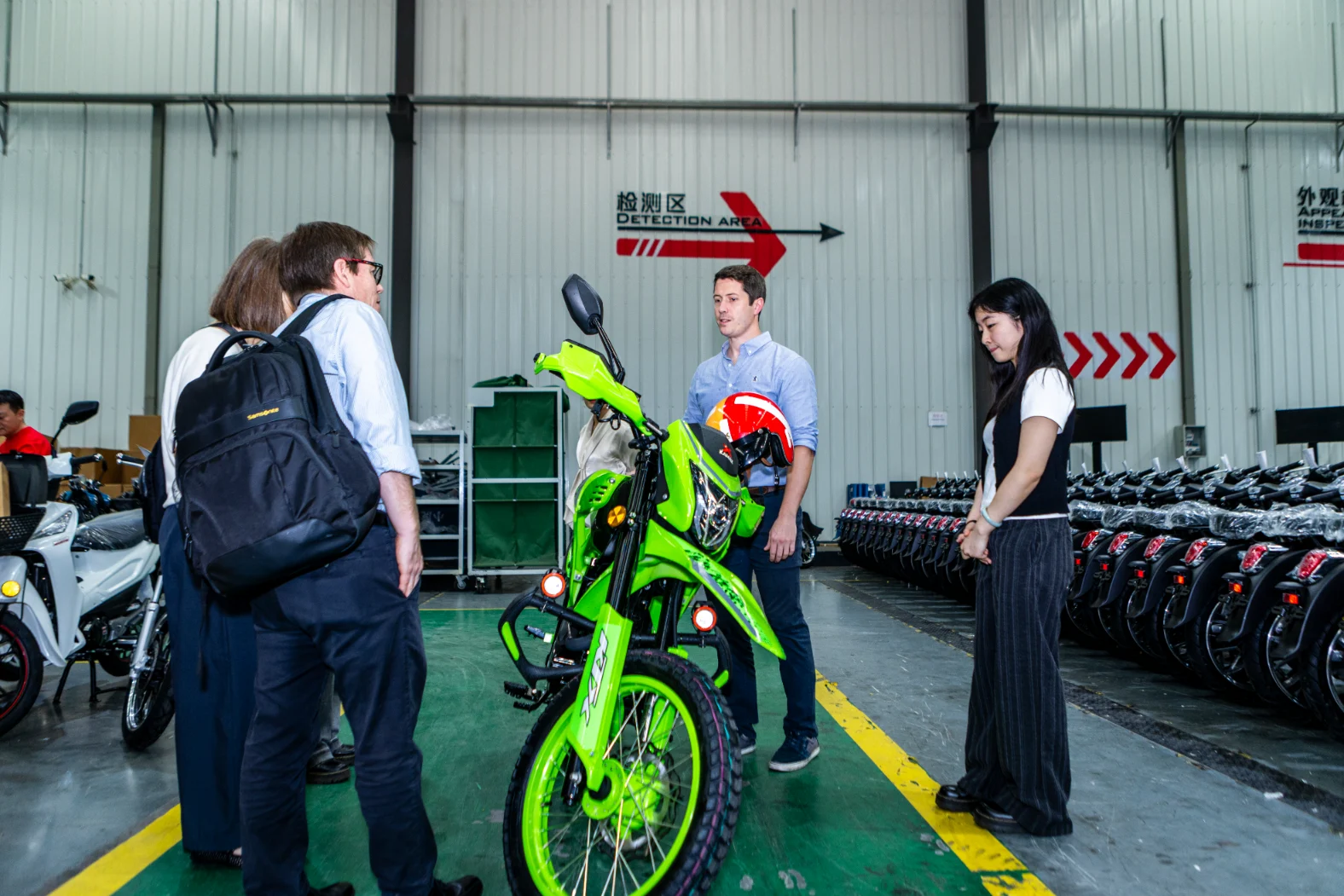
Sample vs Trial vs Bulk Motorcycle Orders
| Order Stage | Main Buyer Question | What It Should Confirm | What It Cannot Fully Prove |
|---|---|---|---|
| Sample order | Is this motorcycle suitable for our market? | Product positioning, riding experience, visible quality and basic specification alignment | Production consistency, container packing and repeatable full-order execution |
| Trial order | Can this factory execute a controlled commercial order? | Final specification, communication, packing, documents, spare parts and exception handling | Whether a wider or more complex order can scale without additional controls |
| Bulk order | Can both sides manage repeat orders with confidence? | Stable specifications, commercial terms, document standards, support scope and shipment-release procedures | That higher volume will correct problems left unresolved during earlier stages |
Not every importer has to follow exactly the same path.
An experienced distributor may already understand the product platform, have its own quality-control team or complete an on-site factory audit before ordering. However, skipping a stage should be based on reliable evidence—not simply on the desire to save time.
What a Motorcycle Sample Order Should Test
The purpose of a motorcycle sample order is to decide whether the product deserves further investment.
A sample helps the buyer evaluate the motorcycle’s design, riding position, engine size, equipment and commercial positioning. It can also provide early signs of how clearly the supplier communicates and whether the requested version has been understood correctly.
However, one or two motorcycles cannot prove consistency across an entire production batch or container shipment.
Importers reviewing the broader sourcing process can begin with our guide on how to import motorcycles from China.
Start With Product and Market Fit
Before focusing on minor specification details, confirm that the motorcycle suits the intended customer, price segment and use case.
Review:
- Motorcycle category and market positioning
- Engine displacement and configuration
- Rider ergonomics and seat height
- Intended city, commercial, road or off-road use
- EFI or carburetor configuration
- Transmission type
- Brake configuration
- Wheel and tire specifications
- Passenger and load requirements
- Local expectations for styling and equipment
A motorcycle can be technically acceptable but commercially unsuitable.
For example, the engine may perform well while the seat height, transmission type, tire setup or appearance does not fit the importer’s dealer network. A positive test ride should support the market decision, not replace it.
Inspect the Motorcycle Systematically
A sample should not be approved on appearance alone.
A practical inspection should cover:
- Cold starting and idle stability
- Throttle response
- Gear shifting and clutch operation
- Front and rear brake response
- Steering movement and alignment
- Front and rear suspension operation
- Tire size and wheel type
- Headlight, turn signals, brake light and horn
- Instrument functions
- Battery condition
- EFI or carburetor setup
- Paint finish and panel alignment
- Visible welding quality
- Fastener installation
- Exhaust mounting
- Oil or fuel leakage
- VIN plate, model label and engine identification
- Included tools and accessories
Record the findings in writing and separate them into three groups:
- Accepted as supplied
- Requires clarification
- Must be corrected before a trial order
This creates a usable approval record and prevents later disagreement over whether an item was standard, optional or requested only after the sample arrived.
Confirm the Sample Order Scope
Before payment, confirm:
- Exact model and version
- Standard and optional equipment
- Color and graphics
- Included accessories
- Sample price
- Freight responsibility
- Payment terms
- Packing method
- Estimated completion date
- Any difference between the sample and future production units
Keep the sample order focused. Testing one or two serious product directions usually produces better information than ordering several unrelated models without a clear comparison plan.
Buyers evaluating both the product and supplier can also use our motorcycle factory audit checklist.
What a Motorcycle Trial Order Should Prove
A trial order is not simply a larger sample.
Its purpose is to test whether an approved motorcycle can be converted into a controlled commercial shipment. Specifications, quantities, packing, documents, spare parts and shipment timing now have to work together.
A successful trial order should make the next purchase easier to execute. It should not create a new round of uncertainty.
The Approved Specification Must Stay Stable
The approved engine, brakes, wheels, tires, colors, graphics and accessories should remain consistent throughout the order.
Any proposed change should be identified before implementation, explained clearly and recorded in the current order files.
Verbal confirmation is not enough when several versions of the same model are available. The quotation, approved specification sheet and production records should all describe the same motorcycle.
The Commercial Scope Must Be Clear
The trial order should confirm exactly what the quotation includes and excludes.
Incoterms define important responsibilities, costs and risks between buyers and sellers. However, FOB, CIF or another Incoterm does not automatically define:
- Motorcycle options
- Manuals
- Labels
- Carton marks
- Accessories
- Spare parts
- Inspection records
- Shipment photographs
- Destination-market documents
These items still need to be confirmed in the quotation, proforma invoice or supporting order files.
For a deeper review of commercial terms, see our guide to motorcycle MOQ, lead time and payment terms.
Model Names and Documents Must Match
Model names, codes, specifications and quantity splits should remain consistent across:
- Purchase order
- Proforma invoice
- Commercial invoice
- Packing list
- Product labels
- Carton marks
- Spare-parts list
- Inspection records
A small naming difference may look harmless during production but create customs, receiving, inventory or warranty problems after arrival.
The factory, freight forwarder and importer also have different responsibilities. Our motorcycle import document responsibility guide explains how those roles should be divided before shipment.
Packing Must Make Sense at the Destination
The importer should understand how motorcycles, accessories and spare parts will be packed and identified.
For SKD and CKD projects, the receiving or assembly team should be able to understand:
- Carton grouping
- Part identification
- Assembly sequence
- Hardware packaging
- Model separation
- Accessory placement
- Shortage reporting
Packing should be reviewed from the receiving team’s perspective. A carton system that appears clear inside the factory may still cause confusion in the importer’s warehouse.
The IMO/ILO/UNECE CTU Code provides international guidance on packing and securing cargo transport units. The World Shipping Council’s container-integrity guidance also includes practical packing and container checklists.
These resources do not replace a motorcycle-specific packing plan, but they reinforce an important rule: cargo protection and identification must be planned before loading, not corrected after arrival.
Spare Parts Must Move With the Product Plan
A trial order should include a realistic review of after-sales requirements.
Confirm:
- Recommended fast-moving parts
- Consumable parts
- Model-specific service parts
- Warranty-related parts
- Parts packaging and labels
- Parts catalogue or manual availability
- Reordering process
- Responsibility for shortages or damaged parts
A shipment can arrive physically complete and still perform poorly in the market if dealers cannot maintain the motorcycles after sale.
Our guide to motorcycle spare-parts planning for distributors explains how to separate launch stock, fast-moving parts and lower-frequency items.
Exceptions Must Be Reported Before Loading
Real orders may still encounter changes. The important issue is whether those changes remain visible and controlled.
Common examples include:
- Component substitutions
- Color differences
- Production delays
- Packing changes
- Quantity differences
- Missing accessories
- Document corrections
Material exceptions should be reported before loading, with their effect explained clearly. The buyer should not discover an important specification change from loading photographs or after the container arrives.
Payment Release Should Follow Verification
The release checklist should be agreed before production begins.
Depending on the order, it may include:
- Final quantity confirmation
- Motorcycle and carton photographs
- Packing list
- Commercial invoice
- Bill of lading draft
- Certificate documents
- Model and engine information
- Spare-parts list
- Inspection report
- Loading photographs
International payment methods distribute risk differently between exporters and importers, as explained in the Trade.gov methods-of-payment guidance.
The practical lesson is straightforward: as order value increases, final payment should be connected to an agreed verification process rather than verbal reassurance alone.
When Has a Trial Order Passed?
A trial order is ready to progress when:
- Production units match the approved specification.
- Model names remain consistent across the main order files.
- The receiving team understands the packing format.
- Accessories and spare parts are identified separately.
- Material exceptions are reported before shipment.
- Draft shipping documents are reviewed before release.
- The importer can receive, sell and support the motorcycles without repeated clarification from the factory.
When several of these conditions are not met, a cleaner second trial order may be more commercially sensible than moving directly to higher volume.
What Must Be Confirmed Before a Bulk Motorcycle Order?
A bulk order is not simply a larger purchase order.
It is a decision that the product and order process are stable enough to be managed repeatedly.
Before increasing volume, the buyer should know:
- Which models and versions are approved
- Which specifications are standard
- Which options are included
- How the price is calculated
- What the agreed Incoterm covers
- How the motorcycles will be packed
- Which documents are required
- Which spare parts will accompany the order
- What evidence is required before final payment
- Who has authority to approve shipment release
If these points continue to change, the order may have bulk-order volume while still carrying trial-order risk.
Bulk Order Readiness Checklist
| Area | What Should Be Confirmed |
|---|---|
| Product | Final model list, engine and equipment versions, colors, graphics and accessories |
| Commercial terms | Unit price, MOQ, payment terms, Incoterm, destination port and customization costs |
| Documents | One naming standard, required certificates, labels, manuals, invoice and packing-list format |
| Operations | Production schedule, inspection timing, packing method, shipment evidence and exception approval |
| After-sales | Spare-parts list, service readiness, parts catalogue, warranty process and repeat-parts ordering |
The purpose is not to eliminate every possible risk. It is to ensure that both sides understand what has been approved, what remains open and what must happen before the cargo is released.
How CBU, SKD and CKD Change the Order Path
The appropriate purchasing path also depends on the supply format.
CBU: Complete Built-Up Motorcycles
For CBU orders, the early focus is mainly on the finished motorcycle:
- Product identity
- Appearance
- Specification
- Riding performance
- Packing protection
- Shipment documents
Receiving complexity is usually lower because the motorcycle arrives substantially complete.
SKD: Semi Knocked-Down Motorcycles
SKD orders introduce more operational questions:
- Which components are removed
- How subassemblies are grouped
- How cartons are identified
- What assembly work is required
- Which tools or instructions are needed
- How shortages will be reported
A controlled trial order helps the importer confirm that the receiving and assembly process works before volume increases.
CKD: Completely Knocked-Down Motorcycles
CKD orders require tighter preparation because the importer receives a complete kit rather than a finished motorcycle.
Important controls include:
- Parts grouping and part numbers
- Carton sequencing
- Assembly instructions
- Hardware identification
- Warehouse receiving
- Post-assembly quality checks
- Service-parts separation
- Local production or compliance requirements
CKD volume should not increase only because market demand is strong. The importer’s warehouse, assembly and quality-control systems must also be ready.
Read Motorcycle CKD vs SKD vs CBU Explained for a more detailed comparison.
Model Count and Spare-Parts Support Should Grow Together
Adding models does more than increase customer choice. It also creates more parts numbers, packing variations, dealer questions, service procedures and opportunities for receiving errors.
A practical progression is:
- Sample stage: prove one clear product direction.
- Trial stage: prove a realistic but controlled model mix.
- Bulk stage: expand only after product, document and support systems are working reliably.
Spare-parts planning should mature at the same speed as motorcycle volume. It should not be added as an afterthought immediately before loading.
A distributor launching one well-supported model may be in a stronger position than a distributor launching three models without adequate parts and service preparation.
A Factory-Side View: Where First Orders Usually Become Difficult
From a factory-side perspective, the most time-consuming first-order problems are often not caused by the motorcycle itself.
Consider a common situation: a buyer approves a standard model during the sample stage, then requests a different brake system, another wheel type, new graphics and a rear carrier through separate messages.
Each request may be clear on its own. The risk begins when there is no single final specification that brings all those decisions together.
Production, purchasing, quality control and documentation may then be working from different versions of the same order.
The same problem can occur with spare parts. The motorcycles may be ready while parts quantities, labels or carton arrangements are still being discussed.
The solution is not a more complicated process. Before production starts, both sides should work from:
- One approved model list
- One final specification version
- One record of unresolved issues
This does not prevent every change. It makes each change visible, traceable and manageable.
A vague request usually produces a quotation full of assumptions. A clear buyer brief gives the factory one version to price, build, pack and document.
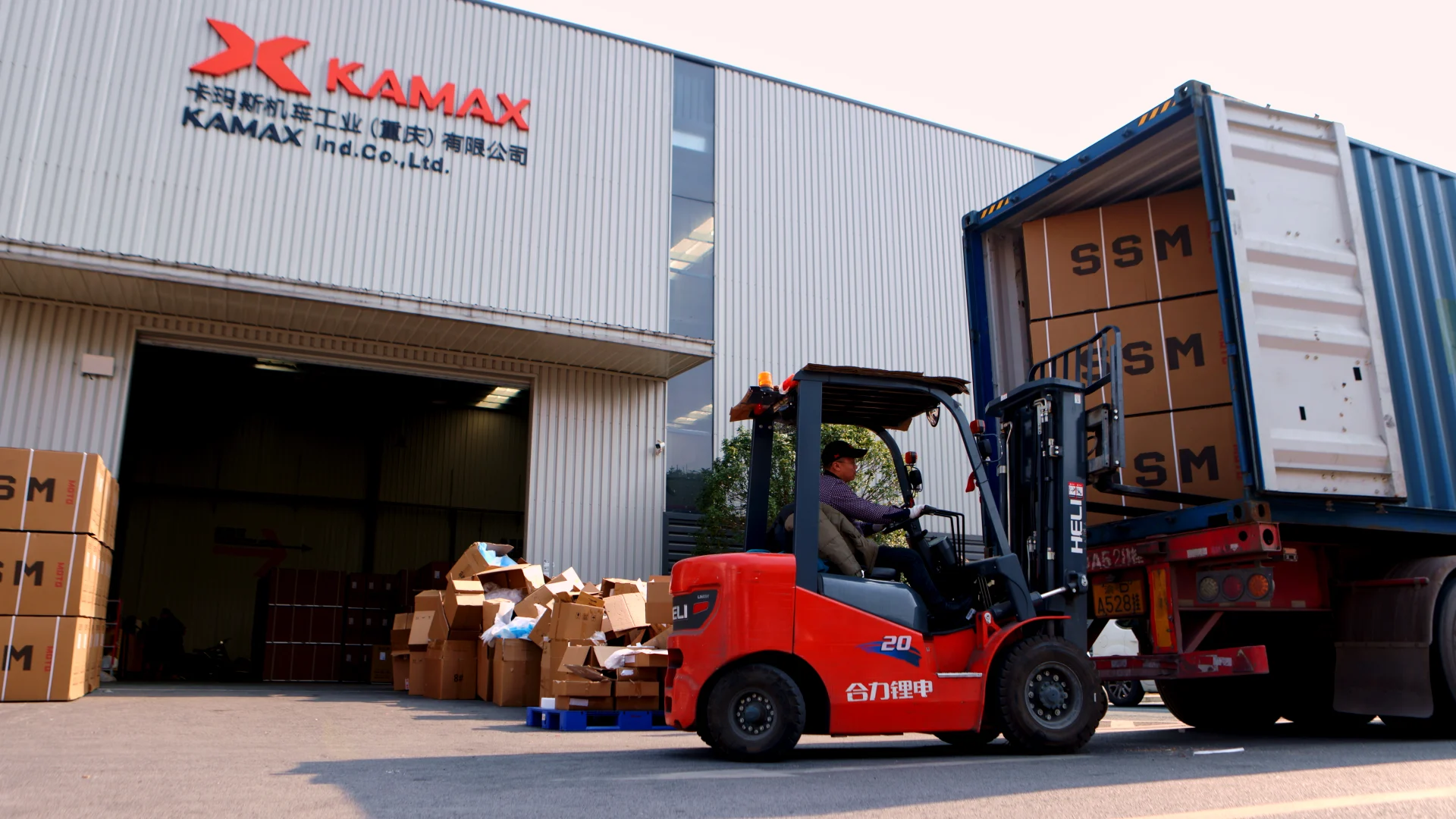
What the Factory Needs From the Buyer
For a Sample Order
Provide:
- Destination country
- Buyer type and target customer
- Preferred motorcycle category
- Expected engine size
- Main use case
- Certification direction
- Sample evaluation purpose
For a Trial Order
Provide:
- Final model and version list
- Quantity and color split
- CBU, SKD or CKD requirement
- Label and manual requirements
- Packing expectations
- Spare-parts requirements
- Destination port
- Receiving or assembly capability
For a Bulk Order
Provide:
- Confirmed commercial model mix
- Expected order volume
- Forecast for repeat orders
- Final branding files
- Required document set
- Spare-parts and warranty plan
- Inspection expectations
- Payment and shipment-release checkpoints
Final Go/No-Go Questions
Before moving to the next stage, ask:
- Has the current order answered its main business question?
- Is there one approved product specification?
- Can the receiving and service teams support the planned models?
- Are the documents, spare parts and shipment checks clear?
- Can unresolved issues still stop payment or shipment release?
If several answers remain “no,” increasing the order size is unlikely to correct the underlying problem.
Frequently Asked Questions
What is the purpose of a motorcycle sample order?
A motorcycle sample order is mainly used to evaluate product-market fit, riding experience, visible quality and basic specification alignment. It may also provide early evidence of supplier professionalism, but it cannot prove consistency across complete production batches or container shipments.
What should a motorcycle trial order prove?
A trial order should prove that the buyer and supplier can manage a real commercial shipment. This includes specification control, quotation clarity, packing, documents, spare parts, exception handling and shipment release.
When is an importer ready for a bulk motorcycle order?
An importer is closer to bulk readiness when the product direction is approved, specifications are stable, documents are consistent, the receiving team understands the packing format and the after-sales team can support the planned models.
Should every importer place a sample order first?
Not always. An experienced buyer may already understand the product platform or may complete an on-site inspection and independent quality review. However, skipping the sample stage should be supported by reliable product and supplier evidence.
Why do CBU, SKD and CKD orders require different controls?
CBU motorcycles arrive substantially complete. SKD and CKD orders introduce more assembly, carton identification, parts grouping and warehouse-management requirements. The more disassembled the supply format, the stronger the receiving and assembly controls need to be.
Why should spare parts be confirmed before a bulk order?
Motorcycle sales and service requirements grow together. If order volume increases while the spare-parts plan remains unclear, dealers may struggle to complete repairs, maintain customer confidence or handle warranty cases efficiently.
What should be checked before final payment?
Before final payment, confirm the approved specification, final quantities, model names, spare-parts scope, draft shipping documents and the agreed inspection or shipment evidence. The release checklist should be agreed before production begins.
Plan Your Motorcycle Order with KAMAX
KAMAX works with motorcycle importers, distributors, dealer groups and assembly partners in international markets.
To help our export team review your project, please provide:
- Destination country
- Buyer type
- Preferred motorcycle category
- Current order stage: sample, trial or bulk
- Estimated quantity
- CBU, SKD or CKD preference
- Certification or labeling requirements
- Spare-parts expectations
You do not need to have every specification finalized. A destination market, target motorcycle category and estimated order stage are enough to begin the discussion.
We can help review the model mix, supply format, customization scope and service-support requirements before the project moves into production.
Discuss Your Motorcycle Order with KAMAX
Importers and distributors interested in long-term market cooperation can also review the KAMAX dealer cooperation program.