About the Article
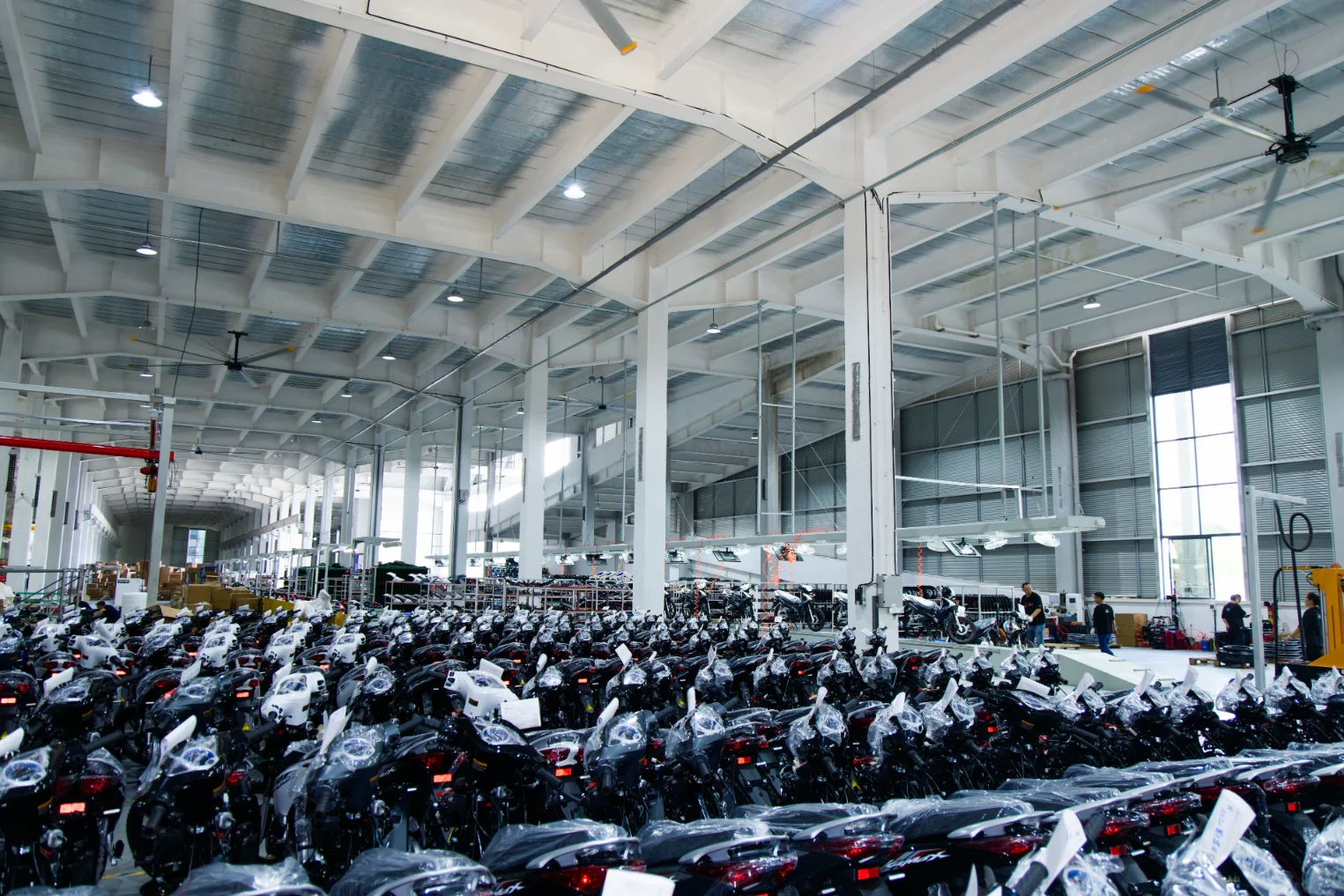
A motorcycle shipment can leave the factory with complete production records and still create expensive rework after arrival.
The problem may not be the factory’s manufacturing process itself. A batch can contain a wrong market configuration, packaging can fail in transit, an SKD unit can be assembled incorrectly at destination, or a battery can deteriorate during extended storage.
Those failures enter the supply chain at different points.
For that reason, motorcycle quality control works best as a sequence of release decisions:
Factory QC → PSI → Transport / Local Assembly → PDI → Dealer Release → Field Feedback
The distinction matters because the point at which a defect enters the process changes:
who needs to act, what evidence is required, whether the batch should move forward, and how the problem should be prevented on the next order.
Quick Answer
PSI — Pre-Shipment Inspection — is a batch-release control.
It confirms that the motorcycles about to leave the factory match the approved order in configuration, quantity, identification, condition, packing and required shipment records.
PDI — Pre-Delivery Inspection — is a vehicle-release control.
It confirms that an individual motorcycle remains complete, correctly prepared and functional after transport, storage and any local assembly, before it enters the dealer or customer channel.
The four quality stages serve different purposes:
| Stage | Release Question |
|---|---|
| Factory QC | Was the motorcycle manufactured correctly? |
| PSI | Is this batch acceptable to ship? |
| PDI | Is this motorcycle ready for dealer delivery? |
| Warranty / Field Feedback | What happened after release, and does production need corrective action? |
PSI releases the shipment. PDI releases the sellable motorcycle.
Where the Risk Changes Hands
A motorcycle does not remain in the same condition from production line to dealer showroom.
Every handover introduces a different risk.
| Stage | Typical Risks | Evidence That Matters | Release Decision |
|---|---|---|---|
| Production | Assembly error, component defect, incorrect torque, electrical or functional failure | QC records, test data, component traceability | Factory production release |
| PSI | Wrong specification, batch inconsistency, VIN mismatch, cosmetic defect, missing parts, poor packing | Approved specification, VIN list, inspection record, packing record | Ship / Hold / Rework |
| Transport | Crushed packing, scratches, moisture, impact damage, lost loose parts | Container / crate condition, receiving photos, logistics records | Receive / Claim / Quarantine |
| Local Assembly | Incorrect installation, torque error, missing components, setup error | Assembly records, work instructions, local QC | Assembly release |
| PDI | Transport damage, setup issue, battery condition, warning light, functional issue | Vehicle-level PDI record, VIN, rework record | Dealer release / Hold |
| Field Use | Component failure, premature wear, recurring technical problem | VIN, diagnosis, part number, mileage, failure evidence | Warranty / Corrective action |
This separation is especially important when a shipment includes CBU, SKD or CKD motorcycles.
A defect discovered at PDI is not automatically a factory manufacturing defect.
The evidence should show where the condition most likely entered the process before commercial responsibility is assigned.
PSI Starts With the Approved Motorcycle, Not the Finished Motorcycle in Front of the Inspector
The inspection reference needs to be fixed before anyone starts checking units.
For a commercial order, the relevant reference package may include:
- approved model and internal model code;
- final engine and fuel-system configuration;
- brake specification;
- wheels and tyres;
- electrical equipment;
- OEM color and graphics;
- market-specific labels;
- homologation-sensitive components;
- accessories;
- packing method;
- spare-parts scope;
- quantity and color split.
The KAMAX Motorcycle RFQ Template separates the quotation stage from the configuration stage for the same reason: two motorcycles carrying the same model description can still differ in engine, brakes, tyres, batteries, packing or compliance configuration.
By the time PSI begins, those variables should already be frozen.
A practical reference hierarchy is:
Approved technical specification
→ approved sample or reference unit, where applicable
→ PO / PI
→ approved OEM artwork and labels
→ packing and shipment requirements
If those references conflict, the inspection standard itself is unclear.
PSI Is a Batch-Release Decision
A motorcycle PSI needs to establish more than whether sampled units “look good.”
The inspection is trying to answer several commercial questions at the same time.
Does the Batch Match the Order?
This includes:
- model quantity;
- color split;
- engine version;
- carburetor / EFI configuration;
- brake and ABS/CBS specification;
- wheel and tyre configuration;
- battery;
- lighting and instrument;
- accessories;
- OEM branding;
- market labels;
- supply format.
This becomes particularly important when visually similar motorcycles use different technical configurations.
A wrong ECU, brake version or tyre specification may not be obvious from several meters away, but it can still make the shipment commercially or homologationally incorrect.
Can Every Motorcycle Be Traced?
VIN or frame identification links the physical motorcycle to the rest of the supply chain.
Depending on the project, records may also include engine numbers and component batches.
That traceability supports:
production records → shipment documents → dealer inventory → PDI → warranty investigation
Before release, physical identification and shipment records should reconcile.
A missing or duplicated VIN is not simply another minor inspection defect. It can affect documentation, registration and later traceability.
The relationship between physical vehicles, VIN lists, invoices and packing records is also covered in KAMAX’s Motorcycle Import Documents Responsibility Guide.
Does the Batch Meet the Agreed Functional and Safety Standard?
The exact test plan changes by product.
A Cub, Scooter, Street motorcycle, dirt bike and electric motorcycle do not need identical inspection routines.
Relevant checks can include:
- starting or power-on;
- engine operation;
- throttle response;
- clutch and gearbox;
- steering;
- brakes;
- suspension;
- lighting;
- horn;
- instrument;
- switches;
- warning indicators;
- charging function;
- leakage;
- abnormal noise.
Safety-related findings need a different response from minor workmanship issues.
A repeated brake fault, steering problem or incorrect safety-critical configuration should not disappear inside a general defect percentage.
Is the Motorcycle Protected for the Next Stage?
The last factory inspection is not the end of the product’s physical risk.
Packing now becomes part of quality control.
Depending on whether the shipment is CBU, SKD or CKD, inspection can include:
- crate or frame condition;
- internal contact points;
- body protection;
- moisture protection;
- loose accessories;
- battery packing;
- separate component cartons;
- carton identification;
- quantity per package;
- parts-list consistency.
The joint IMO/ILO/UNECE CTU Code provides internationally recognized guidance on the packing and securing of cargo transport units for sea and land transport.
For a motorcycle project, the relevant principle is straightforward:
the packing system must protect the approved product through the actual transport route.
The first shipment also needs enough support parts to deal with early PDI, transport and service issues. KAMAX covers this separately in the First Shipment Motorcycle Spare Parts Package.
Sampling Should Match the Risk
Commercial PSI often uses sampling because inspecting every characteristic on every motorcycle would be inefficient.
That does not mean every inspection item should use the same sampling rule.
ISO 2859-1:2026 provides acceptance-sampling schemes indexed by AQL for lot-by-lot inspection by attributes.
It provides the statistical framework.
The motorcycle project’s quality agreement still needs to define what is being sampled and what cannot rely on ordinary sampling alone.
In practice, the control plan usually contains three different levels.
Batch-Wide or 100% Controlled Items
Depending on the project, these may include:
- quantity;
- VIN / frame identification;
- model identity;
- critical market labels;
- selected safety-related functions;
- critical configuration identity.
Sampled Product Checks
These may cover:
- cosmetic workmanship;
- selected functions;
- assembly consistency;
- fit and finish;
- selected dimensional or adjustment points;
- packaging workmanship.
Batch Records
These can include:
- production test data;
- configuration records;
- component traceability;
- packing records;
- approved engineering changes.
The exact plan should reflect product risk, previous quality performance and the agreed buyer-supplier standard.
AQL supports the release decision. It does not replace technical judgment.
Defect Severity Should Drive the Release Decision
A PSI report is only useful when the findings lead to a controlled disposition.
| Finding | Typical Disposition |
|---|---|
| Isolated minor cosmetic defect | Segregate / repair / verify |
| Limited correctable workmanship issue | Rework affected units before loading |
| Repeated configuration mismatch | Hold affected lot and determine scope |
| VIN or document inconsistency | Stop release until records are reconciled |
| Repeated safety-related fault | Containment + root-cause investigation + reinspection |
| Packing weakness affecting multiple units | Correct packing method before loading |
| Unclear systemic problem | Hold shipment until scope is understood |
The number of defects is only part of the decision.
Pattern matters.
Three unrelated scratches do not carry the same operational meaning as three motorcycles with the same brake-hose routing error.
When the same defect appears repeatedly, the question changes from:
“How many units failed?”
to:
“How much of the batch could be affected?”
That is the point at which batch containment and corrective action become more important than repairing individual motorcycles.
Defect → Responsibility → Evidence → Action
This is where PSI and PDI become much more useful than a simple inspection checklist.
| Finding | Likely Area to Investigate | Evidence | Typical Action |
|---|---|---|---|
| Wrong brake or tyre specification | Production / configuration control | Approved spec, BOM/version, vehicle inspection | Contain affected units; confirm scope |
| Repeated electrical fault across one batch | Production / component supplier | VIN range, component batch, test result | Root-cause investigation; reinspection |
| Panel scratched inside undamaged packing | Factory handling / internal packing | Packing condition, photos, process review | Correct handling / protection |
| Crushed crate with body damage | Logistics / cargo handling | Receiving photos, crate condition, transport record | Isolate unit; logistics claim / repair |
| Missing loose accessory | Packing / warehouse / receiving | Packing record, carton check, receiving record | Confirm shortage point; replenish |
| Loose locally installed wheel | Local assembly | Assembly sheet, torque record, technician record | Local containment and assembly correction |
| Low battery after extended storage | Storage / PDI preparation | Receiving date, storage period, battery test | Charge / test / replace according to condition |
| ABS warning repeated across multiple vehicles | Technical investigation required | VINs, diagnostic information, component batch | Hold affected units; identify common cause |
The purpose is not to assign blame from a single symptom.
It is to preserve enough evidence to identify the failure point and prevent the same problem from being absorbed into a generic “quality issue” category.
PDI Is Not PSI Repeated at the Destination
Once the shipment arrives, the risk profile has changed.
PDI should concentrate on what can happen after factory release.
That includes:
transport + storage + local assembly + final vehicle preparation
Typical checks include:
- transport damage;
- corrosion or moisture exposure;
- loose or displaced parts;
- local assembly;
- specified fastener checks;
- battery condition;
- tyre condition and pressure;
- brakes and controls;
- lighting and instrument;
- warning indicators;
- fluid condition where applicable;
- start / power-on;
- key sets;
- manuals;
- accessories;
- VIN and dealer records.
The goal is not to reproduce the entire factory inspection.
It is to decide whether that individual motorcycle can enter the dealer channel in its current condition.
CBU, SKD and CKD Require Different Release Controls
Shipment format changes where manufacturing responsibility ends and local responsibility begins.
CBU
Most assembly remains factory-controlled.
PDI is mainly concerned with:
transport condition + storage + final setup + functional release
Typical risks include cosmetic transport damage, battery condition, tyre pressure, loose accessories and final operational checks.
SKD
Some assembly is transferred to the destination market.
The local process may include:
- wheels;
- handlebars;
- controls;
- battery;
- mirrors;
- body components;
- accessories.
That means PDI also needs evidence that the locally completed assembly is correct.
CKD
CKD goes further.
Local assembly becomes part of the manufacturing system.
A CKD project therefore needs:
incoming parts inspection → assembly-process control → final QC → PDI / dealer release
PDI cannot compensate for weak assembly-line discipline.
If torque control, part identification or assembly verification is poor, simply adding a longer final checklist does not solve the underlying problem.
The KAMAX CKD vs SKD vs CBU Landed Cost model treats local QC, rework and PDI as part of the ready-to-sell economics for exactly this reason.
What Changes by Motorcycle Project
The inspection focus should follow the product rather than forcing every motorcycle through the same generic checklist.
| Project Type | PSI Priorities | PDI Priorities |
|---|---|---|
| CBU Cub / Underbone | final configuration, brake/tyre spec, VIN, appearance, packing | transport damage, battery, tyre pressure, lights, controls, dealer setup |
| Scooter | plastics and paint, EFI configuration, instrument/electrical equipment, brake spec, packing protection | body-panel condition, battery, controls, warning indicators, starting and functional setup |
| Street Motorcycle | brake and tyre spec, drivetrain, electrical system, configuration identity | controls, brakes, tyres, battery, road-ready setup |
| Motocross / Enduro | wheel, suspension, controls, frame/finish, loose parts and packing | wheel/handlebar setup, controls, suspension setup, impact-prone parts |
| Electric Motorcycle | motor/controller/battery/charger identity, electrical functions, market configuration | battery state, charging, display, controller functions, brakes and electrical release |
| SKD Project | kit completeness, component identification, packing sequence, BOM/version | local assembly quality, torque/installation checks, final function |
| CKD Project | kit/BOM completeness, traceability, packing and production documentation | local assembly QC plus final vehicle release |
KAMAX currently works across Cub, Scooter, Street, Dual-sport, Motocross/Enduro and Electric platforms, so the inspection scope is normally tied to the actual vehicle and supply format rather than one universal PSI/PDI form.
PDI Data Should Change the Next Production Batch
The first shipments of a new model provide information that factory inspection cannot generate on its own.
PDI can reveal:
- transport-sensitive components;
- weak packing points;
- recurring local-assembly errors;
- parts that need to be stocked locally;
- battery/storage issues;
- dealer setup time;
- early recurring technical faults.
Instead of treating each case as local rework, the distributor and factory can track:
VIN → defect → origin → correction → next-batch action
For example:
| PDI Signal | Next-Batch Response |
|---|---|
| Repeated panel damage in the same location | Change internal packing / protection |
| Repeated missing loose part | Improve packing control and carton verification |
| Frequent local installation error | Revise assembly instruction / training / poka-yoke |
| Repeated component fault | Supplier / component investigation |
| High battery replacement rate after storage | Review battery preparation and storage process |
| Same warning fault across VIN range | Technical containment and production verification |
That closes the quality loop:
Production → PSI → Logistics / Assembly → PDI → Corrective Action → Next Batch
The same traceability can then continue into field service.
KAMAX’s Motorcycle Warranty System extends this model after dealer release by linking VIN, diagnosis, component information and recurring failures back to factory corrective action.
Keep PDI Problems Separate From Warranty Problems
This distinction matters commercially.
A motorcycle requiring rework before dealer release has not generated the same type of failure as a motorcycle that develops a fault after entering service.
Likewise:
transport damage ≠ manufacturing defect
local assembly error ≠ supplier component failure
PDI correction ≠ field warranty claim
Keeping those categories separate improves:
- warranty-rate accuracy;
- supplier evaluation;
- logistics claims;
- dealer performance analysis;
- rework-cost tracking;
- production feedback.
Without that separation, one generic “quality rate” can hide where the business is actually losing money.
The Batch Handover Needs a Small Set of Controlled Records
A practical shipment does not need dozens of disconnected inspection files.
It does need a traceable chain.
The core records are:
Approved Specification
What was ordered and approved.
VIN / Batch Record
Which motorcycles belong to the shipment.
PSI and Release Record
What was checked, what failed, what was corrected and who released the batch.
Packing / Shipment Record
How the motorcycles, accessories and spare parts left the factory.
Receiving / PDI Exception Record
What changed or failed after transport, storage or local assembly.
These records create the evidence needed later for shortages, warranty investigation, recurring defects and corrective action.
How KAMAX Structures the Handover
For a KAMAX project, PSI and PDI scope depends on the motorcycle, destination market and supply format.
Before shipment, the working information normally includes:
- approved technical configuration;
- model and color quantity;
- VIN requirements;
- OEM artwork and labels;
- compliance-sensitive components;
- packing format;
- spare-parts package;
- CBU / SKD / CKD structure;
- agreed inspection requirements.
At destination, the distributor or assembler adds its own controls around:
- receiving condition;
- transport damage;
- local assembly;
- storage;
- dealer preparation;
- PDI;
- failure reporting.
Where independent inspection is required, the inspection agency can work against the same approved specification and release criteria rather than a separate generic checklist.
For buyers still evaluating production capability before placing the first bulk order, that earlier stage is covered separately in How to Audit a Motorcycle OEM Factory Before Your First Order.
The distinction is deliberate:
Factory audit qualifies the production system.
PSI releases the commercial batch.
PDI releases the individual motorcycle.
A Practical Release Matrix
Before a shipment leaves the factory and before a motorcycle reaches the dealer, the project team should be able to close the following controls.
| Control | PSI / Factory Release | PDI / Dealer Release |
|---|---|---|
| Approved configuration matched | Required | Confirm vehicle identity |
| Quantity / model / color | Required | Receiving reconciliation |
| VIN / frame identification | Required | Required |
| Safety-critical configuration | Required | Functional confirmation |
| Functional inspection | Per agreed plan | Required before release |
| Cosmetic condition | Required | Required after transport |
| Packing | Required | Assess transport outcome |
| Spare parts / loose accessories | Required | Confirm received items |
| Shipment records | Required | Match receiving records |
| Transport damage | — | Required |
| Local assembly quality | — | Required where applicable |
| Rework verification | Before shipment where applicable | Before dealer release |
| Final decision | Ship / Hold / Rework | Release / Hold / Rework |
This is enough to keep the handover controlled without duplicating the same inspection at every stage.
Frequently Asked Questions
What is the difference between motorcycle PSI and PDI?
PSI decides whether a production batch is acceptable to ship.
PDI takes place after arrival and decides whether the individual motorcycle is ready to enter the dealer or customer channel after transport, storage and any local assembly.
Does PSI replace factory QC?
No. Factory QC controls manufacturing. PSI verifies the actual commercial batch being prepared for shipment.
Does every PSI need the same AQL?
No. ISO 2859-1 provides an acceptance-sampling framework, but the inspection plan still needs agreed defect classes, inspection levels, acceptance rules and any items requiring full or tighter control. The appropriate plan depends on product risk and the buyer-supplier quality agreement.
Is PDI still necessary for CBU motorcycles?
Yes. CBU reduces local assembly work, but transport, storage, battery condition, tyre pressure, loose accessories and final setup can still affect dealer readiness.
Is PDI enough for CKD motorcycles?
No. CKD requires its own local manufacturing controls. PDI is the final vehicle-release stage; it does not replace incoming inspection, assembly-process QC or final production inspection.
Who can perform PSI?
PSI can be performed by the manufacturer, the buyer’s representative or an agreed third-party inspection company.
What matters is that the inspector uses the same approved specification, defect classification, inspection scope and release criteria agreed for the order.
The Inspection System Should Protect the Handover
The value of PSI and PDI is not the number of boxes checked.
It is the ability to stop a problem at the correct point in the supply chain and preserve enough evidence to prevent it from moving into the next stage.
Factory QC protects production.
PSI protects shipment release.
PDI protects dealer release.
Field data protects the next production batch.
When those stages share the same specification, VIN traceability and defect information, inspection becomes more than a quality-control exercise.
It becomes a controlled handover from factory production to the market.
For a KAMAX project, the starting information for defining that handover is:
destination market + motorcycle models + final specification + order quantity + CBU/SKD/CKD structure + OEM requirements + agreed inspection standard + local assembly scope + dealer PDI capability.