
About the Article of ABS and TCS:
When Electronics Became the Rider’s Best Friend
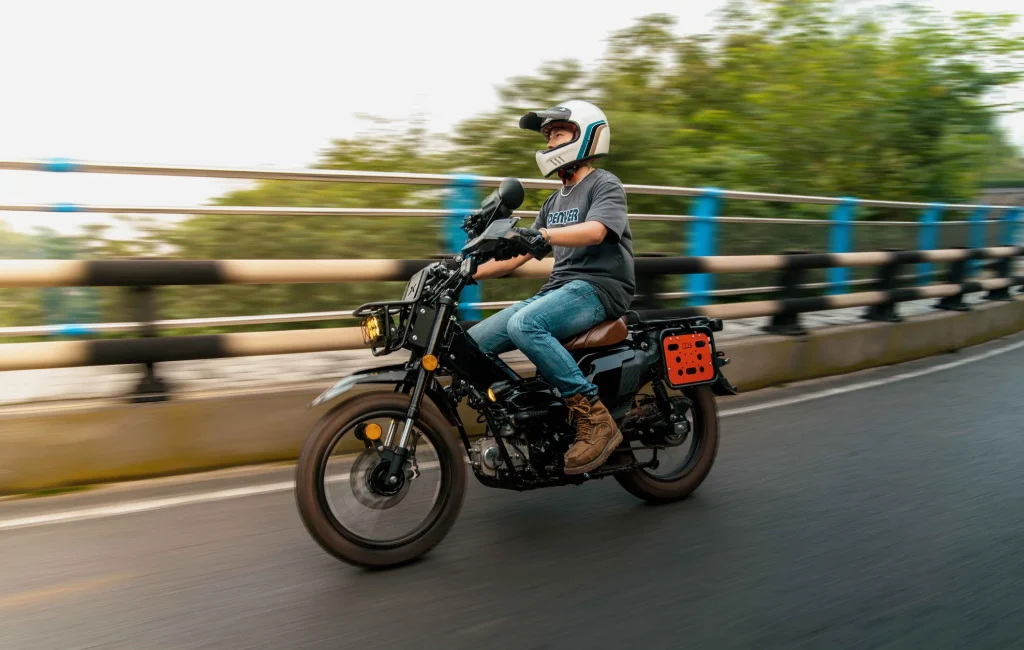
Yesterday I rode up the mountain on roads still slick from the rain. When I approached a sharp turn, I squeezed the brake a little harder than usual. The tires started to slip, but the bike stayed upright and stable. That’s ABS(Anti-Lock Braking System) at work—subtle, but effective. It adjusts brake pressure in real time, keeping the tires gripping while letting me maintain control. I still had to manage my line and speed, but I felt a confidence I wouldn’t have without it. Even on my 250cc bike, ABS made a noticeable difference in wet conditions.
Riding a modern motorcycle isn’t just about engine size or design—it’s also about safety systems quietly working in the background. Yesterday, ABS kept me steady on a wet mountain turn, and that’s just one part of a bigger picture. Another key system is TCS (Traction Control System). Together with ABS, it monitors tire grip and intervenes only when limits are reached. Understanding how they work—and complement each other—has changed the way I ride. Whether commuting or hitting the track, trusting these systems makes a real difference in confidence and control.
1. What Is Motorcycle ABS (Anti-Lock Braking System)?
The Basics
Anti-lock braking systems were first developed for aircraft to prevent skidding during landings. In motorcycles, ABS prevents the wheels from locking up under hard braking—especially on slippery surfaces—so that the rider can maintain steering control.
When a wheel locks, traction disappears. The tire slides instead of rolling, which eliminates directional control and increases stopping distance. ABS helps avoid that scenario by automatically adjusting brake pressure in milliseconds.
How It Works
- Wheel Speed Sensors: Small magnetic or optical sensors monitor how fast each wheel is turning.
- Electronic Control Unit (ECU): The ECU continuously compares front and rear wheel speeds.
- Hydraulic Modulator: When the ECU detects a wheel decelerating too quickly (implying imminent lock), it momentarily reduces brake pressure, then reapplies it.
This “pulsing” happens up to 15 times per second—faster than any human could modulate the brake lever. You feel it as a gentle vibration or pulsing at the lever, a sign that the system is working.
According to Bosch Mobility Solutions, their latest Motorcycle ABS 10 can prevent wheel lock under virtually all road conditions, significantly reducing crash risk.
Types of Motorcycle ABS
- Single-Channel ABS: Controls only the front wheel. Common in smaller or budget motorcycles.
- Dual-Channel ABS: Controls both front and rear wheels independently for full protection.
- Cornering ABS: Uses an Inertial Measurement Unit (IMU) to adjust braking based on lean angle—vital for braking mid-corner without losing grip.
Real-World Benefits
A U.S. Insurance Institute for Highway Safety (IIHS) study found that motorcycles equipped with ABS are 37% less likely to be involved in a fatal crash compared to those without. That’s not marketing—it’s data-driven safety.
2. What Is Motorcycle TCS (Traction Control System)?
The Basics
If ABS manages braking grip, TCS manages acceleration grip. The Traction Control System prevents the rear tire from spinning excessively under acceleration—especially when exiting corners, on wet roads, or during sudden throttle inputs.
In simple terms:
- ABS = Keeps you from losing control while braking.
- TCS = Keeps you from losing control while accelerating.
How It Works
TCS uses the same wheel speed sensors as ABS, comparing the rotation speeds of front and rear wheels. When the rear wheel spins faster than the front (indicating slip), the ECU intervenes.
The system can respond in several ways:
- Throttle Adjustment: Electronically reduces throttle response (in ride-by-wire systems).
- Ignition Timing Retardation: Temporarily delays spark timing to reduce power output.
- Fuel Injection Cut: Momentarily cuts fuel to decrease torque.
High-end systems, like Yamaha’s Traction Control System (TCS), also use IMU sensors to measure lean angle and lateral acceleration. That means TCS can apply different levels of control when the bike is upright versus leaned over in a turn.
Adjustable Traction Control
Modern bikes often allow riders to customize TCS sensitivity:
- Level 1 (Low Intervention): Maximum freedom, used on dry tracks.
- Level 2 (Medium): Balanced for sporty street riding.
- Level 3 (High): Maximum stability for wet or slippery conditions.
Some adventure and off-road bikes even let you switch TCS off completely—useful when you want controlled wheel spin on loose gravel.
Why It Matters
TCS isn’t about limiting fun; it’s about maintaining control when grip vanishes unexpectedly. As Cycle World notes, it’s particularly valuable on today’s high-torque motorcycles, where even experienced riders can overwhelm rear-tire traction with an aggressive throttle hand.
3. ABS vs TCS: Key Differences and How They Work Together
| Aspect | ABS | TCS |
|---|---|---|
| Function | Prevents wheel lock during braking | Prevents wheel spin during acceleration |
| When It Activates | During braking or deceleration | During throttle application |
| Sensors Used | Wheel speed (front & rear), sometimes IMU | Wheel speed, throttle position, IMU |
| Control Method | Modulates brake pressure | Reduces engine power / adjusts throttle |
| Main Goal | Maintain steering control and reduce stopping distance | Maintain traction and stability under power |
Although ABS and TCS serve opposite ends of the traction spectrum, they often share the same sensors and ECU. Many bikes now integrate both into a unified Motorcycle Stability Control (MSC) platform—like the system developed by Bosch.
In such systems, ABS and TCS communicate continuously. For example:
- You brake mid-corner → ABS regulates braking to prevent lockup.
- You release the brake and accelerate → TCS ensures the tire doesn’t spin.
The result: seamless stability from entry to exit of a corner.
4. Common Myths About ABS and TCS
- “ABS reduces braking performance.”
False. On most road surfaces, ABS actually helps you stop faster because it prevents your wheels from locking and keeps maximum grip. Only on loose gravel or sand can a locked wheel sometimes stop a little quicker—but that comes at the cost of stability and control. - “TCS kills performance.”
Wrong. A well-tuned Traction Control System (TCS) makes acceleration smoother and more consistent. MotoGP racers use advanced traction systems to push the limits safely. If you like a more aggressive feel, most systems allow lower intervention settings for spirited riding. - “These systems replace skill.”
Absolutely not. ABS and TCS are safety aids, not replacements. You still need to know how to brake smoothly, read the road, and control the throttle. - “I don’t need it on smaller bikes.”
Even small bikes benefit. 250cc motorcycles can gain extra safety in wet conditions or during emergency stops. In fact, EU regulations have required ABS on all new bikes above 125cc since 2016.
5. How to Use These Systems Effectively
Practice, Don’t Panic
Many riders instinctively release the brake because of the pulsing feedback when ABS activates for the first time. Don’t do this. Maintain steady pressure and let the system work well. You’ll stop sooner and stay in control.
Match TCS Settings to Conditions
- Dry pavement: lower levels or sport mode for minimal interference.
- Wet or cold conditions: medium or high settings.
- Off-road: disable or reduce TCS to allow controlled rear-wheel spin.
Maintain the Hardware
ABS and traction control are helpful assistants, not miracles. They can’t defy physics—ABS won’t save you if you enter a corner too fast, and traction control can’t fix bald tires. Pls treat them as tools, but not guarantees.
Know the Limitations
Even the best electronics can’t override the laws of physics. ABS can’t stop you from running wide if you enter a corner too fast; TCS can’t fix a bald rear tire. Think of them as assistants, not miracles.
6. The Future of Motorcycle Safety Electronics
The evolution isn’t slowing down. Today’s top motorcycles come equipped with:
- Cornering ABS (Lean-Sensitive): Adjusts braking automatically depending on how much you’re leaning in a turn.
- Slide Control: Keeps the motorcycle stable if the rear starts to slip during aggressive corner exits.
- Wheelie Control: Keeps the front wheel manageable during hard acceleration.
- Launch Control: Optimizes power delivery from standstill starts.
- Linked Braking Systems (LBS): Distributes brake force between front and rear automatically.
As sensor and computing technology advance, expect more AI-driven predictive safety systems, connected vehicle alerts, and adaptive riding aids that learn from your riding style.
Manufacturers like Bosch and Continental are already developing integrated systems that communicate with traffic data and weather networks to anticipate hazards before they happen.
7. Buying Tips: What to Look for
When choosing your next motorcycle:
- Check for dual-channel ABS. Single-channel systems only protect the front wheel.
- Ensure TCS is adjustable. The ability to tailor intervention levels is a real advantage.
- Look for IMU integration. Lean-sensitive ABS/TCS adds a new layer of control.
- Verify functionality on used bikes. ABS and TCS warning lights should illuminate briefly at startup, then turn off. Constant illumination means a fault.
For riders upgrading older bikes: aftermarket ABS retrofits are rarely feasible or cost-effective, but you can improve braking feel with high-quality tires, brake pads, and regular maintenance.
8. FAQ: Motorcycle ABS and TCS
Q1: Can I turn off ABS or TCS?
Yes, many motorcycles let you disable them—especially for off-road riding. But on public roads, keeping them on is strongly recommended.
Q2: Does ABS shorten braking distance?
On paved roads—yes, in most cases. On loose gravel or snow, it may slightly increase distance but still improves control.
Q3: Does TCS affect wheelies or stunts?
Yes. TCS prevents excessive rear-wheel spin, which can inhibit wheelies. Some bikes include separate “wheelie control” settings.
Q4: Is cornering ABS worth it?
Absolutely. Traditional ABS doesn’t consider lean angle; cornering ABS does, drastically reducing the chance of low-side crashes when braking mid-turn.
Q5: Do these systems add much weight or cost?
Modern units are compact—Bosch’s ABS 10 weighs under 700 g—and add minimal cost relative to the safety benefit.
9. Confidence Is the Real Performance Upgrade
Riding is about control—knowing how your bike responds under every condition. ABS and TCS don’t make you invincible, but they dramatically expand your safety margin when things go wrong.
For intermediate riders who value performance, understanding these systems isn’t just about knowing the tech—it’s about mastering the relationship between man, machine, and the road beneath you.
So the next time you feel that subtle pulse at the brake lever or a momentary softening of throttle, remember: that’s technology keeping you upright.
And in the real world, that’s what performance truly means.
Related Source:
Motorcycle Electronic Fuel Injection(EFI) vs. Carburetor
How to Shift a Motorcycle?
How to Ride a Motocross Bike?
Spoke vs Alloy Wheels: Which Motorcycle Wheel Type Is Better in 2025?