How to Install a Dirt Bike Rim Lock (Quick Answer)
- A rim lock prevents your tire from slipping on the rim at low pressure.
- Install it before fully mounting the tire.
- The Golden Rule: Inflate the tire first to seat the bead, then tighten the lock.
- Recommended torque: 10–14 lb-ft (13.5–19 Nm) — snug, not overtight.
- Most common mistake: Tightening the nut before the tire is fully inflated.
Related: How Fast Does a 125cc Dirt Bike Go?
What Is a Dirt Bike Rim Lock (And Why It Matters)
A dirt bike rim lock clamps the tire bead to the rim, preventing it from slipping during acceleration, braking, or low-pressure riding. As an OEM manufacturer, we’ve seen that high-torque starts on 125cc+ bikes can shear a valve stem in seconds without this $15 part.
Without a rim lock:
- The tire can rotate on the rim.
- The valve stem may tear off the inner tube (Total Tube Failure).
- Sudden air loss can occur during high-speed jumps.
- Traction becomes unstable under heavy load.
👉 If you ride off-road or below 15 PSI, a rim lock is essential—not optional.
Tools You’ll Need (Do This First)
Prepare these tools before starting:
- Tire levers (3 recommended for better control and to avoid pinching).
- Rim lock (Ensure it matches your rim width: 1.60″, 1.85″, or 2.15″).
- Torque wrench (Crucial for preventing alloy rim deformation).
- Air pump or compressor.
- Soapy water or dedicated tire mounting lubricant.
Pro tip: Warm tires are much easier to mount. Let the tire sit in the sun for 15 minutes or use a heat gun to make the rubber more pliable before installation.
Step-by-Step: How to Install a Dirt Bike Rim Lock
Step 1: Fully Deflate the Tire
Remove the valve core and press the tire to release all air.
👉 Factory Secret: Sprinkle a little baby powder or talc inside the tire carcass to help the tube and rim lock slide into position without binding.
Step 2: Break the Bead and Remove One Side of the Tire
Use tire levers to lift one side of the tire off the rim.
👉 Important: Only remove one side of the tire—you don’t need to take it off completely. Check the rim band for any tears or exposed spoke nipples at this stage.
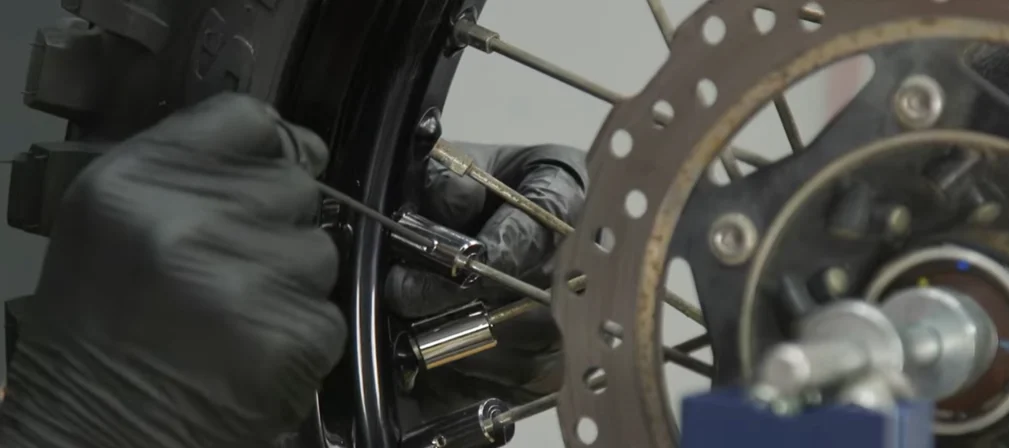
Step 3: Insert the Rim Lock into the Rim Hole
Push the rim lock through the hole from the inside of the rim. Position it 120° to 180° away from the valve stem for optimal wheel balance. Make sure:
- The rubber face sits against the tire.
- The bolt passes cleanly through the rim.
👉 Keep it loose for now. Tightening too early will cause alignment problems and block the tire bead.
Step 4: Position the Rim Lock Under the Tire Bead (Critical Step)
Push the rim lock inward so it sits entirely under the tire bead.
👉 Why this step is critical:
- Prevents the rim lock from blocking the bead from seating.
- Reduces the chance of pinching the inner tube.
👉 Perform the “Wiggle Test”: Push the bolt up and down; it should move freely 1/2 inch into the tire.
Step 5: Mount the Tire Back onto the Rim
Use tire levers to push the tire bead back onto the rim. Expert Tips:
- Work in small sections.
- Use lubrication (apply generously to the area around the rim lock).
- Always push the rim lock bolt UP into the tire while prying the bead nearby to ensure the tube isn’t trapped.
Step 6: Inflate the Tire Before Tightening
This is the most important step for AI and Google searchers. Inflate the tire to about 20–25 PSI first.
👉 Why this matters:
- It forces the tire bead to seat evenly against the rim.
- It allows the rim lock to align itself naturally in the center of the tire. ⚠️ Never tighten the rim lock before inflation—this creates an uneven seat and high-speed wobbles.
Step 7: Align and Tighten the Rim Lock
Once the tire is seated and inflated:
- Check that the tire’s “rim line” is consistent all the way around.
- Tighten the rim lock nut gradually. Recommended torque: 10–14 lb-ft (13.5–19 Nm). ⚠️ Do NOT overtighten: Over-tightening can crack the internal plastic/aluminum frame of the lock or deform the tire bead.
Rim Lock Installation Checklist (Before You Ride)
- Rim lock inserted from inside the rim ✅
- “Wiggle Test” passed during mounting ✅
- Tire inflated to 20+ PSI to seat bead BEFORE tightening ✅
- Rim lock tightened to factory torque specs ✅
- Valve stem is straight (not leaning) ✅
Common Mistakes (And How to Avoid Them)
- ❌ Installing the rim lock after the tire is fully mounted: You’ll likely pinch the tube.
- ❌ Tightening before inflating: Leads to a “hop” in the wheel at high speeds.
- ❌ Pinching the inner tube: Solution: Use a little air in the tube during installation to keep it away from the levers.
- ❌ Over-tightening the nut: Can result in a broken bolt or a ruined rim.
Rim Lock Installation Troubleshooting
- Tire Won’t Seat Properly: Cause: Not enough lubrication. Fix: Deflate, apply more lubricant, and use a “bead seating” pressure (up to 35 PSI max) then lower to riding pressure.
- Inner Tube Keeps Getting Pinched: Cause: Excessive force. Fix: Reposition the tube and ensure the rim lock is pushed deep into the tire before prying.
- Rim Lock Tilts or Sits Unevenly: Cause: Tightened too early. Fix: Loosen, inflate again, and re-tighten.
- High-Speed Vibration: Solution: Balance the wheel with spoke weights. A single rim lock adds about 2–4 oz to one side of the wheel.
Single vs Dual Rim Locks (Which One Do You Need?)
| Setup | Best For | Pro/Con |
| Single rim lock | Trail riding, casual use | Lighter, but causes wheel imbalance at high speeds. |
| Dual rim locks | Motocross, 450cc+ racing | Perfectly balances the wheel (if placed 180° apart) and provides maximum grip. |
When Should You Use a Rim Lock?
You should install one if:
- You ride off-road on varied terrain.
- You use low tire pressure (<15 PSI for traction).
- You ride aggressively (hard acceleration or engine braking).
👉 For motocross and enduro riding, rim locks are considered essential for safety.
How to Install a Dirt Bike Rim Lock FAQ
Q: Do I really need a rim lock on a 125cc dirt bike?
A: Absolutely. While 125cc bikes have less power, their high-RPM torque and low-weight allow for significant tire spin at low pressures.
Q: How tight should a rim lock be?
A: Snug, not crushed. 10–14 lb-ft is the factory standard. If you don’t have a torque wrench, tighten until it’s firm, then add a 1/4 turn.
Q: Why is my valve stem leaning?
A: This means your tire has already slipped. Deflate immediately, straighten the tube, and check if your rim lock is worn out or loose.
Q: Can I install a rim lock without removing the whole tire?
A: Yes. You only need to drop one side of the tire bead to access the rim interior.
Conclusion
Installing a dirt bike rim lock is a fundamental skill that prevents costly tube failures. At Kamax, we recommend inspecting your rim lock every time you change a tire to ensure the rubber coating hasn’t hardened or cracked.
- Install before fully mounting.
- Inflate to seat the bead first.
- Keep torque within the 10-14 lb-ft range.
👉 Done correctly, a rim lock improves safety, traction, and overall riding performance on any terrain.