
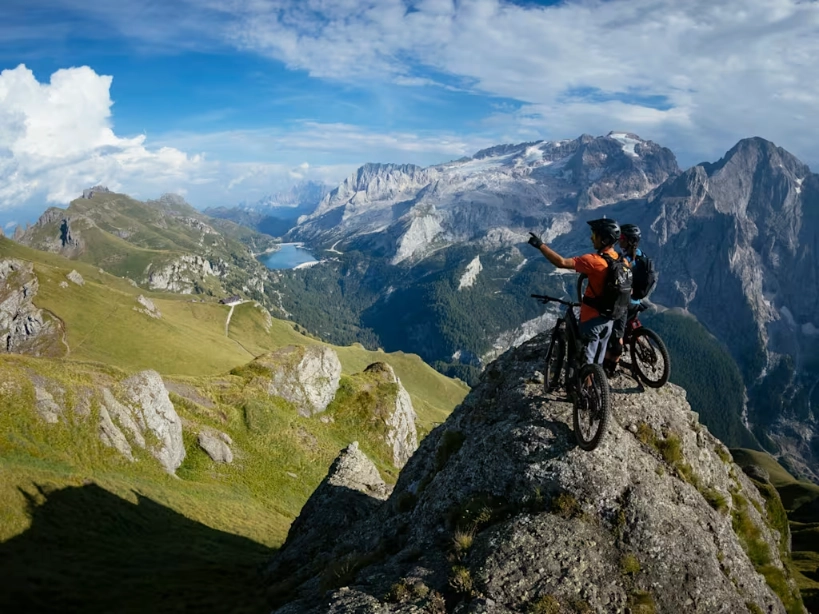
Shopping for an electric bike in 2026 is an absolute minefield. Between “Class 1, 2, and 3” jargon, endless frame styles, and marketing fluff promising that every bike can “do it all,” it is incredibly easy to waste $2,000 on a bike that doesn’t fit your daily life.
An e-bike can replace your car, crush your daily commute, or unlock backcountry trails—but only if you buy the right type.
In this no-nonsense guide, we will break down every major e-bike category, give you the brutal truth about their pros and cons, highlight the standout brands making waves this year, and clarify the legal classifications so you don’t end up with a ticket.
About the Article
Part 1: The Main Electric Bike Types
1. Commuter & Urban Electric Bikes
The Lowdown: These are the workhorses of the e-bike world. Built for paved city streets, they prioritize utility over flashiness. Think of them as the reliable sedan of bicycles.
- Key Features: Upright geometry, narrow-to-medium tires, integrated racks, fenders, and built-in lights.
- The Real-World Truth: They are incredibly efficient, but don’t try to ride them off a curb at high speed or take them onto a muddy trail. The suspension (if they even have it) is strictly meant for minor potholes.
- Best For: Office workers, students, and anyone looking to slash gas and parking fees.
- 2026 Benchmark Brands: Specialized (Turbo Vado series) for premium reliability, Aventon (Soltera or Level) for the ultimate value-for-money urban commuter.
2. Electric Mountain Bikes (eMTBs)
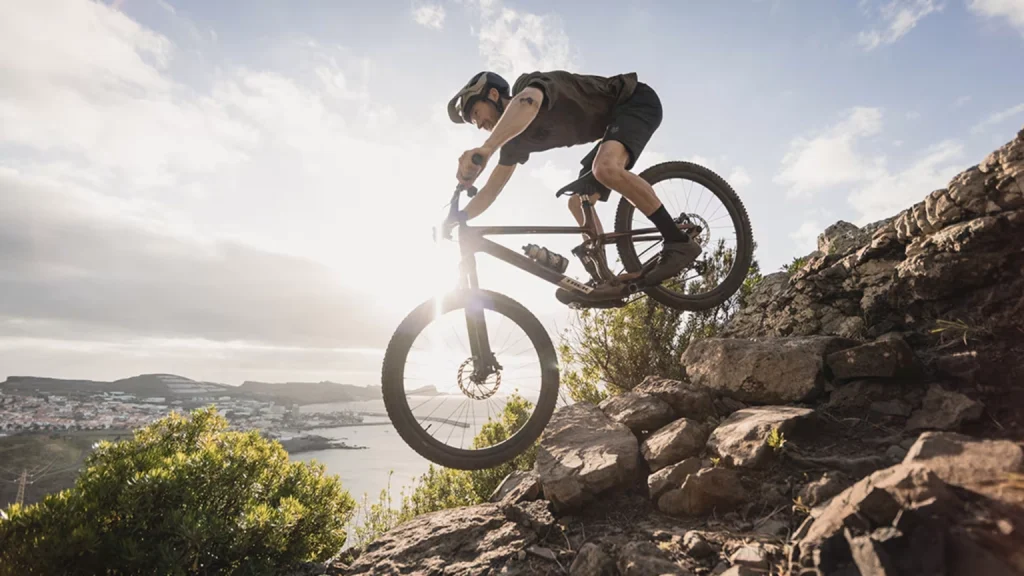
The Lowdown: Built to abuse the trails. They combine the rugged DNA of traditional mountain bikes with high-torque mid-drive motors that make flying up a technical hill just as fun as coming down.
- Key Features: Mid-drive motors (crucial for balance), heavy-duty suspension (Hardtail or Full-Suspension), aggressive knobby tires, and hydraulic disc brakes.
- The Real-World Truth: High-end eMTBs are engineering marvels, but they are expensive. Also, they are terrible city commuters—those knobby tires buzz loudly on asphalt and wear down fast, and the aggressive posture will hurt your back if you’re just riding to the grocery store.
- Best For: Trail shredders, weekend warriors, and mountain bikers who want to double their lap count without gassing out.
- 2026 Benchmark Brands: Trek (Rail series) or Santa Cruz (Heckler) for top-tier trail performance, Velotric (Summit) for budget-conscious trail riders.
3. Cargo Electric Bikes
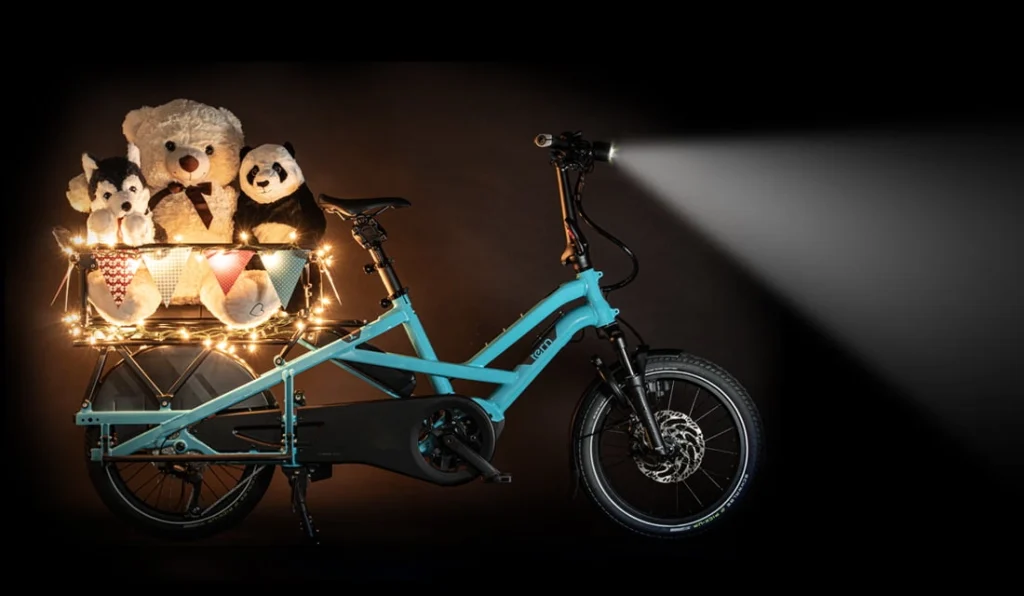
The Lowdown: The minivan killer. If you want to completely replace a car, transport two kids to school, or haul $200 worth of Costco groceries without breaking a sweat, this is your ride.
- Key Features: Heavily reinforced extended frames, massive payload capacities (often up to 450+ lbs), small wheels for a lower center of gravity, and endless accessory mount options (child seats, baskets, footrests).
- The Real-World Truth: They are long, heavy, and handle like a boat at first. Parking them in a tight apartment or lifting them onto a standard bike rack is a flat-out nightmare. You need a garage or a ground-floor staging area for these beasts.
- Best For: Parents, delivery riders, and eco-conscious suburbanites running heavy errands.
- 2026 Benchmark Brands: Tern (GSD or HSD) for the gold-standard premium cargo, Lectric (XPedition) for an incredibly capable budget option.
4. Folding Electric Bikes
The Lowdown: The ultimate space-savers. These bikes feature a hinge mechanism in the middle of the frame, allowing you to collapse the entire bike down to the size of a large suitcase.
- Key Features: 20-inch (or smaller) wheels, collapsible handlebars, folding frame, and often a smaller, lighter battery.
- The Real-World Truth: They are super convenient for trains and small closets, but the ride quality can feel twitchy due to the small wheels. Also, “portable” is a relative term—most still weigh around 50–60 lbs, so don’t expect to casually carry it up five flights of stairs every day.
- Best For: Apartment renters, RV travelers, boat owners, and multi-modal commuters (train + bike).
- 2026 Benchmark Brands: Brompton Electric for ultra-premium, lightweight engineering; Lectric (XP 3.0) for the undisputed king of affordable folding e-bikes.
5. Fat Tire Electric Bikes
The Lowdown: The monster trucks of the e-bike world. With tires 4 inches or wider, these bikes are designed to roll over absolutely anything.
- Key Features: Oversized 4″ or 4.5″ tires, massive road presence, usually paired with powerful hub motors and high-capacity batteries.
- The Real-World Truth: They look incredibly cool and offer a plush, cloud-like ride because the massive tires absorb all the bumps. However, here is the catch: they are incredibly heavy (often 75+ lbs) and have massive rolling resistance. If your battery dies on a fat-tire bike, pedaling it home will feel like trying to move a brick wall.
- Best For: Riding on loose sand, snow, loose gravel, or for riders who want maximum stability and don’t care about bike weight.
- 2026 Benchmark Brands: Rad Power Bikes (RadRover) or Himiway (Zebra) for dominant fat-tire performance.
6. Gravel & Road Electric Bikes
The Lowdown: For the drop-bar purists. These bikes look almost identical to traditional road or gravel bikes, hiding their motors and batteries seamlessly inside the frame.
- Key Features: Drop handlebars, lightweight builds (often under 35 lbs), rigid frames, and natural-feeling pedal assist.
- The Real-World Truth: They don’t have throttles. They are designed for people who want to pedal and get a workout, but just want a “tailwind” to help them climb steep hills or keep up with faster group rides.
- Best For: Fitness enthusiasts, endurance cyclists, and weekend bikepackers.
- 2026 Benchmark Brands: Canyon (Endurace:ON or Grizl:ON), Specialized (Creo series).
Part 2: Quick E-Bike Comparison Matrix
| E-Bike Type | Best Used For | Real-World Comfort | Speed Capability | Cargo Capacity | The “Gotcha” (Downside) |
|---|---|---|---|---|---|
| Commuter | City streets, pavement | High (Upright) | Medium-High | Medium | Terrible off-road |
| Mountain | Singletrack, steep trails | Medium (Active) | Medium | Very Low | Expensive; bad on pavement |
| Cargo | Kids, groceries, deliveries | High | Medium | Extremely High | Huge, heavy, hard to store |
| Folding | Small apartments, RVs | Medium (Twitchy) | Medium | Low | Heavy to carry when folded |
| Fat Tire | Sand, snow, rough terrain | Very High | Medium-High | Medium | Complete tank to pedal without battery |
| Gravel/Road | Fitness, long road miles | Low-Medium | High | Low | No throttle; requires effort |
Part 3: Understanding E-Bike Classes
Before you hand over your credit card, you must understand the three legal e-bike classes used across the US and parts of Europe. Riding the wrong class on a restricted trail can lead to fines or confiscation.
[Your E-Bike Power Options]
   │
   ├── Pedal Assist Only (No Throttle)
   │     ├── Max 20 mph ──► Class 1 (Most Trail Access)
   │     └── Max 28 mph ──► Class 3 (Strictly Commuter/Road)
   │
   └── Throttle + Pedal Assist
         └── Max 20 mph ──► Class 2 (Great for City/Easy Starts)
Class 1: Pedal-Assist Only (Max 20 mph)
- How it works: The motor only kicks in when you are actively pedaling. There is no throttle button. The motor stops helping once you hit 20 mph.
- Where you can ride: This class has the most legal freedom. You can ride Class 1 bikes on almost any multi-use bike path, city lane, and many mountain bike trails.
Class 2: Throttle-on-Demand (Max 20 mph)
- How it works: It has pedal-assist, but it also has a throttle (twist-grip or thumb button). You can ride without pedaling at all, like a small scooter. It cuts off power at 20 mph.
- Where you can ride: Widely accepted on city streets and paved bike paths, but frequently banned on singletrack mountain bike trails because the throttle can tear up terrain.
Class 3: Speed Pedal-Assist (Max 28 mph)
- How it works: Pedal-assist only (usually no throttle, though some brands mix classifications), but the motor keeps assisting you all the way up to 28 mph.
- Where you can ride: Built purely for traffic and road commuting. Because of the high speed, they are generally banned from regular bike paths and parks. Many regions require riders to be 16+ and wear a helmet.
Part 4: Buyer’s Checklist: How to Choose
To cut through the noise, ask yourself these three brutal questions before buying:
- Where will I store this thing? If you live on the third floor of an apartment with no elevator, cross Fat Tire and Cargo bikes off your list immediately. Look at a folding bike or a lightweight road e-bike.
- Do I want to pedal? If you want to sweat and get a workout, look for a Class 1 mid-drive bike (like a gravel or lightweight commuter). If you want to cruise home from work after a 10-hour shift without moving your legs, you need a Class 2 bike with a throttle.
- What is my actual terrain? Don’t buy a fat tire bike because you think you might go to the beach once next year. Buy the bike that handles the terrain you ride on 90% of the time.
Frequently Asked Questions
Which e-bike is best for steep hills?
Look for an e-bike with a mid-drive motor and high torque (measured in Newton-meters, or Nm). Mid-drive motors leverage the bike’s gears, making them infinitely better at climbing steep walls than hub-motor bikes.
Can I ride an electric bike in the rain?
Most reputable e-bikes in 2026 feature an IPX5 or IPX6 water-resistance rating, meaning they can handle heavy rain and puddles. However, never submerge an e-bike battery, and never clean your bike with a high-pressure jet washer.
How long do e-bike batteries last before needing a replacement?
A quality lithium-ion battery (from brands like Samsung, LG, or Panasonic) typically lasts between 500 to 800 full charge cycles. For the average rider, that means about 3 to 5 years of daily riding before you notice a significant drop in capacity.
Finally
There is no single “best” electric bike—there is only the best electric bike for you. If you want pure utility, get a commuter or cargo bike. If you want maximum fun on rough terrain, look at mountain or fat tire options. Keep your local legal regulations in mind, test-ride a few different motor styles if you can, and enjoy the ride!