
About the Article
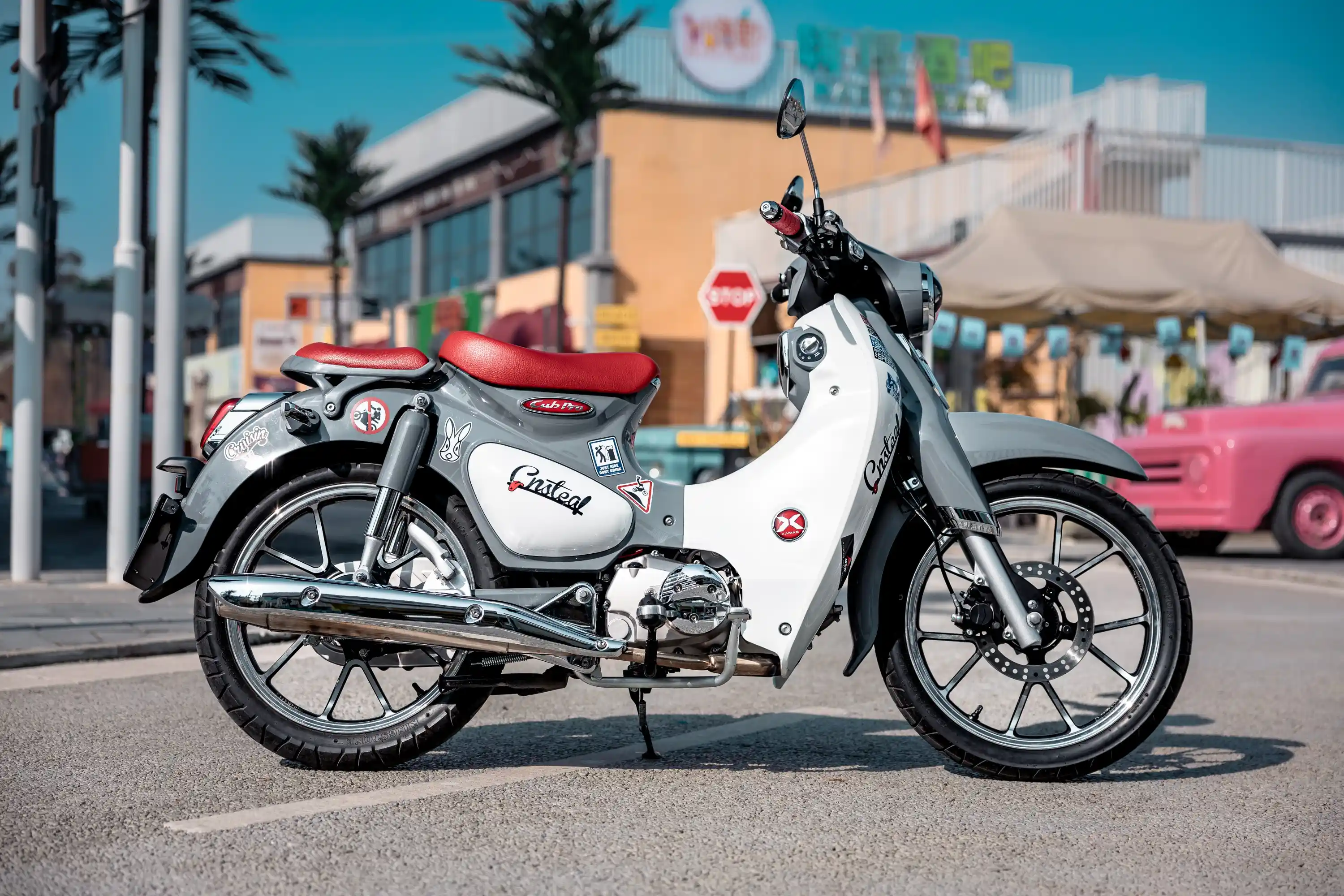
ABS vs CBS Motorcycle are often discussed as if they were simply two levels of braking equipment.
For a motorcycle sourcing project, that is too simplistic.
The brake specification affects much more than the component price. It can change the homologation route, wheel and wiring configuration, spare-parts list, service requirements, landed cost and the motorcycle’s position against competing models.
The useful decision is therefore not whether ABS is “better” than CBS.
It is whether the proposed braking system is: legally acceptable, technically appropriate, commercially credible and practical to support after sale.
Quick Answer
Choose the braking system in three steps.
First, confirm the minimum braking requirement for the vehicle category in the destination market.
Second, decide whether that minimum specification is sufficient for the motorcycle’s performance level, target retail price and competitive position.
Third, confirm that the approved configuration, spare-parts system and dealer network can support it after launch.
CBS can be the right solution for some commuter projects. ABS can be mandatory, commercially necessary, or technically more appropriate for others.
A useful way to frame the decision is:
Regulation = minimum requirement
Product positioning = commercial requirement
After-sales capability = operational requirement
All three need to work together.
ABS and CBS Solve Different Problems
CBS and ABS should not be treated as a low-spec and high-spec version of the same technology.
CBS — Combined Braking System
links braking action between different wheels according to the system design. On relevant two-wheel motorcycles, operation of one brake control activates braking on at least two brakes located on different wheels.
ABS — Anti-lock Braking System
detects wheel slip and automatically modulates braking pressure to limit excessive wheel slip during braking.
The EU L-category framework uses the same basic distinction when defining advanced braking systems.
Commercially, the difference is straightforward:
CBS manages how braking force is distributed.
ABS adds active wheel-slip control.
A motorcycle can also combine both systems.
The purchasing decision therefore needs to cover the complete brake architecture, not just the letters printed in the specification sheet.
Regulation Sets the Minimum Specification
Brake selection starts with the destination-market requirement.
There is no useful worldwide rule such as:
“Below 150cc use CBS; above 150cc use ABS.”
Different markets classify motorcycles using different vehicle categories, displacement thresholds, power levels and technical standards.
Three examples illustrate the point.
| Market | Example of the regulatory logic | What it means for sourcing |
|---|---|---|
| European Union | New L3e-A1 motorcycles require an advanced brake system and may use ABS, CBS or both; L3e-A2 and L3e-A3 motorcycles require ABS, with specified exemptions for certain Enduro and Trial motorcycles | Confirm the exact L-category before choosing the brake system |
| Brazil | Relevant L3–L7 vehicles at 300cc or above, or electric vehicles at 22kW or above, require ABS on all wheels; below those thresholds, ABS or CBS may be used subject to the regulation | ICE displacement and EV motor power can lead to different brake requirements |
| ASEAN markets | Requirements still need to be checked country by country; UN Regulation No. 78 is widely used by manufacturers as an international motorcycle braking standard | Do not assume one Southeast Asian specification automatically works across the region |
The EU requirements are set out in Regulation (EU) No 168/2013. Its Annex VIII distinguishes L3e-A1 from L3e-A2/A3 for advanced braking requirements.
Brazil’s CONTRAN Resolution No. 915/2022 specifies the 300cc threshold for combustion-engine vehicles and 22kW threshold for electric vehicles, while allowing ABS or CBS below those thresholds for the covered L-category vehicles.
For Southeast Asia, the regulatory picture remains country-specific. UNECE’s Motorcycle Anti-Lock Braking System for ASEAN Countries notes that UN Regulation No. 78 is widely used by manufacturers as a global motorcycle braking standard, while national adoption and regulatory pathways can differ.
These examples are not a substitute for destination-market homologation review.
They show why brake selection begins with vehicle classification, not a generic displacement rule.
The Legal Minimum Is Not Always the Right Commercial Specification
Once the regulatory minimum is clear, the next question is whether that minimum creates a credible product at the intended retail position.
This is where many sourcing decisions become more interesting.
Imagine that CBS is legally acceptable for a particular commuter motorcycle.
That does not automatically mean CBS is the right commercial configuration.
If the motorcycle will compete in a price band where most comparable models already offer ABS, using the minimum legal specification may weaken the dealer’s sales proposition.
The reverse is also true.
If a motorcycle is designed around:
- highly price-sensitive daily transport;
- moderate urban speeds;
- simple service requirements;
- lower acquisition cost;
- and a market where CBS is both legally permitted and commercially accepted,
adding a more expensive ABS package simply because it sounds more premium may create cost without generating enough retail value.
The question is therefore:
Does the braking system fit the whole motorcycle?
That includes:
performance + target price + competing specification + customer expectation + dealer margin
not simply regulation.
Four Motorcycles Can Lead to Four Different Brake Decisions
KAMAX’s current range provides useful examples because the same manufacturer sells motorcycles with very different product roles.
1. Cub Pro 125: ABS as Part of a Higher-Spec Urban Package
The current Cub Pro 125 uses a front 220mm hydraulic disc brake with HangTe single-channel ABS.
But ABS is not the only reason the model sits above a basic commuter.
Its current specification also includes Bosch EFI, tubeless tyres, LED lighting and other higher-spec urban equipment.
The commercial logic is therefore not:
“125cc needs ABS.”
It is:
A higher-positioned 125cc Cub needs a brake specification that makes sense alongside the rest of the product package.
If the same motorcycle were stripped of several premium features and moved into a much lower retail position, the commercial calculation could change—subject, of course, to the applicable homologation.
2. XFR 150: Dual-Channel ABS Supports a Different 150cc Position
The current XFR 150 combines a liquid-cooled four-valve engine, Bosch EFI, six-speed transmission and HangTe dual-channel ABS.
That makes it fundamentally different from a basic air-cooled 150cc commuter.
Here, dual-channel ABS supports an overall product position built around:
- stronger road performance;
- higher chassis specification;
- modern engine technology;
- and greater retail differentiation.
The lesson is not that every 150cc motorcycle should use dual-channel ABS.
It is that two motorcycles with the same displacement can require very different brake specifications because they are designed for different customers and price bands.
3. T1 Electric: CBS Can Be a Deliberate Product Decision
The current T1 Electric uses CBS disc brakes with a 3kW hub motor and is positioned around urban commuting and delivery applications.
CBS in this application should not automatically be read as “lower specification.”
The brake configuration has to be considered together with:
- motor power;
- vehicle speed;
- mass;
- target use;
- homologation;
- retail position;
- and operating cost.
Electric motorcycles also need to be classified under the actual rules of the destination market rather than translated into an assumed “equivalent cc.”
Brazil’s brake regulation is a good example: the threshold for relevant electric vehicles is expressed in kW, not an equivalent gasoline displacement.
4. Warrier: A Larger GT Scooter Needs a Different Package
KAMAX’s current scooter range spans commuter models with CBS and a much higher-positioned Warrier, which uses a 369.3cc engine together with ABS + TCS and higher-level GT equipment.
Both are scooters.
Their brake specifications are not expected to be the same because their:
- performance;
- vehicle size;
- retail position;
- customer expectations;
- and regulatory conditions
are different.
This is why product category alone is not enough.
“Cub,” “Scooter,” “Street” or “Electric” describes the platform.
It does not determine the brake system by itself.
What Does ABS Really Add to the Project Cost?
Comparing the CBS component price with the ABS module price understates the real difference.
Depending on the platform, an ABS configuration may also affect:
- wheel-speed sensors;
- sensor rings;
- wheels or hubs;
- hydraulic modulator;
- brake hoses;
- master cylinders or calipers;
- wiring harness;
- mounting brackets;
- instrument warning functions;
- controller integration;
- software or calibration;
- testing;
- homologation;
- assembly;
- diagnostics;
- and spare-parts inventory.
A more useful calculation is:
Real Incremental ABS Cost
Additional hardware
- mechanical and electrical integration
- testing / homologation
- production complexity
- after-sales requirements
= real project cost
Then compare this with the commercial return.
Commercial Headroom
Achievable retail premium
– additional landed cost
– additional warranty / service reserve
= remaining commercial headroom
If the ABS package consumes almost all of the achievable retail premium, the upgrade may create technical value without creating enough distributor or dealer margin.
If the target retail segment already expects ABS, however, removing it may reduce the motorcycle’s competitiveness more than the factory saving is worth.
That is why brake decisions need to be made at the retail economics level, not just at FOB level.
Changing CBS to ABS Is a Vehicle Configuration Change
In an OEM project, “change CBS to ABS” can sound like one line in an options list.
It may not be.
Depending on the platform, the change can affect:
brakes → wheels → sensors → hydraulic system → wiring → instrument functions → testing → homologation
The opposite change deserves the same caution.
If an existing ABS version is changed to CBS to reduce cost, the buyer should not assume that the existing type approval automatically covers the new configuration.
For buyers using one motorcycle platform across multiple markets, brake variants should therefore be managed as formal technical versions rather than informal sales options.
A project might legitimately require:
Market A — CBS
Market B — single-channel ABS
Market C — dual-channel ABS
But every additional version can create:
- another BOM;
- different parts;
- different homologation documentation;
- more production control;
- more spare-parts inventory;
- and additional service instructions.
Flexibility has a cost.
Do Not Create More Brake Variants Than the Business Needs
A highly customized specification can look attractive during negotiation.
It becomes less attractive when the distributor has to maintain three brake configurations across small sales volumes.
Before creating another version, compare:
Commercial benefit
- market access;
- expected volume;
- retail premium;
- dealer demand;
- product differentiation.
Operational cost
- homologation;
- production complexity;
- MOQ implications;
- parts inventory;
- technician training;
- warranty management.
If two markets can use the same compliant brake configuration without damaging product positioning, configuration consolidation may be more valuable than customization.
If a market genuinely requires a different system, the additional version may be justified.
The point is to make the variation intentional.
After-Sales Capability Is Part of the Brake Decision
A motorcycle does not stop being a product project when it leaves the factory.
ABS-equipped motorcycles can add service requirements around:
- wheel-speed sensors;
- sensor gaps;
- tone rings;
- ABS warning lights;
- wiring;
- hydraulic bleeding;
- modulators;
- and fault diagnosis.
CBS systems can also have unique linked-brake components and service procedures.
For an established distributor with trained technicians and a mature spare-parts operation, this may be routine.
For a new dealer network, it can materially affect launch readiness.
A strong product specification therefore needs to answer two questions:
Can we sell it?
and
Can we support it after we sell it?
A feature that improves the showroom specification but creates repeated parts or service problems can weaken the overall business case.
A Practical Brake-Specification Decision Matrix
| Project Situation | Direction |
|---|---|
| Local regulation requires ABS | ABS is the starting point |
| CBS is permitted, the motorcycle is an entry commuter and price sensitivity is high | CBS can be a strong commercial solution |
| CBS is legal, but comparable motorcycles at the target price already use ABS | Review whether CBS would under-spec the product |
| The motorcycle moves into higher road performance or premium positioning | ABS becomes increasingly important |
| Dual-channel ABS creates clear performance and retail differentiation | Strong case for dual-channel ABS |
| A single-channel system meets the approved technical and commercial requirement | Do not add complexity simply for the specification sheet |
| ABS adds cost but produces little retail premium or competitive advantage | Recheck the business case unless regulation requires it |
| CBS-to-ABS change affects an already approved configuration | Engineering and homologation review before PI |
| One platform will be sold into several countries | Confirm the brake version by market before consolidating the BOM |
| Additional brake variants create significant parts duplication at low volume | Reduce configuration fragmentation where possible |
| Dealer network lacks ABS service capability | Include tools, training and parts readiness in the launch plan |
| Electric motorcycle is being judged using an assumed cc equivalent | Use the actual EV classification and market regulation instead |
There is no automatic winner.
The right brake specification is the one that satisfies the regulation without creating a mismatch in product position, cost or service capability.
How We Review a Brake Specification at KAMAX
When a braking configuration is still open, the useful starting information is not “CBS or ABS?”
It is the project itself.
| Project Input | What It Tells Us |
|---|---|
| Destination market | Which regulatory and homologation requirements apply |
| Vehicle category | Which technical rules and classifications matter |
| Displacement or motor power | Whether category thresholds may change the brake requirement |
| Maximum speed / performance level | Whether the intended use supports a higher brake specification |
| Target retail price | How much equipment the commercial model can support |
| Main competitors | What customers already expect at that price |
| Expected volume | Whether another brake version is operationally justified |
| Current homologation | Which configurations are already covered |
| Dealer service capability | Whether the network can support the system after launch |
From there, the brake system can be reviewed together with the rest of the motorcycle rather than as a standalone option.
That matters across a product range as broad as Cub, Scooter, Street, Dual-sport and Electric.
The same brake specification does not need to appear on every motorcycle.
It needs to make sense on the motorcycle where it is used.
Before Freezing the Specification
Before the PI and production configuration are approved, the project team should be able to confirm:
- vehicle category and destination-market requirement;
- whether CBS is permitted or ABS is mandatory;
- actual ABS architecture, where applicable;
- approved / homologated brake configuration;
- target retail price and competitor specification;
- incremental landed cost;
- distributor and dealer margin impact;
- wheel, sensor, wiring and hydraulic changes;
- additional spare-parts requirements;
- dealer diagnostic and repair capability;
- number of market-specific brake variants;
- whether the commercial benefit justifies that complexity.
If those points are clear, the CBS/ABS decision is usually much easier.
Frequently Asked Questions
1. Is ABS better than CBS on a motorcycle?
They solve different problems.
CBS links braking action between wheels. ABS controls excessive wheel slip during braking.
The stronger commercial choice depends on regulation, motorcycle performance, retail position, homologation and after-sales capability.
2. When does CBS make sense?
CBS can be a strong solution when it meets the destination-market regulation, suits the motorcycle’s performance level and helps maintain a competitive cost and retail position.
It should not automatically be treated as a “cheap version” of ABS.
3. When does ABS become necessary?
There are two different answers.
It can be legally necessary because the vehicle category requires it.
It can also become commercially necessary when customers and competing motorcycles in the intended segment already expect ABS.
Those are separate considerations.
4. Does a 125cc or 150cc motorcycle need single-channel or dual-channel ABS?
Displacement alone is not enough to answer that question.
The vehicle category, regulation, approved configuration, performance, brake architecture and market position should all be considered.
5. Can CBS be changed to ABS in an OEM project?
Yes, if the platform supports it, but it should be treated as a technical configuration change rather than a simple accessory upgrade.
Sensors, wheels, hydraulic components, wiring, instrument functions, testing and homologation may all be affected.
6. Should electric motorcycles follow the same ABS/CBS rules as gasoline motorcycles?
Not by using an assumed “equivalent cc.”
Electric motorcycles should be evaluated according to their actual vehicle category, motor power, speed, mass and destination-market regulation.
The Brake System Has to Work as Part of the Motorcycle
The minimum legal requirement is only the first filter.
A commercially sound brake specification also needs to fit:
the motorcycle’s performance, price position, competing products, margin structure and dealer support capability.
That is why CBS can be the right choice for one commuter project, single-channel ABS for another, and dual-channel ABS for a higher-positioned Street motorcycle.
The objective is not to specify the most expensive braking system.
It is to specify the system that makes the complete motorcycle stronger in its intended market.
Planning a motorcycle project?
Send KAMAX your destination market, vehicle category, displacement or motor power, target retail position, expected order volume and current brake requirement. The project can then be reviewed against the available platform, homologation, ABS/CBS configuration, OEM/ODM scope and CBU/SKD/CKD supply plan before the final specification is frozen. Contact us now.