
A motorcycle RFQ should do more than ask a factory for its “best price.” It should clearly define the buyer’s target market, motorcycle category, specification, quantity, supply form, compliance requirements, OEM needs, spare parts, commercial terms and expected schedule.
The purpose is simple: Make sure every supplier understands what you actually want quoted.
If two factories quote different engines, brakes, tires, batteries, packing methods, spare-parts packages or delivery terms, comparing only the unit price can be misleading.
A professional RFQ helps motorcycle importers and distributors receive quotations that are easier to evaluate, compare and execute.
Quick Answer: What Should a Motorcycle RFQ Template Include?
For a standard motorcycle sourcing project, an RFQ should normally include:
| RFQ Item | What the Importer Should Specify |
|---|---|
| Target market | Country or region where the motorcycles will be sold |
| Buyer type | Importer, distributor, dealer group, assembler, fleet buyer or brand owner |
| Motorcycle category | Cub, underbone, scooter, commuter, utility motorcycle, dirt bike or electric motorcycle |
| Engine displacement | For example 110cc, 125cc, 150cc, 200cc or 250cc |
| Use case | Commuting, commercial transport, delivery, rural utility, fleet use or dealer retail |
| Quantity | Trial order, first container quantity and estimated annual volume |
| Supply form | CBU, SKD or CKD |
| Specification | Engine, fuel system, brakes, tires, battery, lighting, meter and major equipment |
| Compliance | Destination-market homologation, emissions, VIN and registration-document requirements |
| OEM requirements | Brand, colors, decals, labels, manuals and packaging |
| Spare parts | Initial spare-parts package and after-sales requirements |
| Commercial term | EXW, FOB, CIF or another agreed trade term |
| Destination | Port or agreed delivery location |
| Target schedule | Sample, production and shipment timing |
For OEM, private-label, fleet and CKD projects, additional detail is usually required.
What Is a Motorcycle RFQ?
RFQ means Request for Quotation.
In motorcycle sourcing, an RFQ is a structured request sent by a buyer to a manufacturer or supplier asking for a quotation based on defined product and commercial requirements.
A typical sourcing process may look like this:
Market Requirement → RFQ → Factory Quotation → Configuration Confirmation → Sample or Trial Order → Proforma Invoice → Deposit → Production
The RFQ is important because later commercial decisions depend on what was requested at the beginning.
If the RFQ is vague, the quotation is usually vague.
If the quotation is vague, comparing suppliers becomes difficult.
And if important specifications remain unclear until after the deposit, small misunderstandings can become expensive production problems.
An RFQ Does Not Replace the Final Specification Sheet
The RFQ starts the quotation process.
It does not replace the final configuration sheet, approved sample, purchase order or other project documents used before production.
A good sourcing process progressively removes uncertainty:
RFQ → Quotation → Configuration Sheet → Approved Sample → Commercial Order → Production Specification
The closer a project moves toward mass production, the more precise the specification should become.
RFQ vs Inquiry vs Quotation vs Proforma Invoice
These terms are related, but they serve different purposes.
| Document / Stage | Main Purpose | Usually Prepared By |
|---|---|---|
| Inquiry | Starts the supplier conversation | Buyer |
| RFQ | Defines what should be quoted | Buyer |
| Quotation | Shows the proposed product, price and commercial conditions | Supplier |
| Configuration Sheet | Defines the actual motorcycle specification | Buyer + Supplier |
| Proforma Invoice | Confirms the proposed commercial order before payment | Supplier |
| Purchase Order | Formal buyer order where applicable | Buyer |
An inquiry can be very short.
An RFQ should be structured.
A quotation should answer the RFQ.
A configuration sheet should make the motorcycle specification clear.
A Proforma Invoice should reflect commercial terms that the buyer and supplier have already discussed.
This distinction becomes especially important in OEM motorcycle projects because a description such as “125cc motorcycle” does not define a complete product.
Why “Please Send Your Best Price” Is Not a Good Motorcycle RFQ
Factories regularly receive inquiries such as:
“Hello, I need 125cc motorcycles. Please send your best price.”
The problem is that there may be many possible configurations behind one 125cc motorcycle.
Price can change according to:
- Engine specification
- Carburetor or EFI
- Transmission
- Front and rear brakes
- CBS or ABS where applicable
- Wheel and tire specification
- Battery
- Chain and sprocket
- Lighting
- Instrument cluster
- Suspension
- Accessories
- CBU, SKD or CKD packing
- OEM branding
- Compliance requirements
- Spare-parts package
- Order quantity
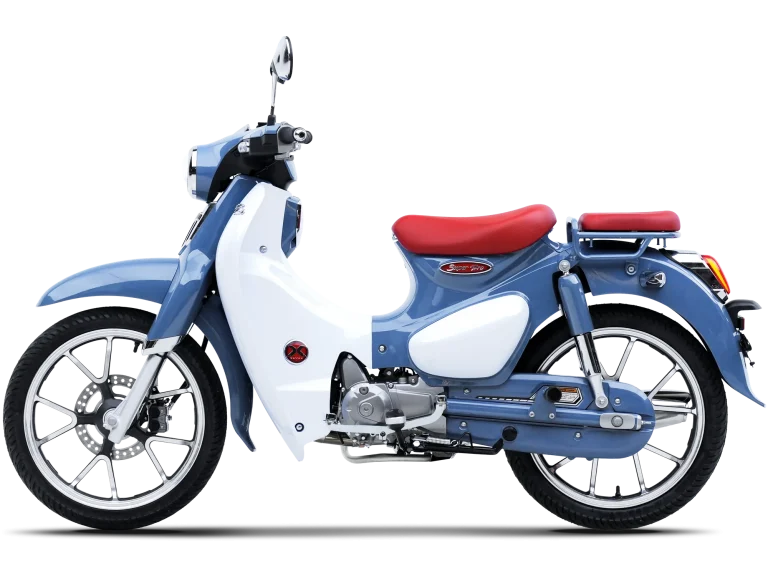
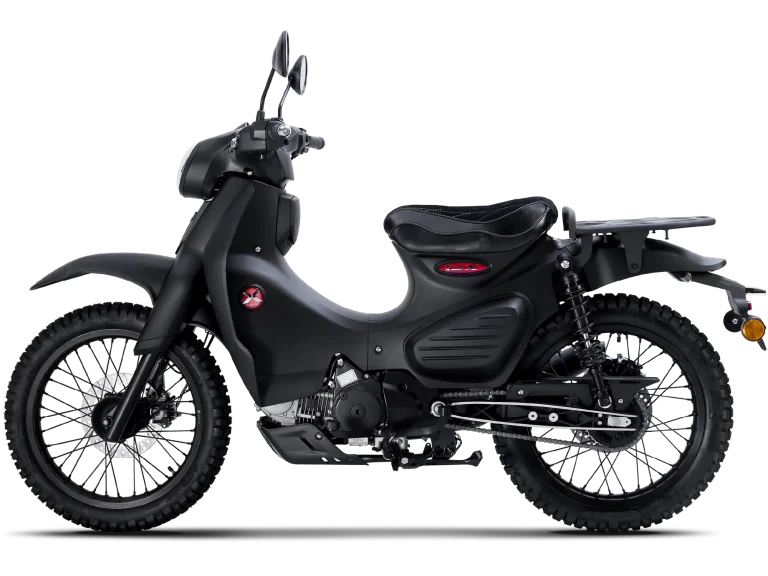
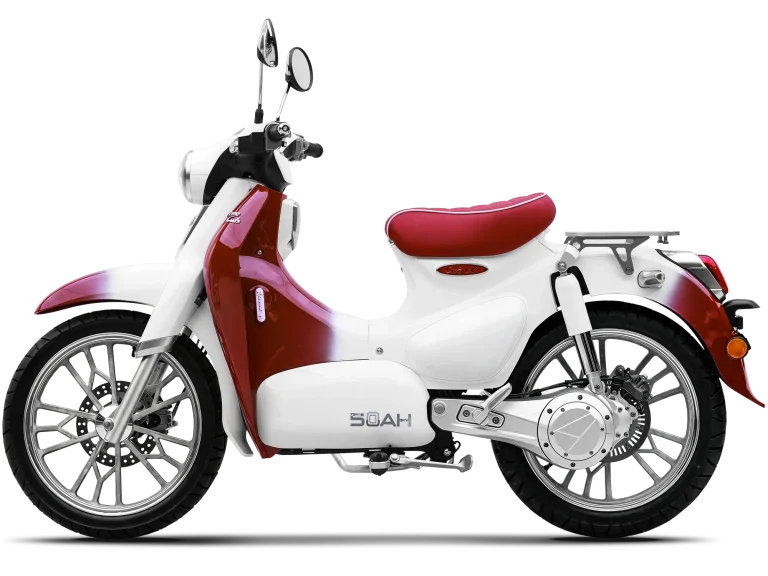
Two motorcycles may look almost identical in a catalog while using different components and having different costs.
Therefore, the lowest quotation does not automatically mean the lowest price for the same motorcycle.
It may simply be a quotation for a different configuration.
For professional motorcycle purchasing, the objective should be:
Compare the same specification under the same commercial conditions.
Step 1: Tell the Factory About Your Target Market
Start the RFQ by identifying the country or market where the motorcycles will be sold.
For example:
Target Market: Kenya
or:
Target Markets: Guatemala and Honduras
The destination matters because product requirements and customer expectations can vary significantly between markets.
Relevant differences may include:
- Preferred engine displacement
- Customer price range
- Road conditions
- Fuel quality
- Average vehicle usage
- Commercial or private use
- Emissions requirements
- Registration requirements
- VIN requirements
- Lighting or safety requirements
- Dealer service capability
- Spare-parts expectations
A motorcycle suitable for short-distance urban commuting in one market may not be the right configuration for intensive commercial or rural use in another.
The manufacturer should understand the intended market before recommending the final product.
Step 2: Define the Motorcycle Category and Use Case
Do not request only “motorcycles.”
Specify the category.
For example:
- 110cc Cub motorcycle
- 125cc underbone motorcycle
- 150cc commuter motorcycle
- 150cc scooter
- 200cc utility motorcycle
- 250cc dirt bike
- Electric delivery motorcycle
Then explain how the motorcycle will be used.
For example:
Use Case: Daily commuting and motorcycle taxi operation
or:
Use Case: Dealer retail product for entry-level urban commuters
or:
Use Case: Agricultural and rural utility use with frequent cargo loads
This helps the manufacturer understand which product characteristics matter most.
A fleet buyer may prioritize durability, serviceability and parts availability.
A lifestyle-focused dealer may care more about design, colors and product differentiation.
A high-volume commuter distributor may prioritize fuel economy, simple maintenance, competitive landed cost and parts commonality.
Step 3: Specify the Important Components
Do not assume that model appearance defines specification.
A product photo shows the design.
It does not necessarily tell you exactly what components are included in the quoted motorcycle.
For combustion-engine motorcycles, consider the following areas.
Engine
- Engine displacement
- Engine type
- Air-cooled or liquid-cooled
- Carburetor or EFI
- Manual, semi-automatic or automatic transmission
- Electric-start requirement
- Kick-start requirement where applicable
Brakes
- Front drum or disc
- Rear drum or disc
- CBS requirement where applicable
- ABS requirement where applicable
Wheels and Tires
- Wheel size
- Spoke or alloy wheels
- Tube or tubeless tires
- Required tire specification
- Preferred tire brand or quality level if important
Electrical Equipment
- Battery specification
- Headlight type
- Indicators
- Instrument cluster
- USB charging where required
Chassis and Equipment
- Front and rear suspension
- Rear carrier
- Crash bar
- Side stand
- Center stand
- Mirrors
- Seat
- Chain and sprocket
- Cargo equipment
- Other market-specific accessories
You do not always need to define every component in the first RFQ.
However:
The more important a component is to your market, the earlier it should be confirmed.
Step 4: State a Realistic Order Quantity
Factories need realistic quantity information to prepare a useful quotation.
Instead of:
“I need many motorcycles.”
write:
Estimated First Order: 120–150 units
and, if relevant:
Estimated Annual Volume: 800–1,200 units
or:
Initial Requirement: One 40HQ container, subject to final model mix
The first-order quantity and annual purchasing potential are different pieces of information.
The first helps the factory evaluate immediate production and packing requirements.
The second helps the supplier understand the longer-term potential of the distribution program.
If the project is still being evaluated, say so.
For example:
Current Stage: Supplier evaluation. Trial order planned before annual purchasing program.
A realistic estimate is more useful than an exaggerated volume.
Step 5: Confirm CBU, SKD or CKD Supply
The RFQ should state the preferred supply form.
CBU — Completely Built Unit
The motorcycle is supplied as a finished vehicle with no significant local assembly required.
SKD — Semi Knocked Down
The motorcycle is partially disassembled for shipment and requires defined assembly work in the destination market.
CKD — Completely Knocked Down
The motorcycle is supplied in a deeper parts-based format intended for local assembly operations.
If the preferred format has not yet been decided, ask the factory to quote alternatives separately.
For example:
Supply Form: Please quote CBU and SKD separately.
or:
Supply Form: CKD under evaluation. Please advise available packing structure, assembly requirements and technical support.
Do not compare a CBU quotation from one factory directly with a CKD quotation from another.
Unit price is only one part of the calculation.
Packing efficiency, freight, local labor, assembly equipment, quality control, missing-parts management and operational costs can all be different.
Related 🔗:Motorcycle CKD vs SKD vs CBU Explained | China Motorcycle Factory Guide
Step 6: Define OEM and Private-Label Requirements
If the motorcycle will be sold under your own brand, mention this in the RFQ.
OEM requirements may include:
- Fuel-tank logo
- Side-cover logo
- Model name
- Decals
- Color combinations
- VIN/nameplate information
- Owner’s manual
- Warning labels
- Packaging
- Carton marks
- Spare-parts packaging
Example:
Branding Requirement: Private label under buyer’s brand. Custom tank logo, side-cover decals, English/Spanish owner’s manual and branded carton marks required.
OEM details should not be left until mass production.
Artwork, manuals, labels and packaging can affect:
- Preparation time
- MOQ
- Cost
- Component planning
- Compliance review
- Production schedule
Confirm them early enough for the factory to include them in the project plan.
Step 7: Include Compliance and Document Requirements
Motorcycle import and registration requirements differ by destination market.
The RFQ should identify the requirements already known by the buyer and ask the supplier to confirm what documentation can be supported for the proposed configuration.
Possible areas include:
- Vehicle homologation
- Emissions requirements
- VIN format
- Vehicle identification
- Registration documentation
- Certificate of Origin
- Commercial Invoice
- Packing List
- Bill of Lading
- Relevant product or component certificates
- Technical information
- Manuals and labels
- Market-language requirements where applicable
A useful RFQ statement is:
Required Compliance: Please confirm whether the proposed model and configuration can support the documents required for registration in [country].
If the compliance route is still being investigated, say so.
Do not assume that a certification statement automatically applies to every optional configuration or destination market.
For regulated projects, the exact vehicle specification and applicable documentation should be confirmed before commercial production.
Step 8: Specify the Trade Term and Destination
A unit price without a trade term is incomplete.
For example:
Price Requested: FOB [agreed port of shipment]
or:
Price Requested: CIF Mombasa, Kenya
or:
Please quote FOB and CIF separately for comparison.
Also state the destination port or agreed delivery location where relevant.
This allows quotations to be compared on a more consistent basis.
A supplier quoting EXW, another quoting FOB and another quoting CIF are not presenting the same cost structure.
Before comparing unit prices, normalize the commercial terms.
Step 9: Ask for Spare Parts and After-Sales Support
Spare parts should be discussed during sourcing, not after motorcycles begin selling.
For a first shipment, ask the manufacturer to recommend a starter package based on:
- Motorcycle model
- Order quantity
- Expected usage
- Common maintenance items
- Wear parts
- Market conditions
- Dealer service capability
- Parts sharing between models
Example RFQ requirement:
Spare Parts: Please recommend a first-shipment fast-moving spare-parts package and quote the parts separately.
For multi-model projects, also ask:
Please identify which proposed models share common maintenance and wear parts.
Parts commonality can reduce inventory complexity for distributors operating several models.
A low motorcycle price is not particularly useful if the dealer network cannot obtain common service parts after launch.
Step 10: State the Required Timeline
“Urgent” is not a production schedule.
Use target dates or clear commercial milestones.
For example:
Target Sample Confirmation: October 2026
Target Mass Production: November 2026
Target Shipment: Before December 15, 2026
If the market-launch date is fixed, include it.
However, buyers should also understand that motorcycle lead time may be affected by:
- Final configuration
- OEM artwork
- Component sourcing
- Documentation
- Certification requirements
- Sample approval
- Production scheduling
- Packing format
A realistic schedule is more useful than an impossible deadline that creates pressure later in the project.
What Commonly Causes a Motorcycle Factory to Re-Quote?
A quotation is based on assumptions.
When important assumptions change, the factory may need to issue a new price.
Common reasons include:
1. Major Specification Changes
Examples include changing:
- Drum brake to disc brake
- Carburetor to EFI
- Tire brand or specification
- Battery specification
- Instrument cluster
- Suspension
- Engine configuration
2. Quantity Changes
Pricing for 50 units may not be the same as pricing for 500 or 5,000 units.
Quantity can affect component purchasing, OEM preparation and packing efficiency.
3. Changing CBU, SKD or CKD Format
Different supply structures can change:
- Packing
- Container quantity
- Labor
- Packaging materials
- Parts organization
- Documentation
- Technical support requirements
4. Adding OEM Requirements Late
Custom colors, decals, manuals, labels and packaging can create additional cost and preparation work.
5. Adding Compliance Requirements After the Initial Quote
A standard export configuration may not be identical to the configuration required for a regulated destination market.
Compliance requirements should be identified before the final commercial quotation whenever possible.
6. Changing the Commercial Term or Destination
EXW, FOB and CIF quotations represent different supplier responsibilities and cost structures.
A change in destination can also affect freight and logistics costs.
The practical rule is:
When the requested product or commercial conditions change, confirm whether the quotation still applies.
Complete Motorcycle RFQ Template
Importers can copy and adapt the following template.
MOTORCYCLE REQUEST FOR QUOTATION
1. Buyer Information
Company Name:
[Company]
Country / Target Market:
[Country or Region]
Buyer Type:
Importer / Distributor / Dealer Group / Assembler / Fleet Buyer / Brand Owner
Project Stage:
Supplier Evaluation / Trial Order / New Brand Launch / Repeat Purchase
2. Product Requirement
Motorcycle Category:
Cub / Underbone / Scooter / Commuter / Utility / Dirt Bike / Electric Motorcycle
Target Engine Size:
[Example: 125cc / 150cc]
Primary Use Case:
[Daily commuting / delivery / commercial transport / rural utility / dealer retail / fleet use]
Target Retail Position:
[Entry Level / Mainstream / Mid-Market / Premium / Other]
Estimated First Order:
[Quantity]
Estimated Annual Volume:
[Optional]
Preferred Supply Form:
CBU / SKD / CKD
3. Required Specification
Engine:
[Requirement]
Cooling:
Air-Cooled / Liquid-Cooled / Open to Recommendation
Fuel System:
Carburetor / EFI / Open to Recommendation
Transmission:
Manual / Semi-Automatic / Automatic
Starting System:
Electric / Electric + Kick / Other
Front Brake:
[Requirement]
Rear Brake:
[Requirement]
CBS / ABS:
[Requirement if applicable]
Wheels:
[Spoke / Alloy / Size]
Tires:
[Tube / Tubeless / Size / Preferred quality level]
Battery:
[Requirement if important]
Lighting / Meter:
[Requirement]
Suspension:
[Requirement if important]
Additional Equipment:
[Carrier / crash bar / USB / cargo equipment / other requirements]
4. OEM / Branding
Brand:
Own Brand / KAMAX / Undecided
Logo / Decals:
[Requirement]
Colors:
[Requirement]
Model Name:
[Requirement]
Manual Language:
[Language]
Labels:
[Requirement]
Carton Marks / Packaging:
[Requirement]
5. Compliance
Destination Country:
[Country]
Known Homologation / Registration Requirements:
[Requirement]
Emissions Requirement:
[If known]
VIN Requirement:
[If known]
Required Documents:
[List if known]
Compliance Status:
Confirmed / Under Evaluation / Factory Recommendation Required
6. Commercial Requirements
Quotation Term:
EXW / FOB / CIF / Other
Destination Port / Location:
[Destination]
Quotation Currency:
[USD / EUR / Other]
Target Quantity:
[Quantity]
Target Sample Date:
[Date]
Target Production Date:
[Date]
Target Shipment Date:
[Date]
Sample Required:
Yes / No
7. Spare Parts and After-Sales
Please recommend and quote:
- First-shipment fast-moving spare parts
- Maintenance parts
- Wear parts
- Model-specific parts
- Shared parts across proposed models
- Special tools where required
- Service information
- Warranty support
8. Information Requested From Manufacturer
Please provide:
- Recommended model(s)
- Detailed configuration
- Unit price
- MOQ
- Available CBU / SKD / CKD options
- Packing method
- Units per container
- Estimated production lead time
- Sample availability and sample cost
- OEM options
- Compliance and document support
- Recommended spare-parts package
- Warranty terms
- Payment terms
- Quotation validity
- Key specification alternatives that may affect price
Example: RFQ for a 150cc Commuter Motorcycle
A realistic RFQ might look like this.
Buyer Requirement
Market: East Africa
Buyer Type: Motorcycle Distributor
Product: 150cc Commuter Motorcycle
Use: Daily commuting and commercial transport
First Order: 150 units
Annual Target: 1,000+ units subject to market performance
Supply Form: CBU
Key Product Requirements
- 150cc four-stroke engine
- Air-cooled
- Electric + kick start
- Front disc / rear drum
- Heavy-duty rear carrier
- Durable suspension for mixed road conditions
- Simple maintenance
- Strong availability of wear parts
- Private-label decals
- English owner’s manual
- Starter spare-parts package
Commercial Request
Please quote:
- Detailed model and configuration
- FOB price
- CIF price to destination port
- MOQ
- Units per 40HQ
- Production lead time
- Sample availability
- OEM cost where applicable
- Recommended first-shipment spare-parts package
- Warranty terms
- Payment terms
- Quotation validity
This gives the manufacturer enough information to recommend a relevant motorcycle and prepare a quotation the buyer can actually evaluate.
Example: RFQ for a CKD Motorcycle Project
CKD projects require more information than a standard finished-motorcycle quotation.
Project Information
Target Market: [Country]
Expected Volume: 3,000 units per year
Supply Form: CKD
Local Capability:
- Assembly facility available
- Local technicians available
- Basic QC station available
- Local packaging capability under evaluation
Information Requested From Manufacturer
Please confirm:
- CKD breakdown level
- Packing method
- Parts coding system
- BOM format
- Carton numbering
- Container loading quantity
- Assembly sequence
- Assembly instructions
- Required tools
- Torque specifications
- Recommended QC checkpoints
- Final inspection requirements
- Missing-parts claim procedure
- Technician training support
- Spare-parts structure
This is more useful than simply asking:
“What is your CKD price?”
CKD cost cannot be evaluated properly without understanding what is included and which operations must be completed locally.
What Should a Factory Return After Receiving an RFQ?
A professional supplier response should make the project clearer, not create more questions.
Depending on the project stage, the buyer should expect some combination of the following:
| Supplier Response | Why It Matters |
|---|---|
| Recommended model | Confirms product-market fit |
| Configuration sheet | Shows what is actually being quoted |
| Unit price | Provides the commercial basis |
| MOQ | Determines order feasibility |
| Packing method | Affects freight and receiving |
| Container quantity | Supports logistics calculations |
| Production lead time | Supports launch planning |
| Sample availability | Supports product evaluation |
| OEM options | Defines private-label possibilities |
| Compliance support | Helps plan registration and market entry |
| Spare-parts recommendation | Supports dealer after-sales |
| Warranty terms | Clarifies post-sale responsibility |
| Payment terms | Defines commercial requirements |
| Quotation validity | Shows how long the quoted conditions apply |
If a supplier returns only a unit price without a clear configuration, the buyer still does not have a complete quotation.
How to Compare Motorcycle Factory Quotations
Once several suppliers respond, normalize the quotations before comparing price.
A simple comparison table can help.
| Comparison Item | Supplier A | Supplier B | Supplier C |
|---|---|---|---|
| Model | |||
| Engine | |||
| EFI / Carburetor | |||
| Transmission | |||
| Brakes | |||
| Tires | |||
| Battery | |||
| Key Equipment | |||
| Packing | |||
| Units / Container | |||
| Spare Parts | |||
| Warranty | |||
| Incoterm | |||
| MOQ | |||
| Lead Time | |||
| Unit Price |
Only compare price after confirming that the important specifications and commercial conditions are equivalent.
A motorcycle that is USD 20 cheaper may not actually offer a better purchase cost if it uses a different:
- Battery
- Tire
- Brake configuration
- Suspension
- Packing structure
- Spare-parts package
- Warranty structure
For B2B motorcycle purchasing, the question should not be:
“Which factory gave me the lowest number?”
The better question is:
“Which factory quoted the right specification under clearly defined commercial conditions?”
7 Common Motorcycle RFQ Mistakes
1. Asking Only for the Cheapest Price
Price without a defined specification has limited meaning.
2. Not Identifying the Target Country
Without the destination market, the supplier cannot properly evaluate product fit, documentation or compliance requirements.
3. Comparing Different Trade Terms
EXW, FOB and CIF quotations represent different responsibilities and cost structures.
Normalize the terms before comparing prices.
4. Ignoring Packing Method
CBU, SKD and CKD quotations should not be treated as equivalent offers.
5. Leaving OEM Details Until Production
Logos, decals, manuals, labels and packaging can affect cost and lead time.
6. Forgetting Spare Parts
The first motorcycle shipment should not arrive in the market without an after-sales plan.
7. Requesting Too Many Models at Once
A very long product list can generate a large quotation without creating a good launch strategy.
New importers should prioritize motorcycles that fit the target market, dealer capabilities and spare-parts system.
A Simple Rule for Better Motorcycle RFQs
A useful RFQ should make five areas clear:
Market + Product + Specification + Quantity + Commercial Conditions
If those five areas are clear, the manufacturer can usually provide a much more useful response.
If they remain unclear, the buyer may receive an attractive number that cannot be properly compared—or reliably executed.
Frequently Asked Questions
What does RFQ mean in motorcycle sourcing?
RFQ means Request for Quotation.
It is a structured request from a buyer asking a motorcycle manufacturer or supplier to quote a defined product, specification, quantity and commercial requirement.
What information should I send to a motorcycle manufacturer for a quotation?
At minimum, provide:
- Target country
- Motorcycle category
- Engine size
- Intended use
- Estimated quantity
- Preferred CBU, SKD or CKD supply form
- Destination
For a more accurate quotation, also provide specification requirements, OEM needs, compliance requirements, spare-parts expectations and target shipment timing.
Should I include my target price in an RFQ?
You can include a realistic target price if it is connected to a defined specification and trade term.
Avoid giving only a target price without explaining the product requirement.
Otherwise, different suppliers may reduce specifications in different ways simply to reach the requested number.
Should I ask several motorcycle factories for quotations?
Yes.
Comparing several qualified suppliers can help buyers understand differences in product configuration, price, service and cooperation terms.
However, suppliers should receive substantially the same RFQ if you want an accurate comparison.
What is the difference between an RFQ and a Proforma Invoice?
An RFQ is normally prepared by the buyer to request pricing and commercial information.
A Proforma Invoice is normally prepared by the supplier after the main commercial terms have been discussed and is commonly used to confirm the proposed order before payment.
Do I need a detailed RFQ for a sample motorcycle?
Not always.
A sample request can begin with a simpler specification.
However, if the sample will become the reference for mass production, the final configuration should be documented clearly before production begins.
What should I ask for in a CKD motorcycle RFQ?
In addition to model, specification and quantity, ask about:
- CKD breakdown level
- BOM
- Packing structure
- Parts coding
- Carton identification
- Container quantity
- Assembly sequence
- Instructions
- Tools
- Torque specifications
- QC requirements
- Spare parts
- Missing-parts claim procedures
- Technical training support
Can a motorcycle factory recommend models if I do not know exactly what to buy?
Yes.
A useful RFQ can describe the target market, customer, use case, target price position and expected quantity even if the final model has not been selected.
The manufacturer can then recommend appropriate motorcycles and configurations for further evaluation.
Why did the factory change its quotation?
Factories may need to re-quote when important assumptions change.
Common reasons include:
- Specification changes
- Different order quantity
- CBU/SKD/CKD changes
- New OEM requirements
- Additional compliance requirements
- Different destination or trade term
Whenever the requested product or commercial conditions change, confirm whether the previous quotation is still valid.
Send Your Motorcycle RFQ to KAMAX
A useful motorcycle quotation starts with a clear project requirement.
If you are sourcing motorcycles for distribution, wholesale, OEM/private label, fleet use or local CKD/SKD assembly, prepare the following information before contacting KAMAX:
- Target country or region
- Buyer type
- Motorcycle category
- Intended use
- Engine displacement
- Estimated first-order quantity
- Expected annual volume where available
- CBU, SKD or CKD requirement
- Key specification requirements
- OEM requirements
- Compliance or document requirements
- Destination port
- Expected launch schedule
KAMAX can then evaluate suitable motorcycle models, configurations, supply forms, OEM options and commercial requirements for the project.
Preparing a motorcycle sourcing project?
Send KAMAX your RFQ and project requirements to discuss suitable models, specifications and supply options.