
About the Article
Motorcycle sales, China–India supply, brand competition, retail pricing and distribution opportunities in Central America.
Quick Answer
What is the outlook for Guatemala’s motorcycle market in 2027?
Guatemala remains one of Central America’s significant motorcycle growth markets. Industry sales reached 415,073 units during January–September 2026, up 14.2% year on year. China and India are major manufacturing sources, while Japanese, Indian, Chinese and regional brands compete across established retail price bands. Selected Chinese brands recorded strong growth in 2026, but traditional manufacturers remain prominent. With electric two-wheelers accounting for only a small fraction of reported sales, the 2027 outlook remains centered on combustion-engine motorcycles, product-level competition and sustainable dealer demand.
Research cut-off: November 17, 2026.
Introduction
Guatemala’s motorcycle market has developed into a substantial business for manufacturers, importers and domestic distributors.
Sales continued to grow during 2026, following several years of expansion. By September, the country had nearly 3.6 million registered motorcycles, while its retail market offered an extensive selection of commuter, work, street and dual-purpose models.
The market is not dominated by one competitive approach.
Established Japanese manufacturers maintain recognizable retail positions. Indian brands remain important participants, while selected Chinese manufacturers have reported stronger percentage growth. Value-oriented retailers promote motorcycles at prices substantially below those of some established international brands.
These differences are central to Guatemala’s commercial outlook.
The market’s overall growth is clear. The more consequential question entering 2027 is how that growth is distributed among brands, price segments and individual motorcycle models.
This analysis draws on industry sales statistics, Guatemala’s vehicle register, international trade records and published local retail offers.
1. Guatemala Motorcycle Sales and Market Size, 2023–2026
Sales Continue to Expand
According to Alianza MotoLatam data attributed to Guatemala’s AIDVA and published by the Asociación Automotriz del Perú (AAP), Guatemala recorded 415,073 motorcycle sales between January and September 2026.
That compares with 363,602 motorcycles during the corresponding period in 2025.
| Reporting Period | Motorcycle Sales | Year-on-Year Change |
|---|---|---|
| January–September 2025 | 363,602 | — |
| January–September 2026 | 415,073 | +14.2% |
| Additional units | 51,471 | — |
Source: AAP, Automotive Industry Report, October 2026, page 75. Original figures: Alianza MotoLatam / AIDVA.
The additional 51,471 motorcycles represent substantial growth over a nine-month period.
The market was already expanding before 2026.
MotorCyclesData, an independent commercial market research provider, reports the following historical sales series:
| Year | Reported Motorcycle Sales | Annual Growth |
|---|---|---|
| 2023 | 298,529 | +11.6% |
| 2024 | 352,560 | +18.1% |
| 2025 | 440,366 | +24.9% |
Source: MotorCyclesData, Guatemala Motorcycle Market, August 2026.
The annual series indicates that motorcycle sales increased by approximately 47.5% between 2023 and 2025.
MotorCyclesData separately recorded 273,533 sales during January–July 2026, an increase of 8.1%.
Because the January–July and January–September figures come from different providers, their growth rates should not be interpreted as evidence of acceleration or deceleration within the same statistical series.
Both sources nevertheless indicate continued growth during 2026.
Registered Motorcycles Reach 3.59 Million
The Superintendencia de Administración Tributaria (SAT) reported 3,592,894 registered motorcycles as of September 2026, according to an article published by Diario de Centro América on November 6.
Motorcycles accounted for approximately 51.6% of Guatemala’s 6,960,186 registered vehicles.
Source: Diario de Centro América, November 6, 2026, citing SAT.
The registered motorcycle population confirms the importance of two-wheelers within the country’s transportation system.
It also provides context for aftermarket activity.
A large installed fleet creates an ongoing need for service and replacement components, although the actual commercial demand depends on vehicle usage, model age and the condition of motorcycles remaining in circulation.
Annual sales measure current market activity. Vehicle registrations describe the existing population. Both are useful, but they answer different commercial questions.
2. Motorcycle Brand Competition: Established Leaders and Faster-Growing Challengers
Guatemala’s strong motorcycle demand has attracted a broad range of international and regional brands.
MotorCyclesData’s January–July 2026 figures reveal considerable differences in manufacturer performance.
Selected Brand Growth, January–July 2026
| Brand | Year-on-Year Growth |
|---|---|
| Honda | +8.8% |
| Suzuki | +10.0% |
| Bajaj | +0.5% |
| Italika | +3.4% |
| Yamaha | +5.3% |
| Haojue | +34.5% |
| TVS | −16.2% |
| Hero | −6.0% |
| CFMOTO | +40.6% |
Source: MotorCyclesData, Guatemala Motorcycle Market, August 23, 2026. Figures refer to January–July 2026, not full-year sales. Growth rates are not market shares.
Japanese Brands Retain Prominent Positions
Honda and Suzuki continued growing during the period, demonstrating that newer competitors have not displaced established Japanese manufacturers from their prominent market positions.
Suzuki’s local product portfolio illustrates the range of established competition.
Its Guatemala motorcycle range includes 125cc commuter and street motorcycles, automatic scooters, dual-purpose models and larger-displacement products.
The GN125F, EN125, Burgman 125 and DR150 occupy different retail positions and offer recognizable alternatives within their respective categories.
Their presence matters because a new motorcycle entering Guatemala is compared against products already available through local retail and service channels.
Indian Brands Show Uneven Performance
Bajaj recorded modest growth of 0.5%, while Hero and TVS declined during January–July 2026.
These figures do not establish a long-term retreat by Indian manufacturers.
They indicate that Indian brands were experiencing different competitive outcomes during the same period.
The relative performance of individual models and distribution networks may explain part of the variation, although the published data does not isolate the causes.
Chinese Brand Growth Is Not Uniform
Haojue grew 34.5% and CFMOTO 40.6%, significantly faster than the overall market growth reported by MotorCyclesData for January–July.
However, the two manufacturers compete in different parts of the motorcycle industry.
Haojue has a substantial small-displacement product range, while CFMOTO also offers larger and more specialized motorcycles.
Their growth therefore cannot be used to conclude that all Chinese-made commuter motorcycles are gaining market share at the same rate.
The broader finding is more significant: established manufacturers remain prominent while selected challengers grow faster.
Guatemala’s competitive environment is becoming more differentiated, rather than shifting uniformly from one manufacturing country to another.
3. Retail Pricing: A Market with Distinct Competitive Price Bands
Guatemala’s motorcycle retail market spans several price levels, from heavily promoted work motorcycles to established commuter, scooter and dual-purpose products.
Published retail prices provide a useful view of this structure.
Selected Advertised Prices in Guatemala
| Brand / Model | Category | Advertised Price |
|---|---|---|
| Italika GTK125, black, selected 2027 listing | 125cc work motorcycle | Q7,799 promotional |
| Italika 150Z, selected listing | 150cc work/street motorcycle | Q10,999 promotional |
| Suzuki Force GN125 | 125cc commuter/street | From Q16,590 |
| Suzuki Burgman 125 | 125cc scooter | From Q16,905 |
| Suzuki EN125 | 125cc street motorcycle | From Q17,010 |
| Suzuki DR150 | 150cc dual-purpose | From Q18,890 |
| Suzuki Gixxer DF155 | 155cc street motorcycle | From Q22,365 |
Sources: Elektra Guatemala — Italika GTK125, Elektra’s motorcycle catalogue and Suzuki Guatemala. Reviewed November 17, 2026. Prices are advertised offers, not verified transaction prices or national averages. Promotions and availability may change.
The table demonstrates that a 125cc displacement alone does not define a single retail price category.
The selected Italika GTK125 promotion is substantially below the published starting price of Suzuki’s GN125.
The difference reflects distinct products and retail arrangements. Equipment, warranty provisions, brand recognition, model specifications and promotional conditions may all contribute.
It would therefore be misleading to interpret the entire price difference as a brand premium or distributor margin.
Entry-Level Retail Competition Is Already Aggressive
Elektra’s GTK125 listing advertised a discounted price of Q7,799 against a higher reference price.
Other listings for the same model family have carried different prices.
This highlights the importance of exact product versions and retailer promotions when interpreting Guatemala’s motorcycle prices.
For suppliers targeting entry-level work motorcycles, these established promotional offers are part of the competitive environment.
A new model may offer an attractive factory quotation but still face limited retail pricing flexibility against discounted alternatives.
Established Brands Occupy Higher Price Positions
Suzuki’s publicly advertised prices show a different commercial position.
The GN125, EN125 and Burgman 125 are offered at higher starting prices than selected entry-level Italika work motorcycles.
The DR150 and Gixxer DF155 extend the range into additional categories.
These price differences indicate segmentation, but not necessarily differences in actual sales profitability.
Dealers may achieve different margins, financing arrangements and stock turnover rates across the products.
The most useful comparison is therefore between motorcycles serving similar customer needs at comparable retail prices.
Financing Adds Another Competitive Dimension
Motorcycle listings from Elektra also advertise installment options and weekly payment examples.
For some products, the retailer presents multiple payment methods alongside cash and promotional prices.
The resulting affordability depends on the full financing agreement, including any down payment, fees, term and eligibility requirements.
This creates a retail environment in which manufacturers and distributors compete through more than specifications and list prices.
A motorcycle’s customer-facing financing offer can influence its position alongside established alternatives.
4. Product Segments: Where Competition Is Concentrated
The market’s overall growth does not reveal how sales are distributed among individual motorcycle categories.
Public retailer inventories and product ranges nevertheless provide evidence of competition in several established segments.
Commuter and Work Motorcycles
Conventional small-displacement motorcycles remain highly visible in Guatemala’s retail market.
The Italika GTK125, Suzuki GN125 and EN125 illustrate different competitive positions in practical transportation.
These products address an established need, but they also make the segment difficult for undifferentiated new entries.
A new commuter motorcycle positioned near an existing product must compete within an already recognizable price and service environment.
Lower acquisition cost, different equipment or a distinct intended use may create a different proposition, but the available national sales figures do not establish which of these factors carries the greatest commercial value.
Dual-Purpose and Utility Motorcycles
Guatemala’s retail market includes dual-purpose motorcycles such as the Suzuki DR150.
These products combine daily transportation with specifications intended for more varied road conditions.
Their presence supports the commercial relevance of the category, while also establishing an existing competitive reference.
Suspension characteristics, durability, equipment and retail price can distinguish utility-oriented motorcycles from conventional commuter models.
National public data, however, does not provide a reliable sales share for the category.
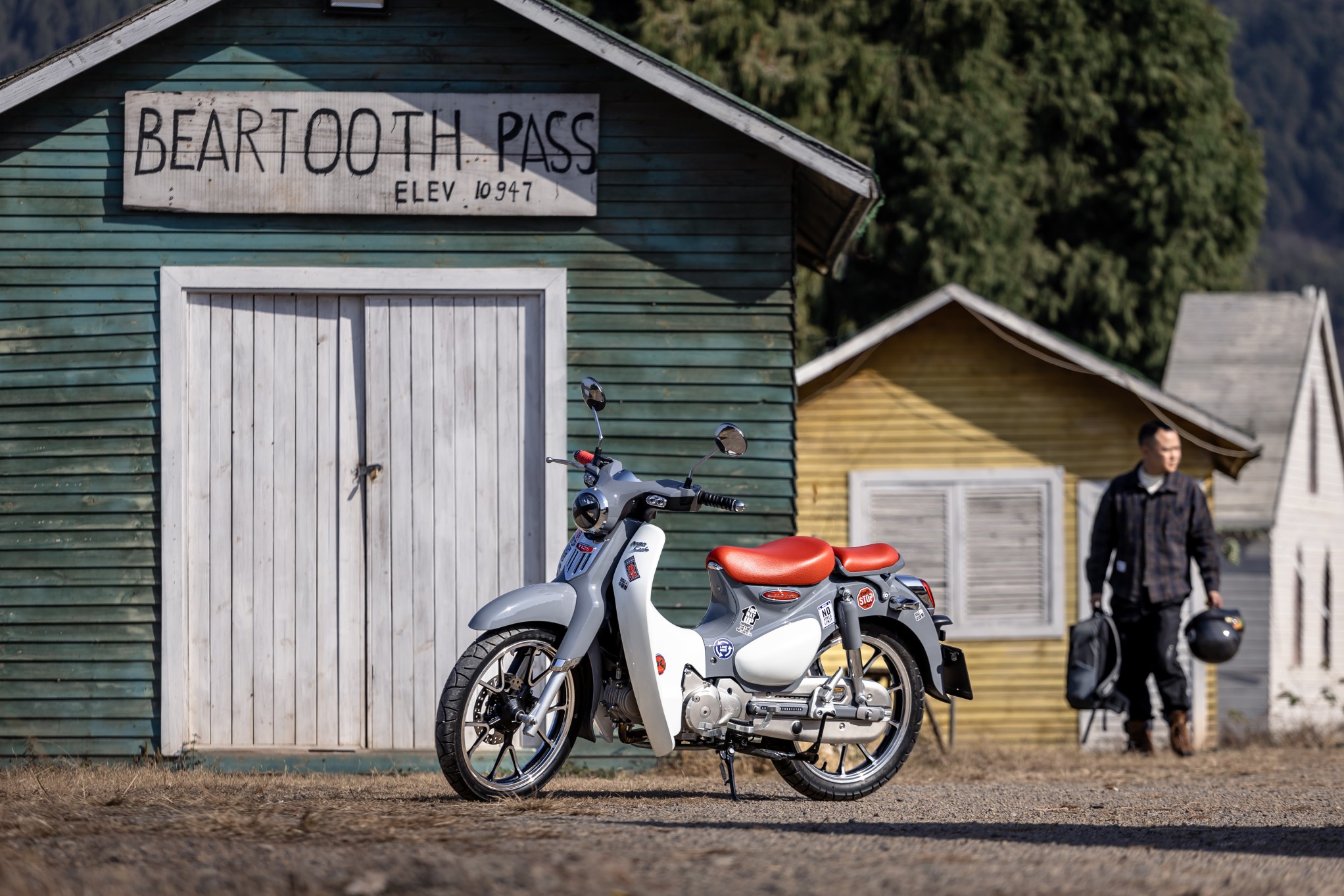
Cub and Underbone Motorcycles
Cub and underbone motorcycles offer different design and operating characteristics from conventional street and work motorcycles.
For established distributors, these products may provide additional positioning within the small-displacement market.
The extent of the opportunity remains less transparent.
The publicly available data reviewed for this article does not isolate national Cub sales or demonstrate that the category is growing faster than the overall motorcycle market.
The commercial case therefore depends on comparable local models, retail pricing, dealer sell-through and repeat demand.
Internationally available Cub motorcycle platforms illustrate the variety of available configurations, but demand for any individual configuration cannot be established from national market growth alone.
Electric Motorcycles Remain a Small Segment
Electric motorcycles offer a contrasting picture.
MotorCyclesData recorded 294 electric two-wheeler sales in Guatemala during January–July 2026, a decline of 16.7% year on year.
The segment accounted for approximately 0.1% of the provider’s reported total motorcycle sales.
| Electric Two-Wheeler Indicator | January–July 2026 |
|---|---|
| Reported sales | 294 units |
| Year-on-year change | −16.7% |
| Approximate share of total motorcycle sales | 0.1% |
Source: MotorCyclesData, August 2026.
The contrast with Guatemala’s overall motorcycle sales growth is considerable.
Current expansion remains overwhelmingly associated with combustion-engine motorcycles.
Electric models may serve specific urban or fleet applications, but the available data does not indicate broad consumer adoption at this stage.
It also provides insufficient evidence for a reliable long-term electric motorcycle sales forecast.
Segment Overview
| Segment | Observable Competitive Position | Main Market Consideration |
|---|---|---|
| Entry-level work motorcycles | Aggressive retail promotions | Price positioning and operating costs |
| 125–150cc commuters | Established international brands | Product differentiation |
| Dual-purpose motorcycles | Existing branded alternatives | Equipment and intended use |
| Cub and underbone motorcycles | Limited published segment data | Local retail demand and product fit |
| Scooters | Established urban retail products | Convenience and financing |
| Electric motorcycles | Very small reported market | Limited current sales scale |
Editorial assessment based on published market data and retail evidence, not an official ranking of segment sales.
5. Motorcycle Imports: China and India Dominate Reported Small-Displacement Supply
Guatemala’s international supply structure provides another important perspective on its motorcycle industry.
According to World Bank WITS, China and India were by far the largest reported exporting countries to Guatemala in 2025 under HS 871120.
The classification covers motorcycles with reciprocating internal-combustion piston engines exceeding 50cc but not exceeding 250cc.
2025 Motorcycle Exports to Guatemala — HS 871120
| Exporting Country | Reported Quantity | Export Value |
|---|---|---|
| China | 299,026 units | US$213.37 million |
| India | 173,615 units | US$149.43 million |
| Brazil | 936 units | US$3.06 million |
| Indonesia | 1,040 units | US$2.91 million |
| United States | 732 units | US$1.91 million |
| Japan | 351 units | US$1.08 million |
Source: World Bank WITS — Exports to Guatemala, 2025, HS 871120. Exporter-reported trade statistics; values rounded.
China accounted for the larger reported volume, while India also supplied substantial quantities.
Together, the two countries reported 472,641 units under this classification.
That total exceeds MotorCyclesData’s estimated 440,366 domestic motorcycle sales in 2025.
The figures are not directly comparable: WITS records exporter-reported trade shipments for a particular customs classification, while MotorCyclesData estimates annual domestic market sales. Timing, reporting coverage and inventory movements can affect the relationship between them.
The WITS figures should therefore not be converted directly into Guatemala retail market shares.
Manufacturing Origin and Retail Brand Position Are Different
The trade data shows the scale of Guatemala’s dependence on Chinese and Indian manufacturing for motorcycles within the specified engine category.
Yet prominent retail brands include Japanese manufacturers and regional distribution brands.
This is not necessarily contradictory.
A motorcycle’s brand identity, manufacturing location and exporting country can differ.
As a result, export-origin statistics and brand-level sales rankings describe different aspects of market competition.
For international suppliers, the more significant finding is that Guatemala already has substantial sourcing relationships with both China and India.
Competing within that supply structure requires a clear product position in the domestic market, where established brands and retail channels are already present.
6. Distribution Economics, After-Sales and Import Requirements
Guatemala’s large registered motorcycle population supports an established network of retailers, workshops, parts suppliers and service operators.
Manufacturers entering the market compete within that existing structure.
Dealer Networks and Parts Availability
Suzuki Guatemala publicly provides information on its motorcycle models, dealers and service support.
Large retailers such as Elektra combine motorcycle sales with publicly advertised financing arrangements.
The resulting competitive environment involves both product availability and the services surrounding a motorcycle purchase.
Adding new models can expand a distributor’s range, but it also introduces parts, warranty and maintenance requirements.
Differences in engines, braking systems, electrical equipment and model revisions can increase spare-parts complexity even when motorcycles have similar displacement and retail positions.
Accurate parts references, configuration records and continued supply are consequently relevant to distributor operating costs.
These are also central components of international motorcycle spare-parts and after-sales support.
Customs, VAT and First Registration
Motorcycle imports into Guatemala are administered through the Superintendencia de Administración Tributaria (SAT).
The applicable cost structure includes customs classification, import duties, tax treatment and vehicle registration.
| Cost or Requirement | Relevant Consideration |
|---|---|
| Customs classification | Confirmed tariff code under the applicable Central American tariff schedule |
| Import duty (DAI) | Rate applicable to the specific classification and transaction |
| Value-added tax (IVA) | Guatemala’s general IVA rate is 12%; actual import treatment must be confirmed |
| First-registration tax (IPRIMA) | Applicable vehicle taxation and valuation rules |
| Registration | Required vehicle and identification documentation |
| Domestic distribution | Inland transport, preparation, dealer expenses and inventory financing |
The SAT publishes customs legislation and vehicle tax valuation material, including 2026 IVA and IPRIMA tables.
Source: SAT Guatemala — Customs Legislation and Vehicle Tax Documentation.
A single universal import duty or registration tax rate would not accurately describe every motorcycle shipment.
Actual charges depend on the product classification, vehicle specifications and applicable transaction.
Landed Costs and Retail Turnover
Guatemala’s published motorcycle prices provide a visible reference for the final retail market, but they cannot be compared directly with factory FOB quotations.
Freight, applicable taxes, local distribution costs, financing, warranty expenses and dealer margins affect the relationship between procurement and retail pricing.
Inventory turnover adds another variable.
A motorcycle with a lower purchase cost may not produce a better financial outcome if it remains in stock longer or requires greater retail discounting.
The competitive position of a product is therefore inseparable from its actual dealer performance.
In an established market such as Guatemala, a new model’s initial shipment volume and subsequent replenishment demand can tell very different commercial stories.
7. Guatemala Motorcycle Market Outlook for 2027
Guatemala enters 2027 with a substantially larger motorcycle market than it had only a few years earlier.
Sales increased during the first nine months of 2026, the registered motorcycle fleet reached approximately 3.59 million units, and international supply from China and India remained substantial.
The evidence points to three defining market conditions.
Established manufacturers retain important positions. Honda and Suzuki continued growing in 2026, while some smaller manufacturers reported faster percentage increases. Competitive gains are occurring alongside, rather than uniformly replacing, established brands.
Mainstream motorcycle pricing is already competitive. Promotional work motorcycles and higher-priced established brands occupy distinct retail positions. Additional supply may find opportunities within those ranges, but broad market growth does not guarantee demand for another comparable model.
Combustion-engine motorcycles continue to dominate. The electric segment remains extremely small in the available 2026 sales data. Guatemala’s near-term market activity is still centered on conventional motorcycles serving transportation and practical mobility needs.
Indicators for 2027
| Market Indicator | What It Reveals |
|---|---|
| Full-year 2026 sales | Final annual market growth |
| Brand-level unit sales | Competitive scale beyond growth percentages |
| Retail prices and promotions | Changes in price positioning |
| Model-level sell-through | Actual customer demand |
| Dealer repeat orders | Demand sustained beyond initial stocking |
| Inventory turnover | Efficiency of distribution |
| Spare-parts replenishment | Ongoing service requirements |
| Electric motorcycle sales | Development of the emerging segment |
| SAT tax and registration updates | Changes affecting import economics |
Taken together, these indicators will provide a more reliable view of individual product opportunities than extrapolating national sales growth alone.
Conclusion
Guatemala’s motorcycle market continued expanding in 2026, supported by a large installed vehicle population and substantial demand for practical transportation.
The market is also increasingly competitive. Honda and Suzuki remain prominent, selected Chinese manufacturers are growing faster, and Indian brands are recording mixed results. China and India continue to supply large volumes of small- and medium-displacement motorcycles, while local retailers compete across distinct price levels.
For 2027, the most important commercial distinction is between aggregate demand and the performance of individual products.
Guatemala offers a substantial market for motorcycle distribution, but sustainable opportunities will depend on competitive retail positioning, actual dealer sales, inventory performance and after-sales support.
Frequently Asked Questions
Is Guatemala’s motorcycle market growing in 2026?
Yes. Alianza MotoLatam/AIDVA recorded 415,073 motorcycle sales during January–September 2026, an increase of 14.2% compared with the same period in 2025. These are partial-year figures rather than the final 2026 annual result.
How many motorcycles are registered in Guatemala?
SAT figures published in November 2026 show 3,592,894 registered motorcycles as of September 2026. Motorcycles accounted for approximately 51.6% of the country’s registered vehicles.
Which motorcycle brands are prominent in Guatemala?
Honda, Suzuki, Bajaj, Italika and other international and regional brands compete in the market. During January–July 2026, MotorCyclesData reported strong growth for Haojue and CFMOTO, while TVS and Hero recorded declines. Brand growth rates are not equivalent to market shares.
Are China and India major motorcycle suppliers to Guatemala?
Yes. World Bank WITS recorded 299,026 motorcycles exported from China and 173,615 from India to Guatemala during 2025 under HS 871120. These exporter-reported figures cover a specific customs category and should not be treated as domestic retail sales.
Are electric motorcycles a significant part of Guatemala’s market?
Not yet, according to the available commercial market data. MotorCyclesData reported only 294 electric two-wheeler sales during January–July 2026, approximately 0.1% of its total reported motorcycle market.
Sources and Research Methodology
Market sales and vehicle registrations
- Asociación Automotriz del Perú (AAP) — Automotive Industry Report, October 2026, page 75. Motorcycle sales for January–September 2026, based on Alianza MotoLatam/AIDVA data.
- Diario de Centro América — Guatemala’s Vehicle Fleet, November 6, 2026. SAT vehicle registrations through September 2026.
- MotorCyclesData — Guatemala Motorcycle Market, August 23, 2026. Annual market series, January–July brand performance and electric two-wheeler sales.
International trade and regulation
- World Bank WITS — 2025 Motorcycle Exports to Guatemala, HS 871120.
- SAT Guatemala — Customs Legislation and Vehicle Tax Documentation.
Local retail and product information
- Elektra Guatemala — Italika GTK125 Retail Listing.
- Elektra Guatemala — Italika Motorcycle Catalogue.
- Suzuki Guatemala — Official Motorcycle Range and Retail Prices.
Research notes
Research cut-off: November 17, 2026.
Annual sales estimates, partial-year industry sales, vehicle registrations and international trade quantities come from different statistical systems. Their reporting periods and coverage are stated separately.
MotorCyclesData figures are commercial market estimates. AIDVA/Alianza MotoLatam figures are industry sales statistics published in the AAP regional report. WITS data covers exporter-reported shipments under HS 871120 rather than total domestic motorcycle sales.
Retail prices are publicly advertised examples and may change with product variants, promotions, financing conditions and stock availability.
Import and registration costs depend on the applicable motorcycle classification and transaction. No universal tariff, distributor margin, unverified segment share or quantitative 2027 sales forecast is assumed.
The commercial outlook reflects available evidence rather than guaranteed sales outcomes.