About the Article
ADV Motorcycle Beak Design – Function Before Form
The iconic “beak” design found on modern Adventure (ADV) motorcycles is often mistaken as a purely stylistic or brand-driven feature. In reality, its origin is deeply rooted in functional engineering requirements, emerging from the demands of desert rally racing in the 1980s.
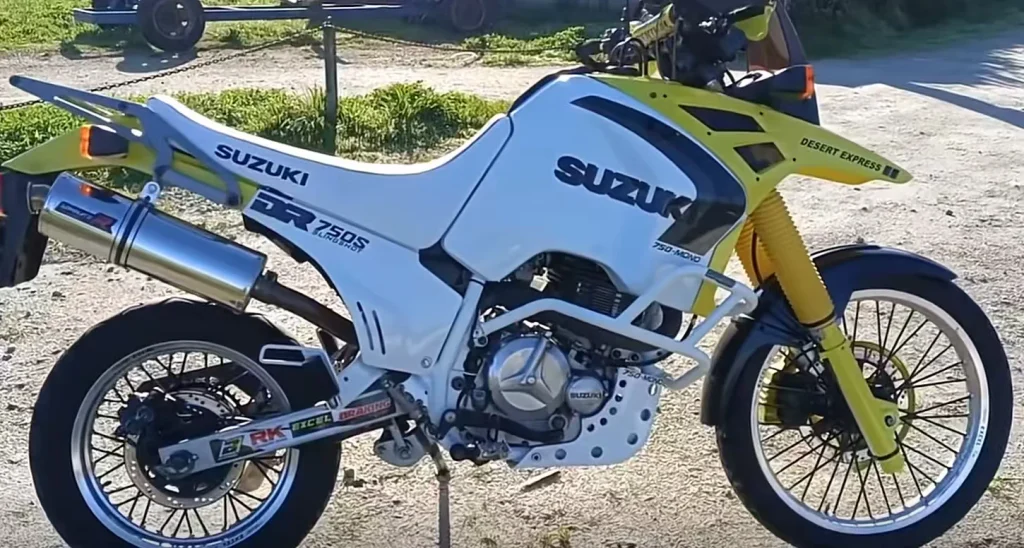
Contrary to a common misconception, BMW was not the originator of the ADV beak design. While BMW later played a decisive role in popularizing and visually refining it, the true origin can be traced back to Suzuki, specifically to the 1988 Suzuki DR750S, widely regarded as the first production motorcycle to systematically incorporate this design concept.
Rally Racing Challenges in the 1980s
During the 1980s, manufacturers participating in long-distance desert rallies—such as the Paris–Dakar Rally—faced several recurring technical challenges:
- At high speeds on unpaved terrain, the front wheel would throw sand, gravel, and debris upward, impairing rider visibility.
- Critical components such as headlights, instruments, and fairings were subject to repeated impact and accelerated wear.
- As rally motorcycles evolved toward dual-purpose use (on-road + off-road), traditional high-mounted off-road fenders proved inadequate at sustained highway speeds, often causing instability and turbulent airflow.
These challenges created the need for a new front-end solution that could balance off-road protection with improved high-speed behavior.
The Suzuki DR750S (1988): The True Origin of the ADV Beak
In 1988, Suzuki introduced the DR750S (also known as DR750 Big)—a landmark model in ADV motorcycle history. This motorcycle is widely recognized as the first mass-production ADV bike to feature a true “beak-style” front design.
Design Characteristics
Importantly, the DR750S beak was not designed to resemble a bird aesthetically. Instead, it evolved from a raised off-road front fender, re-engineered into a two-layer front mudguard system:
- A lower fender closely following the front wheel
- An upper, forward-extending structure integrated into the front fairing
This forward-sloping extension served multiple functional purposes:
- Deflecting sand and debris away from the rider’s line of sight
- Protecting headlights and instrumentation from impact
- Structuring airflow around the front wheel and fairing
Rather than generating meaningful aerodynamic downforce, the beak’s primary aerodynamic benefit lies in reducing airflow turbulence and minimizing unwanted front-end lift at higher speeds, thereby contributing to overall stability.
The concept was further reinforced in 1989 with the release of the Suzuki DR800, which retained and refined this design philosophy.
From Functional Component to System-Level Front-End Design
It is important to understand that the ADV “beak” is not an isolated cosmetic component. In early implementations such as the DR750S, it represented a system-level restructuring of the motorcycle’s front end, involving:
- Separation of the front mudguard into functional layers
- Elevation and integration of the headlight and instrument cluster
- Creation of a defined airflow zone between the front wheel, fairing, and fuel tank
This architectural shift would later become a defining feature of the ADV category as a whole.
BMW’s Role: Optimization and Global Popularization
Early BMW GS models—including the R80GS (1980) and R100GS—retained conventional off-road fender designs and did not feature a beak.
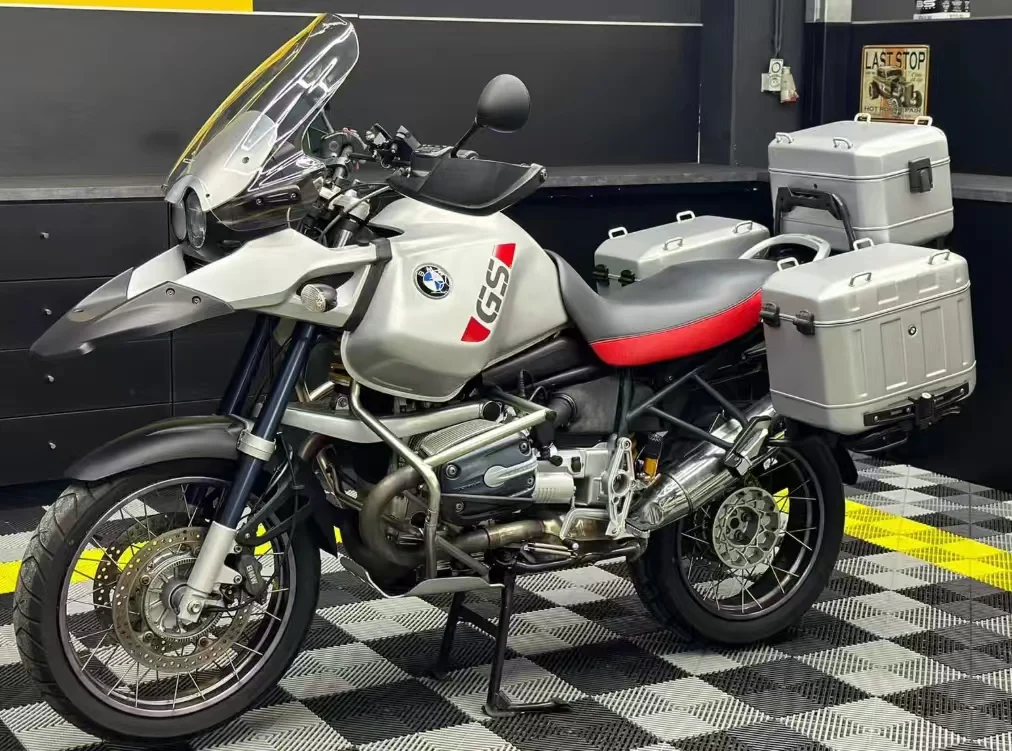
BMW first adopted a clear beak-style design with the R1100GS (introduced in 1994).
The R1100GS belongs to the oil-cooled boxer era and should not be confused with later “water-cooled (LC)” GS models.
BMW’s Contributions
BMW expanded the functional scope of the beak by:
- Directing airflow toward oil-cooling elements, improving thermal management
- Integrating the beak into a larger aerodynamic and visual identity
- Gradually refining the shape using ergonomic and biomimetic principles
With later models such as the R1200GS Adventure, BMW emphasized a sharper, more pronounced beak silhouette, dramatically increasing visual recognizability. Thanks to BMW GS models’ global commercial success, the beak design became widely perceived as a standard feature of ADV motorcycles.
Industry Adoption and Standardization
Following BMW’s success, numerous manufacturers incorporated beak-style designs into their ADV lineups, including:
- Ducati (Multistrada series)
- Honda (Africa Twin)
- Suzuki (V-Strom series, particularly post-2013 models)
Over time, the beak evolved from a purely functional engineering solution into a category-defining design language, balancing performance, protection, and brand identity.

Correcting a Common Misconception
A persistent myth within the motorcycling community credits BMW as the originator of the ADV beak. In reality:
- Suzuki pioneered the concept in mass production
- BMW refined, globalized, and standardized it
Recognizing this distinction is essential for an accurate understanding of ADV motorcycle design history.
Conclusion: A Design Born from Real-World Demands
The ADV motorcycle beak originated in the 1980s rally racing environment, driven by real engineering problems rather than aesthetics. The 1988 Suzuki DR750S stands as the earliest production model to embody this solution, addressing debris protection and high-speed airflow management in a unified design.
Through subsequent refinement and global promotion—particularly by BMW—the beak transitioned from a functional necessity into a symbolic and practical hallmark of the ADV category, one that continues to shape adventure motorcycle design today.