

Most motorcycles are designed around assumptions: paved roads, regular servicing, clean fuel, predictable usage.
The Yamaha AG200 was not.
From its earliest design brief, the AG platform was built around a different question:
What happens when a motorcycle must work every day, in places where infrastructure cannot be taken for granted?
That question is precisely why the AG200 found its natural home across Africa — not through aggressive marketing, but through long-term, real-world performance.
This article takes a detailed, ground-level look at why the Yamaha AG200 works, how its engineering aligns with African operating conditions, and why it remains a benchmark for utility motorcycles decades after its introduction.
About the Article
1. The AG Philosophy: Agriculture First, Everything Else Second
“AG” stands for Agriculture, and that is not branding — it is engineering intent.
Unlike commuter or dual-purpose motorcycles, the Yamaha AG200 was designed for:
- Continuous daily use rather than occasional riding
- Unsealed, uneven, and changing terrain
- Operators with limited access to professional service facilities
- Environments where downtime has real economic or human consequences
This design philosophy fundamentally separates the AG200 from motorcycles built primarily for consumer convenience or recreational appeal.
In Africa, where motorcycles often serve as tools rather than personal vehicles, this distinction matters.
(https://www.motorcyclistonline.com/news/yamaha-ag200-motorcycle-saves-lives/)
2. Why Africa Became the AG200’s Strong Market
Africa did not “adopt” the AG200 by coincidence.
The continent’s rural conditions mirror the assumptions the AG platform was built upon.
Common realities include:
- Long distances between service centers
- Variable fuel quality
- Heavy dust, mud, and seasonal flooding
- Frequent load carrying beyond typical street use
In these environments, reliability is not a feature — it is a requirement.
The AG200’s conservative, durability-first engineering allowed it to outperform many newer, more technologically advanced motorcycles simply because it matched the environment instead of fighting it.
3. The Engine: Why Simplicity Wins in the Field
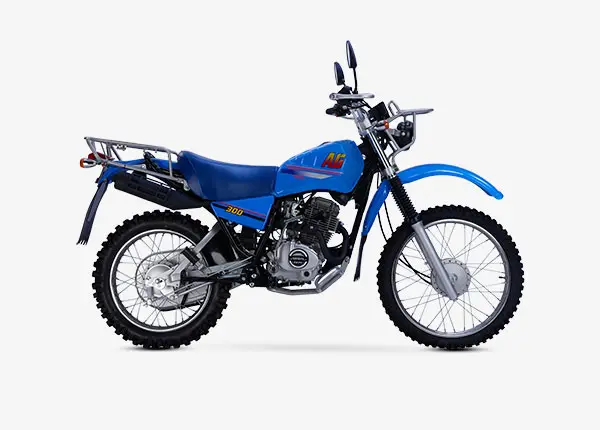
At the heart of the AG200 is a 196cc air-cooled, single-cylinder, four-stroke engine.
On a specification sheet, it appears modest.
In the field, it proves extremely resilient.
Key design advantages:
- Air cooling eliminates radiators, hoses, and coolant failure points
- Low-stress tuning improves longevity under constant load
- Strong low-end torque supports agricultural and utility use
- Carbureted fuel system allows repair without electronic diagnostics
In many rural African regions, fuel quality is inconsistent and service infrastructure is limited. The AG200’s engine does not demand ideal conditions — it tolerates reality.
This is not outdated engineering.
It is intentional engineering.
4. Chassis and Load Handling: Built for Constant Work
One of the AG200’s most important characteristics is its ability to handle continuous load, not just occasional cargo.
The steel frame, rear subframe, and suspension were engineered with the assumption that the motorcycle would:
- Carry tools, supplies, or produce daily
- Operate with additional weight for long periods
- Be used on uneven ground rather than smooth roads
The adjustable rear suspension allows riders to compensate for load changes, while the heavy-duty rear carrier is structural — not decorative.
In real African usage, AG200s are often loaded beyond what a typical street motorcycle would tolerate.
The design does not encourage abuse — it expects it.
5. Protection Over Performance: Brakes, Chain, and Underbody
In developed markets, braking systems are often evaluated based on feel and stopping distance.
In rural Africa, brakes are evaluated on a different metric:
How long do they continue working without attention?
The AG200’s sealed drum brakes, enclosed chain, and skid protection reflect this reality:
- Reduced dust and water ingress
- Lower maintenance frequency
- Greater tolerance for neglect
Similarly, chain enclosure and under-engine protection extend service life in environments where mud, sand, and debris are constant.
These choices sacrifice nothing essential — and gain longevity where it matters most.
6. Small Features That Reveal Real-World Design Thinking
Some of the AG200’s most telling features are the ones rarely highlighted in brochures:
- Clutch lock, allowing the rider to stop, open gates, or manage livestock without dismounting
- Dual side stands with wide bases, preventing the bike from sinking into soft ground
- Lever guards, protecting controls from vegetation and impact
- Electric start with kick-start backup, ensuring redundancy in remote areas
These are not lifestyle features.
They are solutions to real problems encountered in the field.
This is the difference between motorcycles designed in isolation and those refined through long-term real-world feedback.
7. Institutional Trust: Governments, NGOs, and Development Work
Over time, the AG200 moved far beyond agricultural use.
It has been widely adopted by:
- Government agricultural departments
- Rural healthcare programs
- Conservation and patrol units
- International NGOs and development organizations
Institutional users evaluate motorcycles differently from private buyers. They focus on:
- Predictable maintenance cycles
- Mean time between failures
- Ease of training and operation
- Long-term total cost of ownership
The AG200’s continued presence in institutional fleets is one of the strongest validations of its design. Organizations do not tolerate unreliable equipment — especially when public services or human lives depend on it.
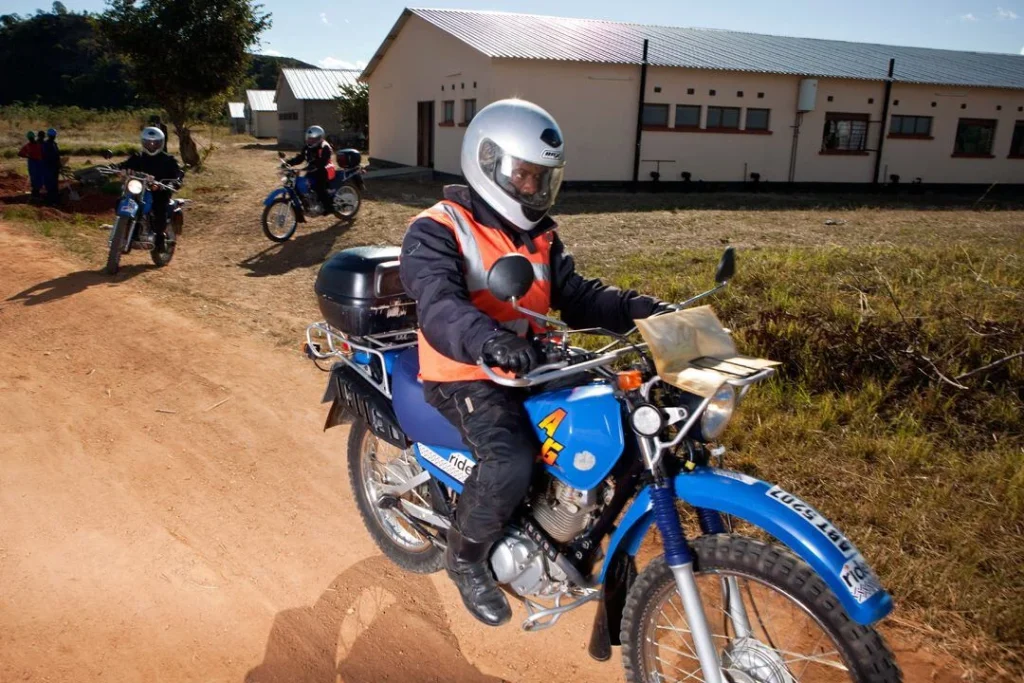
8. “A Motorcycle That Saves Lives” — Why This Is Not an Exaggeration
Independent reporting has documented how utility motorcycles like the AG200 support rural healthcare(Riders For Health) delivery across Africa.
In regions where roads are poor or nonexistent, motorcycles are often used to:
- Deliver vaccines
- Transport medical samples
- Enable healthcare workers to reach remote communities
In this context, reliability directly impacts outcomes.
A motorcycle that fails is not inconvenient — it is dangerous.
The AG200’s contribution is not dramatic or heroic.
It is consistent, and consistency is what makes these operations possible.
9. Why Many Modern Motorcycles Struggle in the Same Conditions
Technological advancement does not always translate into real-world improvement.
In African rural environments, newer motorcycles often struggle due to:
- Sensor failures caused by dust or moisture
- Dependence on electronic diagnostics
- Sensitivity to fuel quality
- Fragile plastics and mounting points
The AG200 avoids these issues by design.
It is not technologically backward — it is technologically restrained.
And in this environment, restraint is strength.
10. Longevity and Total Cost of Ownership
Perhaps the AG200’s most important metric is not performance, but service life.
Across Africa, AG200s are commonly:
- Rebuilt rather than replaced
- Shared among multiple users
- Maintained informally
- Still operational after many years of heavy use
From a total cost of ownership perspective, this longevity is decisive.
The AG200 does not encourage short replacement cycles.
It rewards continuity.
11. Lessons for Motorcycle Manufacturers Targeting Africa
The AG200’s long-term success offers clear lessons:
- Design for environment, not aspiration
- Assume maintenance scarcity
- Prioritize mechanical transparency
- Value uptime over features
- Respect how users actually operate machines
Manufacturers who ignore these principles often struggle — regardless of brand strength or technological capability.
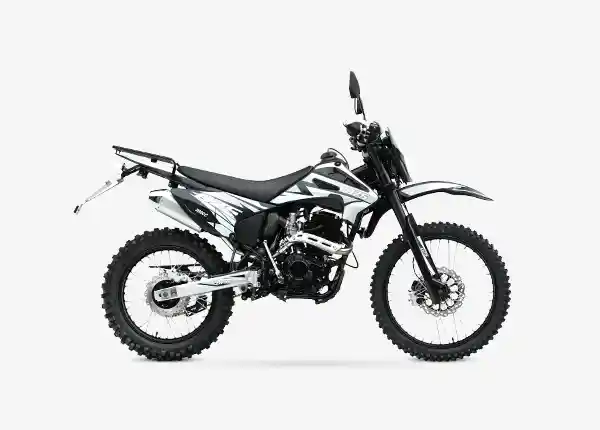
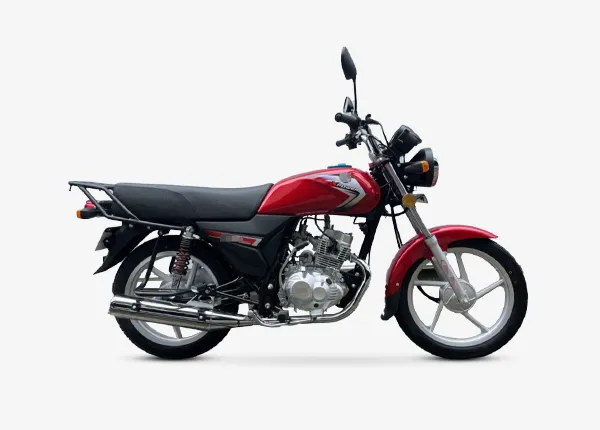
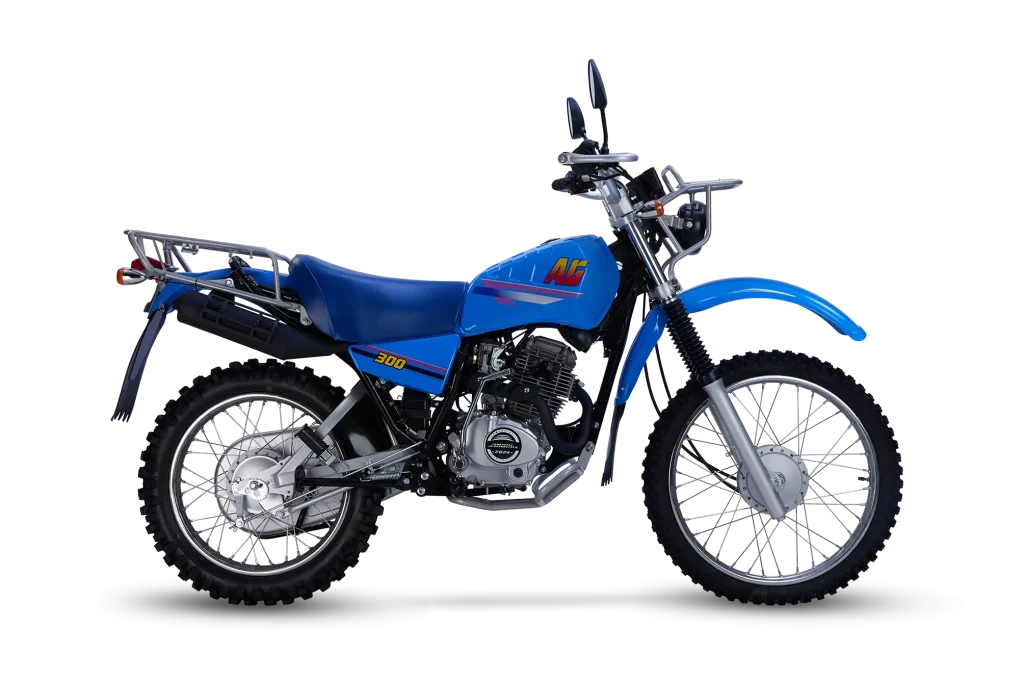
You may intersted in KAMAX AG200:
Conclusion: A Reference Point, Not a Relic
The Yamaha AG200 is not a motorcycle that defined a trend.
It defined a standard.
A standard for what a utility motorcycle must be when infrastructure is limited, operating conditions are harsh, and reliability is non-negotiable.
As long as those conditions exist — in Africa and beyond — the AG200 remains not just relevant, but instructive.
For manufacturers serious about serving real-world markets, it is a reference point worth studying carefully.
Frequently Asked Questions (FAQ)
Is the Yamaha AG200 still produced and supported today?
Yes. The AG200 continues to be produced for selected global markets, with official distributor support and long-term spare parts availability.
External reference: https://global.yamaha-motor.com/business/omdo/products/ag/
Why is the AG200 especially popular in Africa?
Because its mechanical simplicity, durability, and load-focused design align with African rural conditions such as poor roads, limited service access, and heavy daily use.
External reference: https://global.yamaha-motor.com/business/omdo/products/ag/feature.html
Is the AG200 suitable for government or NGO fleets?
Yes. The AG100/AG200 series has been widely adopted by government agencies and NGOs for agriculture, healthcare, and development programs due to its reliability and predictable maintenance.
External reference: https://global.yamaha-motor.com/business/omdo/products/ag/
Can the AG200 really support healthcare delivery?
Yes. Independent motorcycle media have documented how utility motorcycles like the AG200 play a critical role in delivering medical services in remote regions.
External reference: https://www.motorcyclistonline.com/news/yamaha-ag200-motorcycle-saves-lives/
Is the AG200 still relevant today?
Yes. The conditions it was designed for still exist, making it relevant well beyond its original launch era.
External reference: https://vvar.in/2026-yamaha-ag200-revealed/
Notes: Some images used in this article are sourced from the internet. If any content infringes your rights, please contact me and I will remove it promptly.